Your Winter Carry Setup Is a Lie
(And How to Fix It Before Spring)
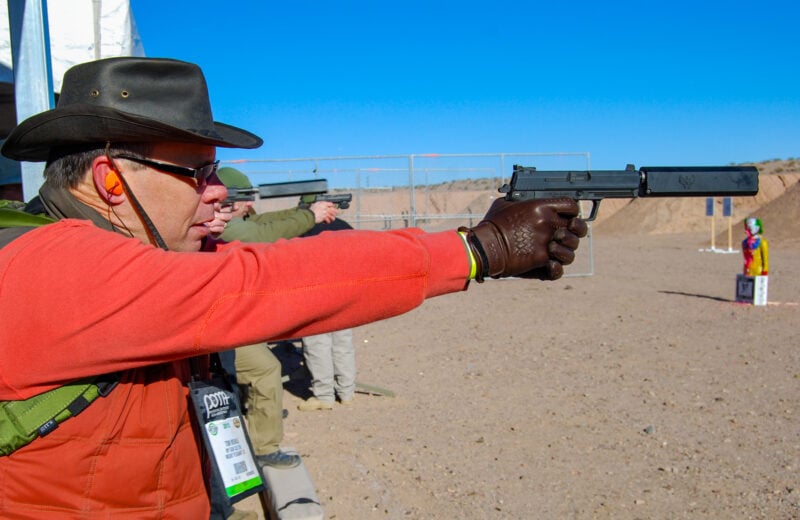
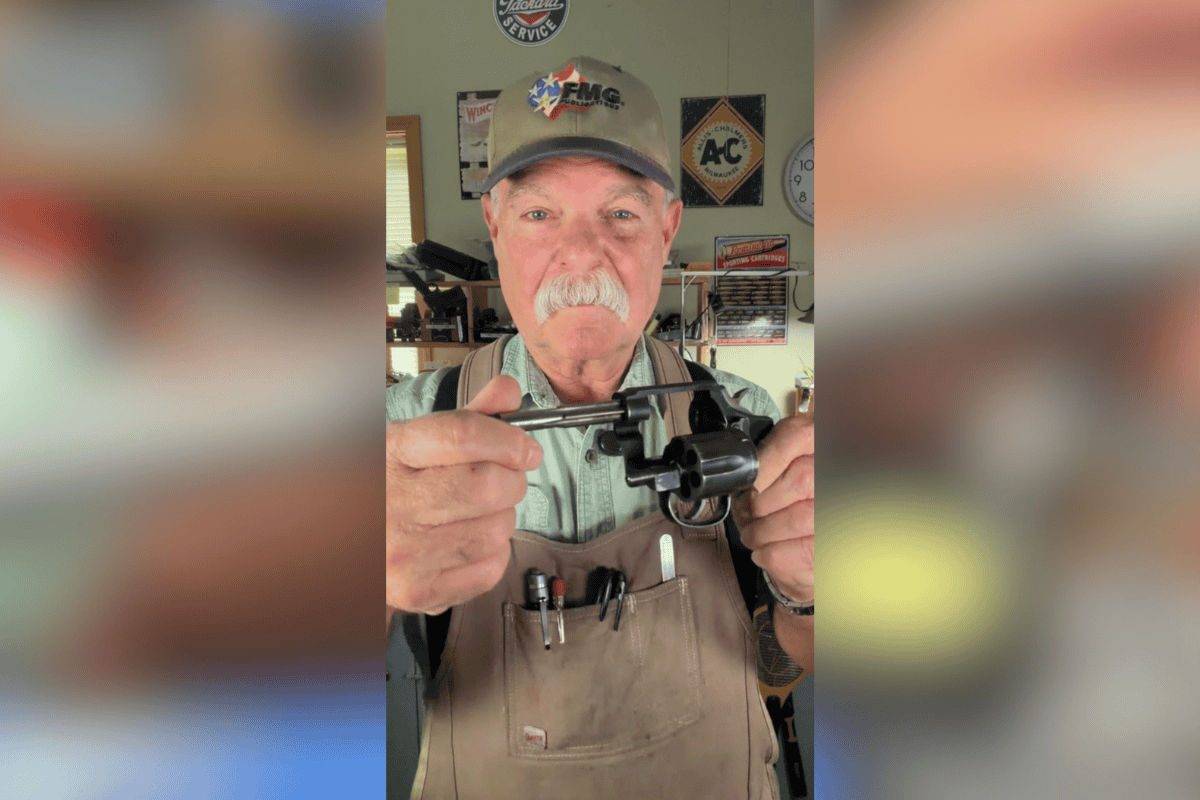
I'm wearing thin driving gloves here. Not very warm, but they help while making it easier
(not easy, just easier) to operate the handgun.
I learned the hard way that my concealed carry setup was seasonal. Not by choice, mind you. By physics.
It was a 28-degree morning in January a few years back, and I was working on a defensive pistol drill at an outdoor range. I was wearing my complete winter ensemble: puffy jacket, fleece mid-layer, and a shirt underneath. Yeah, I know. That’s likely shorts and t-shirt weather for those of you north of the Mason-Dixon line. On the buzzer (yes, those are great for practice, not just competitions), I went for my IWB draw, and what happened next was… educational.
My hand went to where my gun usually lives. My fingers found approximately six inches of layered fabric. An hour and a half later (OK, I’m exaggerating a bit), I could have written an opera.
Seasons Matter
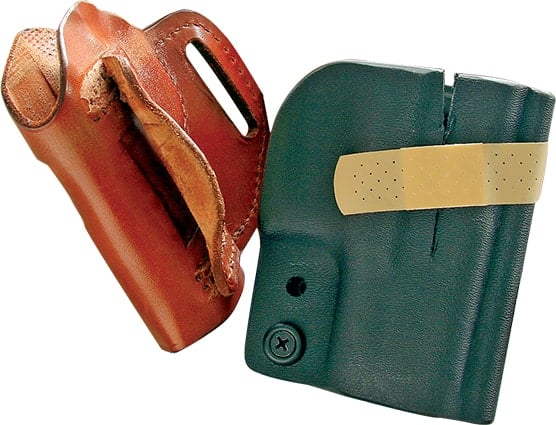
That was the day the “Oh, duh” lightbulb went off, and I’d not really given enough thought to seasonal carry adjustments along with the requisite preparation and practice. Actually, I had approached a similar problem before, but the other way around. During the hot and humid summer months, I tend to switch to Kydex holsters, as on the worst days, leather and guns can get “sticky” for lack of a better word. I’ve found that can make smooth draws… interesting.
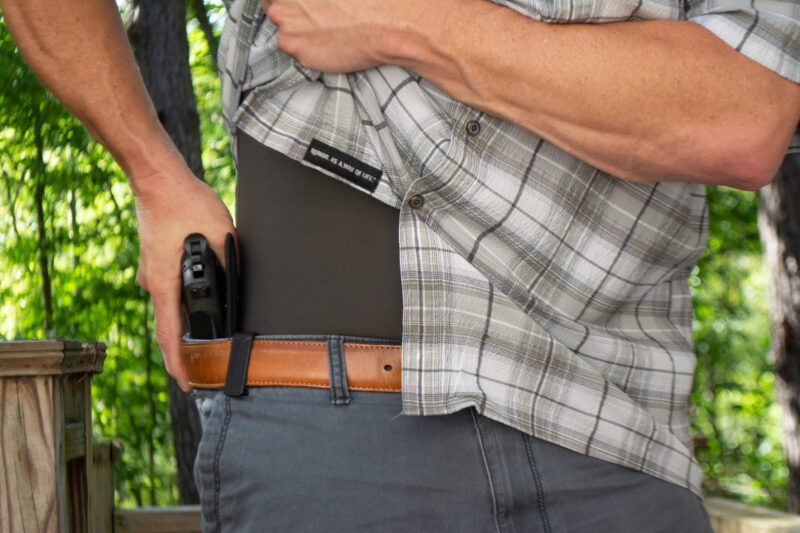
I get spoiled in the summer. Loose shirts, untucked, make access so easy. No heavy layers, no gloves.
Here’s a fun exercise. Imagine you’re wearing a heavy winter coat over a hoodie over a base layer, and perhaps thick gloves. Then consider your summer draw technique.
If you’re being honest, you just realized your three-quarter-second range draw is now a three-and-a-half-second wrestling match and your clothes are Sumo demon spawn. And keep in mind, in your real or imaginary trial, no one is threatening to shoot back at you.
I won’t speak for you, but if I’m honest with myself, I spend more time and energy thinking about summer carry, because concealment and comfort are harder when shorts and t-shirts are the standard attire. But the winter problem is the opposite, and it’s arguably more dangerous: you can conceal most anything easily under a coat or jacket, but can you access it when you need to? Under stress? With numb fingers? And what if you’re wearing gloves?
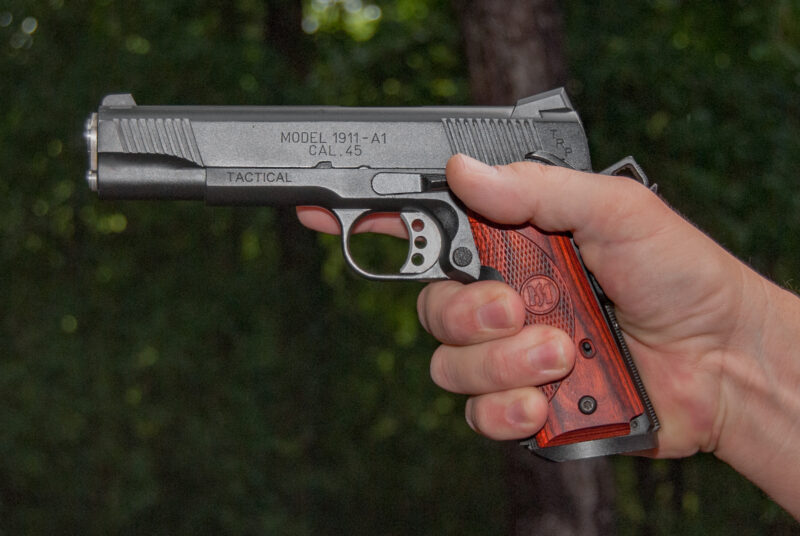
We take getting a proper grip without effort for granted when shooting bare-handed.
Everything changes when gloves come into the picture. No tactile feedback and different
geometry change the game.
Consider the Layers
Let’s start with the clothes themselves, because they are now your primary obstacle. I’ll offer up some things I’ve thought about, but you’ll have to ponder your own tradeoffs.
If your normal carry method is inside the waistband (IWB), a zipped or buttoned-up coat “might” be loose enough to tug upward like you would a shirt, but it’s a heck of a lot bulkier. Oh, and you may have additional layers to worry about. Are you tugging the coat, sweater and shirt out of the way all at once?
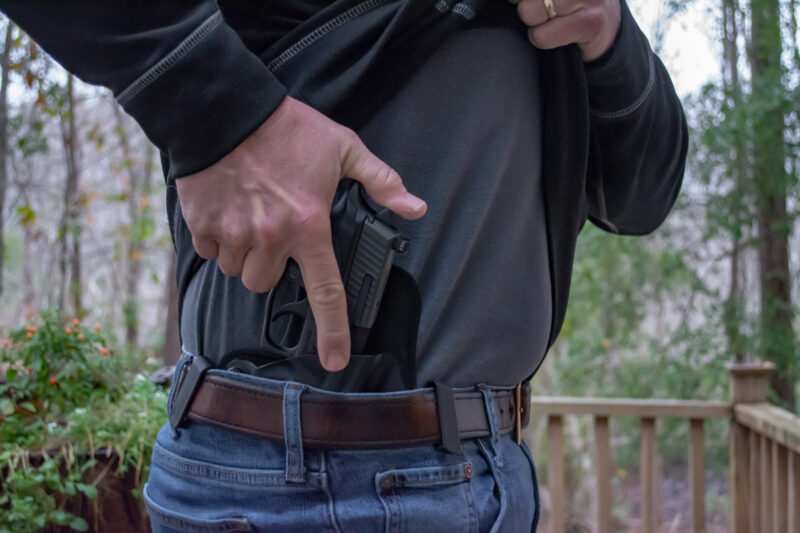
Even a pullover in the fall months adds some challenge to a smooth draw. Extra material bulk
and a tighter fit both impede the cover garment clearing step.
If you’re an IWB carrier in the warmer months, perhaps you consider shifting to outside the waistband (OWB) in the colder months. But what’s your strategy when you go indoors and lose the coat? Are you changing your whole wardrobe so it works with OWB carry inside and out? And, while reduced, you still may have the layers problem. What’s your plan to get that coat out of the way enough for a smooth draw.
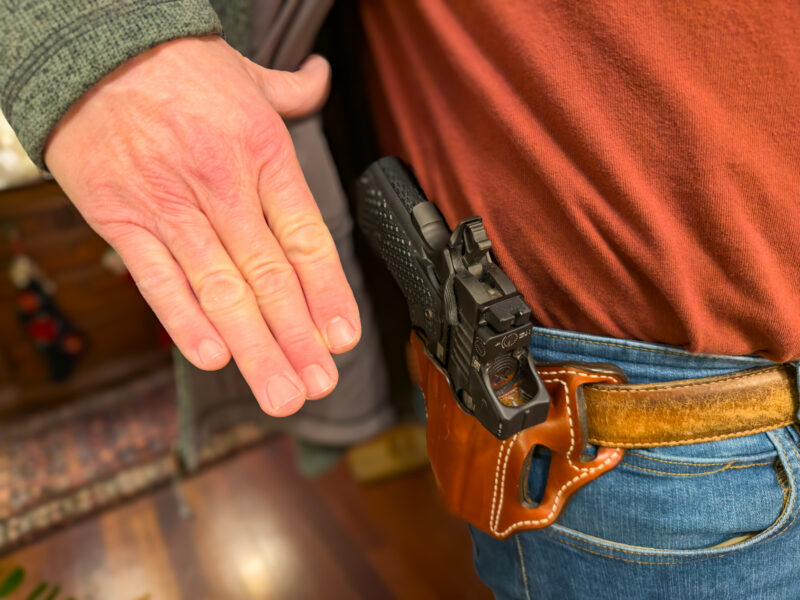
When feasible, the "keep the front open" approach makes things easier as you can sweep the jacket back
with your firing hand thumb if necessary.
One option is to keep the coat unzipped. In some conditions, that’s no big deal. On the plus side, it makes drawing a heck of a lot easier as you’re negating the biggest obstacle. If it’s too cold, and I certainly get that it will be on many occasions, you’ll need to amp up the aggression on your “normal” or summertime motion of ripping your cover garment upward. Yanking a single shirt up reliably enough to always clear your gun and holster requires practice. Doing the same thing with winter layers requires its own practice. Unload the gun and try it. Then practice it until you get it right.
Next, think about any middle layers. Tight fleece or sweater? Tucked in shirt? I tend to tuck in a whole lot more in the winter than in the summer. There are too many variables to present all the options here. The safe approach is to not assume everything will just go to plan if you ever need to draw your gun when all clothed up. Again, with a carefully unloaded gun, try it. There’s no substitute for trying, and failing, so you can identify the gotchas and develop suitable workarounds.
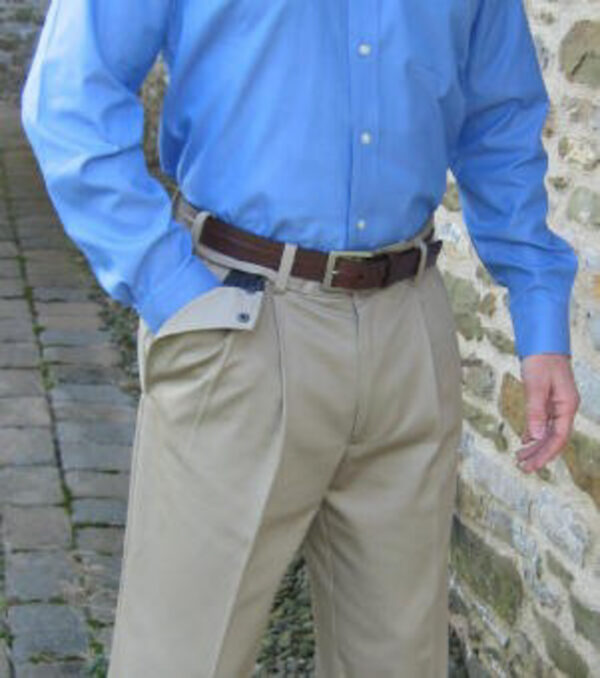
These CCW Breakaways pants also offer an interesting option. You access your gun through the pocket.
It's lower and more out of the way of heavy clothes and natural for your hand to be in your pocket.
To Glove or Not to Glove?
If you carry a gun and you haven’t practiced drawing and shooting with the gloves you actually wear in winter, you’ve got a gap in your training that could get you hurt. I won’t speak for others, but gloved shooting is not at all easy, especially if you have to manipulate anything. Sure, if someone hands me a loaded gun, ready to go, I can shoot just fine with gloves. Drawing from concealment? Multiple the normal difficulty by 10x. Changing magazines? Ha! Even simple operations like working catches, safeties and latches present all sorts of challenges.
Again, step one is to try it first. Put on your normal gloves and draw from concealment. How’d it go?
Thick gloves may not physically fit inside the trigger guard of some guns. Take your winter gloves to the range and find out before you need to know. Shoot. Work safeties. Try the slide lock. Change magazines.
How’s the grip? Even if your finger fits, establishing a proper firing grip through thick gloves changes everything. Your purchase on the gun is different because the tactile input we rely on is greatly reduced or gone completely.
Some people keep their strong hand in a pocket without a glove and use a hand warmer. That approach is actually handy (Ha! No pun intended, but there it is) because we do so many other things that require a bare hand, like operate smartphones and car keys. Others wear a thin liner glove on the strong hand and a heavy insulated glove on the support hand. Both work. The key is figuring out what you’re actually going to do and then practicing it.
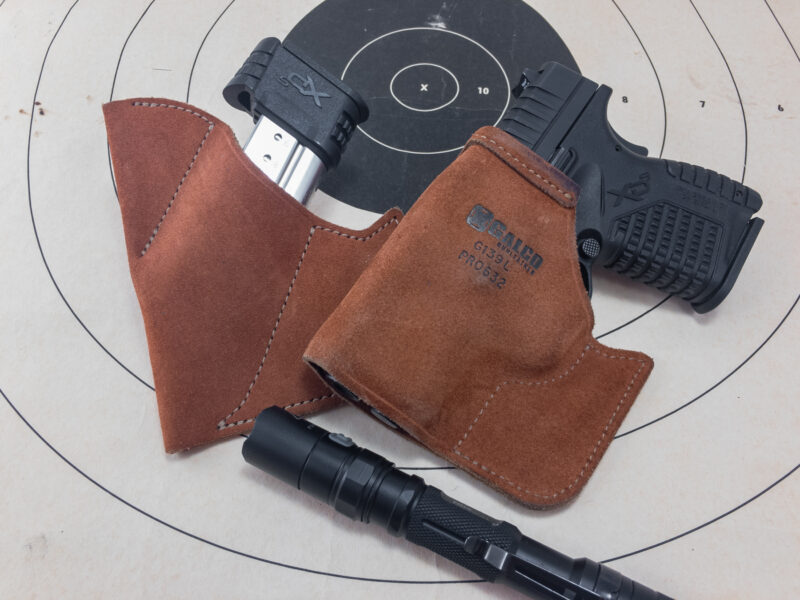
Pocket carry is an interesting option for winter, especially when using a pocket holster
designed for cargo or larger pockets. Carry in a jacket pocket has a few advantages.
In the cold, it's completely natural to have your hands in your pockets...
Do it
Here’s the homework assignment, and I promise it’s the most valuable 15 minutes you’ll spend this week.
Tonight, put on your actual winter clothing. The jacket you wear. The gloves. The layers. All of it. Strap on your carry gun (unloaded, triple-checked) and practice your draw. Do that 10 or 20 times.
I guarantee two things will happen. First, you’ll discover things about your setup that don’t work. Layers that snag. A grip you can’t acquire. Second, you’ll start developing the motor memory to deal with those problems. Dry fire in full winter gear is the cheapest, most effective thing you can do to close the gap between your summer proficiency and your winter reality.
Get more exclusive online content from American Handgunner delivered straight to your inbox. Sign up for our free American Handgunner Insider newsletter.