That’s A Lotta Money!
Firearms And Ammunition Sales Boost Economy

The sale of firearms and ammunition brings in billions of dollars
to the economy, and provides hundreds of millions of dollars for
wildlife conservation and restoration, according to data from the
U.S. Fish & Wildlife Service.
Every couple of years, we take a look at how the sale of firearms and ammunition helps the U.S. economy, simply as a way of reminding politicians how much economic harm the effort to ban guns could do.
It’s one of those “Money talks and BS walks” kind of debates. This year, we shouldn’t be disappointed because, according to the National Shooting Sports Foundation, “The total economic impact of the firearm and ammunition industry in the United States increased from $19.1 billion in 2008 to $91.7 billion in 2024, a 379% increase, while the total number of full-time equivalent jobs rose from approximately 166,000 to nearly 383,000, a 130% increase in that period.”
How much did the gun prohibition movement contribute to the economy during that period? How many full-time jobs were created? What was that? I didn’t hear anything other than a bunch of crickets.
The NSSF report goes on to explain that since 2008, federal business tax payments “surged by 364%, Pittman-Robertson excise taxes for wildlife conservation by 173%, and state business taxes by 224%.”
Long before my days on staff at the now-long-gone Fishing & Hunting News, I was a fan of Pittman-Robertson, which provides tens of millions of dollars to state fish and wildlife agencies for use in wildlife restoration and habitat preservation and enhancement projects. I’m a hunter and a shooter, and knowing some of the money I spend helps support wildlife programs is a plus. Anti-gunners and anti-hunters don’t hold a candle to gun owners when it comes to paying for wildlife, both game and non-game.

Hunters, and non-hunting shooters all contribute to the
Pittman-Robertson fund, also known as the Federal Aid to
Wildlife Restoration program, created by Congress back in
the mid-1930s. Indisputably, hunters and shooters are true
wildlife conservationists.
Fiscal Year 2025
Back in January, the U.S. Fish & Wildlife Service, which administers the Pittman-Robertson fund and distributes the annual apportionments to the states, announced how much money was to be shared with state agencies.
For Fiscal Year 2025, the sum came to more than $1.3 billion (Yeah, with a “B.” It’s not a typo). To find out how much your state came away with, check the data right here. Even shooters who don’t hunt wind up contributing to the P-R program, which not only supports wildlife programs, but also hunter education — with its firearms safety component — and in some cases, range development or improvement.
According to USFWS, “Since 1937, more than $29 billion has been distributed through annual apportionments to monitor and manage our nation’s fish and wildlife resources, support hunter and aquatic education, and improve access for outdoor activities like hunting, fishing and boating.” Nobody else matches that record, to my knowledge.
Who benefits from this effort? Everybody, whether they like to watch birds or shoot them; whether they like to view elk or wintering deer herds or fill their freezer with venison. Hunters know just a bit about wildlife management and conservation, and they can show how money to provide habitat for waterfowl also provides the same habitat for songbirds and other non-game species. The same habitat is home to insects, for those who want to get technical.

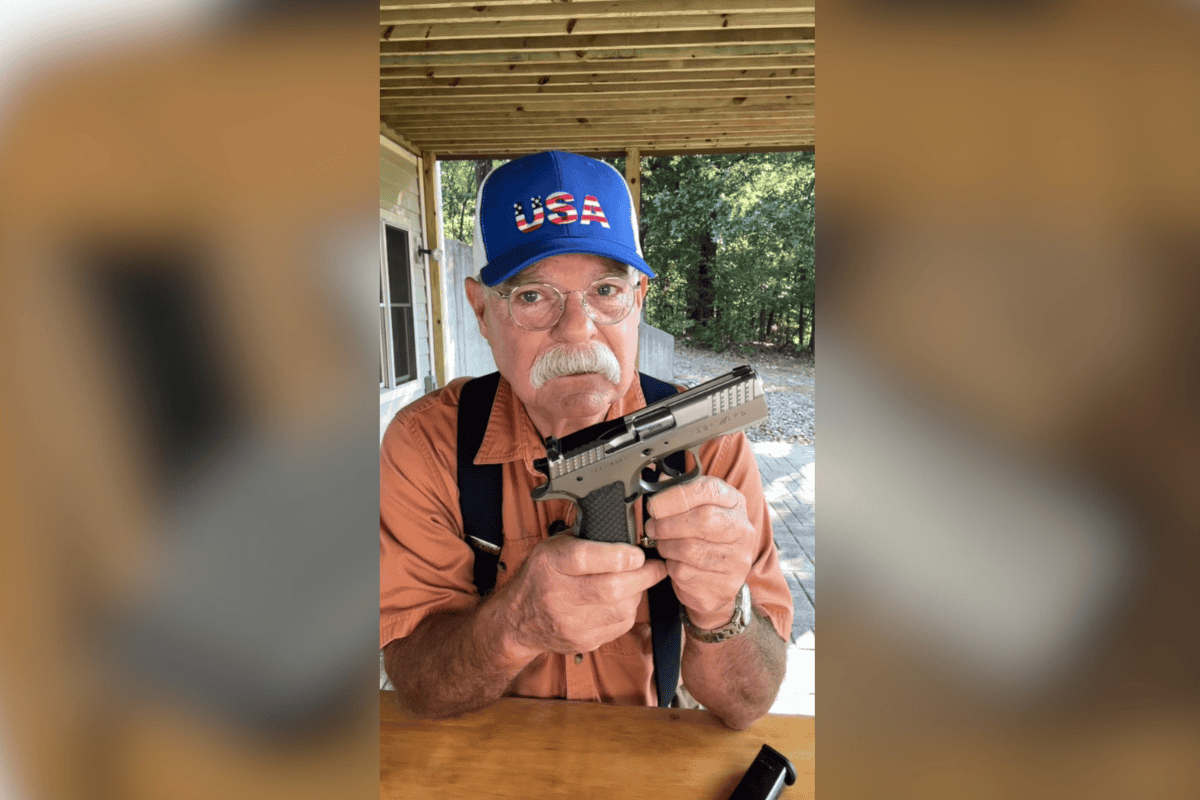
Dave gets plenty of satisfaction knowing every time he
goes through a box of ammunition or buys a gun, his
purchases contribute to wildlife conservation efforts.
Last fall, while hunting mule deer with a pal who simply wanted to pop a grouse, he instead came back to camp with a fat cottontail rabbit. He was hunting a swampy area way up on a ridge. This was on public land, which is home to elk, deer, wild turkeys, coyotes, mountain lions, bears, grouse, squirrels, chipmunks, all kinds of bugs and, as it turned out, rabbits.
So, the moral of this story is simple. If you are ever in a conversation with an anti-gunner or anti-hunter, just ask them how they plan to take care of wildlife if hunting and shooting are somehow outlawed. You’ll get word salad or perhaps silence, but no straight answer.
Here’s Something Alarming
Last month, author John Hinderaker discussed a report by the Network Contagion Research Institute and Rutgers University’s Social Perception Lab and boiled it down to this: There is a growing tolerance for political violence “particularly among left-leaning groups in the U.S.”
According to Hinderaker, the report “points to increased normalization of violence targeting figures like Donald Trump and Elon Musk, especially after the July 13, 2024, assassination attempt on Trump.”
Hinderaker contended there is an “increased normalization of violence targeting figures like Donald Trump and Elon Musk.” He goes on, noting how “among those who say they are ‘slightly liberal’ or farther to the left, 9% think the murder of Elon Musk would be ‘completely justified,’ and 13% say the murder of Donald Trump would be ‘completely justified.’”
To his credit, Hinderaker acknowledged, “We are in uncharted territory. Not many years ago, it would have been inconceivable that a large number of members of either party would tolerate assassinations of their opponents (or firebombing of businesses owned by a political opponent, which is even more broadly supported by liberals).”
Bear in mind, these are the same people who think you are a public menace because you own firearms.
Hinderaker raises an uncomfortable point: “Data like these raise, I think, the question whether the United States has a future as a united country.”

Attorney General Pam Bondi launched the “Second Amendment
Task Force” last month to protect the gun rights of law-abiding
citizens. (Official Image of Bondi, State of Florida
In case you missed it, right after Attorney General Pam Bondi announced the formation of the Justice Department’s “Second Amendment Task Force” last month, the Citizens Committee for the Right to Keep and Bear Arms fired off a letter to her encouraging quick probes of gun laws in 12 states.
Bondi said she would chair the task force, and members would include “representatives from my personal staff, the Office of the Deputy Attorney General, the Office of the Associate Attorney General, the Office of the Solicitor General, the Civil Division, the Civil Rights Division, the Criminal Division, the Bureau of Alcohol, Tobacco, Firearms, and Explosives, the Federal Bureau of lnvestigation, and any other components or representatives that I may from time to time designate to assist in the Task Force’s labors.”
Too bad she didn’t include representatives from CCRKBA, NRA, GOA and/or other gun rights groups. Perhaps that’s coming.
Which states did the committee suggest for investigation? California, Colorado, Connecticut, Hawaii, Illinois, Maryland, Massachusetts, New Jersey, New Mexico, New York, Oregon and Washington. Not surprisingly, Second Amendment activists from other states, including Wisconsin, Michigan and Minnesota, also called for DOJ Task Force attention.
Some people in the firearms community complained about Bondi when she was Florida Attorney General, but when was the last time an administration created a Second Amendment Task Force, whose purpose is to “protect the Second Amendment rights of law-abiding citizens?” Right, it’s never happened before.