The .22 Pistol Is a Truth Serum
My first real handgun was a .22LR semi-automatic. I’d only shot a couple of rifles before, on just a couple of occasions in my life, so, in hindsight, I was less than prepared to go shooting solo. Especially with a handgun. Translation: I didn’t know Jack squat about what I was doing. But, being a male born in America, I was filled with confidence, knowing my genes were somehow encoded with expert marksman-level knowledge.
So off to the range it was, toting a fresh bulk pack of .22s and a brand-new Walmart shooting bag. I did remember to take the price tag off. See? Genetic firearms expertise in action.
I loaded the magazine, aimed, yanked the trigger, and got a click. You got it. I hadn’t racked the slide. I’ve written before about the bloodbath that followed when I did manage to fire a shot, so I won’t repeat it here. Let’s just say it’s a swell idea not to cross your thumbs when shooting a semi-automatic. Minus one point for genetic knowledge.
After my hand transplant and a more successful range visit, I started to realize my .22 pistol was already doing what rimfires do best, though it took me a while longer to figure it out.
A rimfire handgun is easy to dismiss as an invitee to the kids’ table of pistols. Not only are they just plain fun, but they’ll make you a better shooter than all those louder cousins in the safe. A good .22 won’t hide your mistakes behind a fireball, recoil and noise. It just goes on about its work, showing you the quality of your technique and printing on that paper downrange.
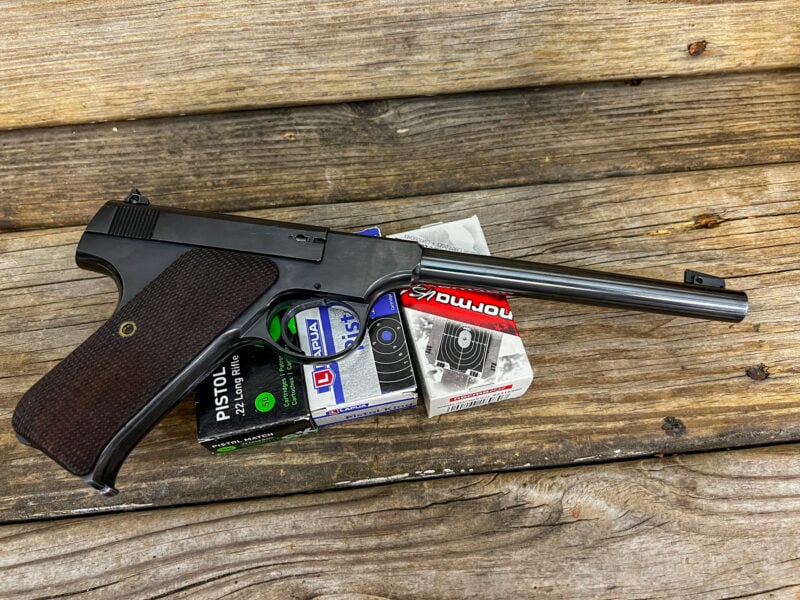
Old as the hills but still valuable for improving handgun skills.
This Colt Woodsman will definitely expose your mistakes.
Mechanical Accuracy
We throw the word “accurate” around like it means one thing. It doesn’t, at least not in the ways we use it.
I’m not sure if this is a pet peeve or not, so let’s politely call it an observation. When somebody says a gun is accurate, they usually mean it’s easy (for them) to shoot well. Most of these reports come from outings where shooters shoot from about 7 yards and perforate the center of the target. Don’t get me wrong, a gun that’s easy to shoot accurately has plenty of value. But that doesn’t necessarily mean it’s an accurate gun. Most modern handguns will perform far better than we can achieve with a freehand hold.
Years ago, I started keeping detailed records of the guns and ammo that crossed my path, tracking group size at 25 yards, velocity and such. Yes, I’m a nerd, but it’s also handy for this job to capture the records. So, when I’m talking about accuracy, I usually mean the inherent mechanical measurement. That means using techniques to remove all possible shooter error from the equation: sighting, hold, etc.
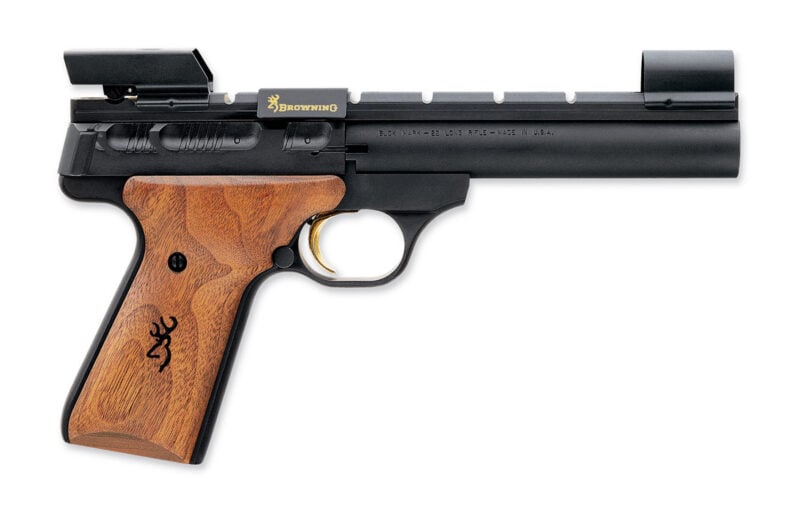
One of the easiest (for me) rimfire pistols to shoot well: the Browning Buck Mark
What I’ve found is that all handguns are accurate compared to us users. The most inaccurate handguns I’ve tested rarely, if ever, exceeded 4″ groups at 25 yards using reasonably decent ammo. And here’s another tidbit from the records. The rimfires consistently top the accuracy list.
A Smith & Wesson Victory printed sub-inch groups at 25 yards all day. Eley Practice: half an inch. CCI Mini-Mags: 0.62″. Even Remington Thunderbolt, which is not exactly Olympic match ammunition, produced 0.79″. A Taurus TX22 Competition, about $350, did 0.90 to 1.45″ with everything from SK Pistol Match to CCI Mini-Mags. A Beretta factory .22 conversion on a 92FS lived in that same neighborhood; then I sold it, which, in hindsight, ruined my life.
I used to own a 1970s Browning Buck Mark Target that may have been the easiest pistol I ever shot accurately. And it was mechanically accurate as well. It was the proverbial tack driver, so I sold that one too. Temporary insanity appears to be another genetic attribute.
Here’s the takeaway. Once you know a Victory or a Buck Mark or a TX22 will shoot a 1″ group, give or take, you now have a baseline to know what is “the gun” and what is “the shooter.”
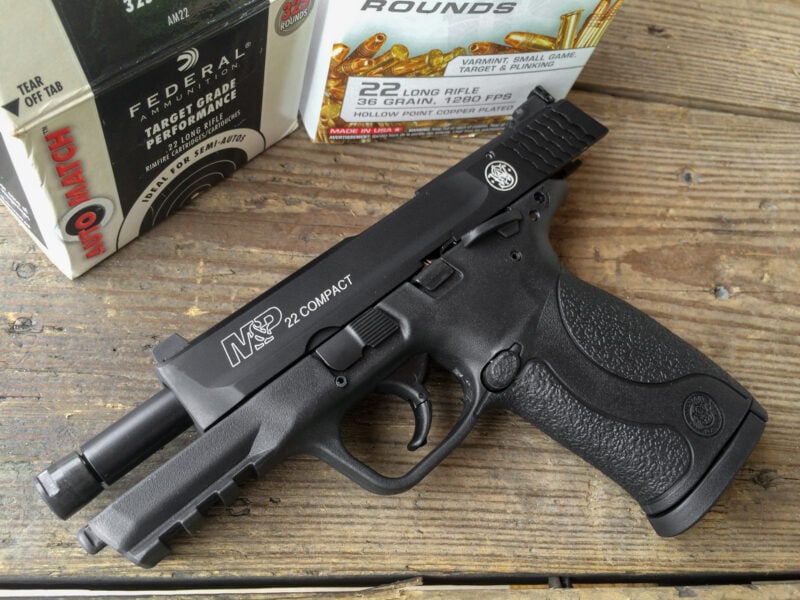
Some manufacturers, like Smith & Wesson, make .22 versions of their centerfire models
like this M&P 22 Compact.
The Cheap Ammo Advantage
Be honest and tell me if you can relate. When I buy a box or two of 9mm or .45 ACP to take to the range, I find myself getting miserly. Burning through the equivalent of a week’s worth of groceries makes you worry more about every shot than focus on the skills screaming for more reps.
On the other hand, when I crack open a bulk pack of .22 LR, I experience the opposite emotion. Financially speaking, it’s possible to shoot enough to get bored using rimfire, even at today’s higher prices. This is when the useful stuff begins. You’re able to put enough rounds on paper to see patterns and explore how variations in grip or trigger technique impact your results on paper.
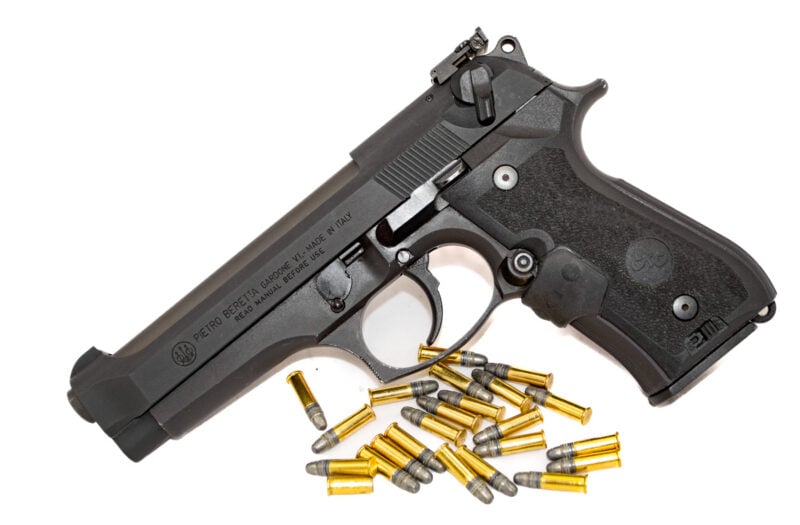
.22 conversion kits are available for lots of common carry guns.
The mild recoil helps more than we want to admit as macho shooter types. With all that cheap ammo, you can experiment with things like calling your shot. Watch the front sight or red dot carefully as you break the trigger and continue maintaining eye lock on those sights until well after the shot has landed. Get enough reps of this without all the commotion and recoil of larger calibers, and you’ll be able to translate that skill to centerfire as well.
It is also quite the tool for new shooters learning the very basics of just holding a handgun reasonably still while operating the trigger. I keep an M&P 22 Compact geared up with a Sparrow can for first-time shooter duty. Small enough for any hand, but just big enough that larger folks can use it without contortions. Without the recoil and noise, and with enough cheap ammo to shoot as much as they want, they can work through the bad habits we all have to overcome when starting out.
The Trigger Gotcha
There is a catch to the truth serum qualities of a .22 handgun. The trigger. They’re usually good enough to spoil you rotten.
I guess it’s the nature of the beast, as rimfire pistols are made for target and recreational use. So they tend to have light, clean, and maybe short pull triggers. Think about a Buck Mark, a Victory, a High Standard. You get the idea. They are a genuine pleasure to shoot, and they go a long way toward making that pistol easy to shoot accurately.
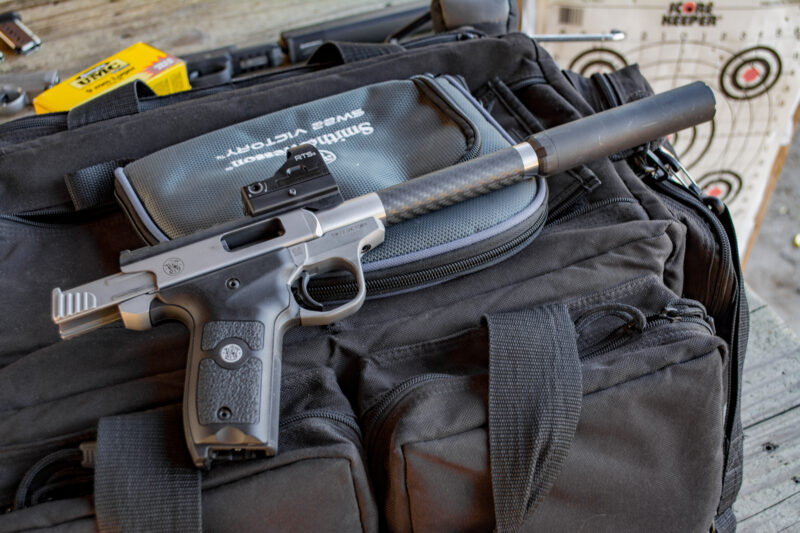
Yes, this S&W Victory will be a lot easier to shoot well than your everyday centerfire,
but if you focus on technique, the skills will translate.
You can quickly attain brag-worthy groups with a good .22. You can also still suck at shooting a centerfire. A good trigger doesn’t make a gun more mechanically accurate, but it sure does make a gun easier to shoot accurately.
So, be sure to account for that. A .22 is ideal for identifying and fixing issues with grip, sight picture, wobble, calling the shot, and trigger press. Knowing the problems is half the battle. You’ll know where to focus when shooting the bigger handguns.
Or, you can pick up a rimfire pistol without that target trigger. The trigger on my Smith & Wesson M&P 22 Compact is fine, but it’s nothing like that on a target pistol. And there’s a lot to be said about practicing with a less expensive, lower-recoil version of your centerfire. This is exactly why I’m kicking myself over selling that Beretta Conversion kit.
If you only have the nice one, that’s OK. Just don’t give yourself a medal (yet) until you can duplicate its performance with a larger-caliber handgun.
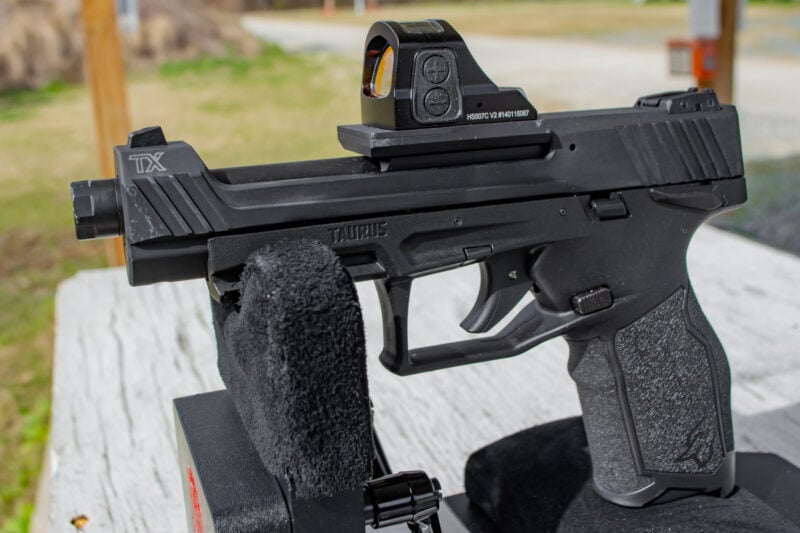
It doesn't take a lot of cash to acquire a high-performance .22.
This Taurus TX22 shot one-inch groups with regularity.
Remember Its Purpose
I won’t dare step into the .22 for self-defense debate here. I prefer something larger, but I get that some people want or need to stick with rimfire for that job. You do you. Just be careful about rationalizing based on how accurately you can shoot that rimfire.
If you want to get really good at pressing a trigger, calling your shot, and matching your sight picture to the forthcoming hole in the target, spend an afternoon and not very much money with whatever .22 you already have.
Get more exclusive online content from American Handgunner delivered straight to your inbox. Sign up for our free American Handgunner Insider newsletter.