American Legends
Those Fantastic .44s!
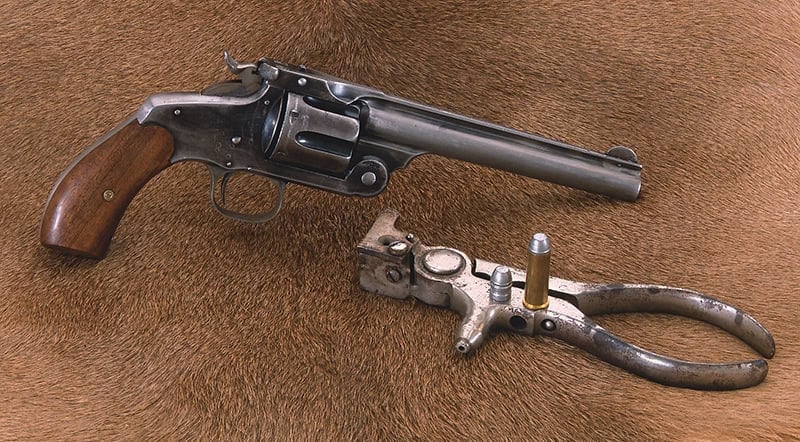
“… His .44 Spoke , Spat Lead And Smoke , And 17 Inches of Flame. THOSE Fantastic .44s!”
Those are the lyrics from an old Marty Robbins song titled Mr. Shorty. It shows how intertwined the .44 cal-iber is with American legend and folklore. Since the beginning of cartridge-firing revolvers the .44 caliber has been in the forefront. Take the Colt Single Action Army for instance. Between 1873 and 1941 more were made in .45 Colt than any other single caliber, but look at how many dif-ferent .44 caliber cartridges were offered. Colt SAAs were cham-bered for .44 WCF (.44-40), .44 Colt, .44 American, .44 Russian, .44 Special and the .44 Henry rimfire. In fact the first couple of Colt SAAs made for U.S. Government testing were in .44 Russian and .44 Amer-ican calibers but the decision was made by the military to switch to .45s as the bore size for both long guns and handguns.
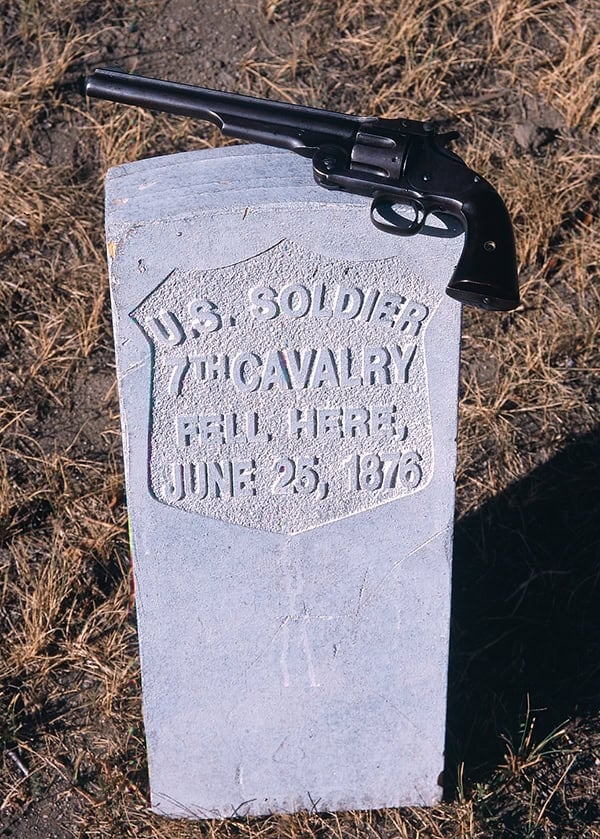
At least four S&W revolvers chambered for the .44 American cartridge
were fired at the Battle of the Little Bighorn.
The second most prominent handgun manufacturer of the late 1800s was Smith & Wesson. Between 1870 and 1912 they sold over a quarter million of their large frame top break revolvers, collectively named the Model No. 3. The vast bulk of them were in .44 caliber. Those were split between .44 Henry rimfires, .44 Ameri-cans and .44 Russian; mostly the latter one. Then circa 1907 they introduced their first large frame revolver with a side-swing cylinder. Its premier cham-bering and the 20th century’s first new .44 cartridge was the .44 S&W Special.Nearly 50 years later they followed it up with the ultimate .44 — the .44 Remington Magnum.
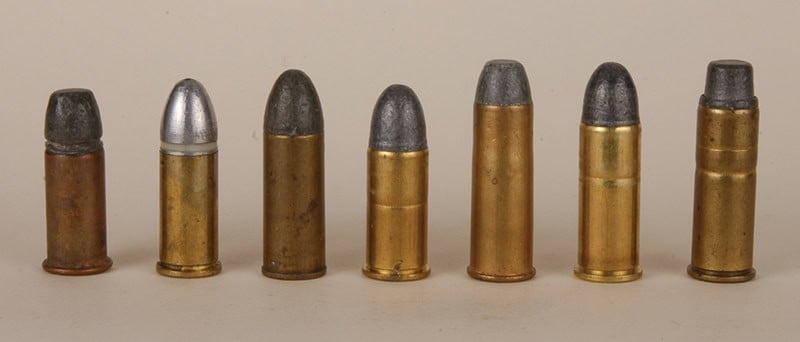
Some of the significant .44 caliber American revolver cartridges.
Left to right: .44 Henry, .44 American, .44 Colt, .44 Russian, .44WCF (.44-40), .44 Special, .44 Magnum.
History’s Mystery
Although Colt and Remington used .44 caliber in their cap & ball revolvers, it was Smith & Wesson that got the ball rolling on .44 caliber metallic cartridges in 1870. And, they did it by chambering their first Model No. 3s for a Winchester “rifle” cartridge. Yes, I said rifle cartridge. That was the .44 Henry rimfire, and it was a mighty puny rifle cartridge, what with a 200 grain bullet with 23 to 28 grains of blackpowder. It had to be puny if a relatively weak top break handgun mechanism could safely hold it.
Smith & Wesson sent their new Model No. 3 to the U.S. Army for testing and they almost immediately sent it back to them saying to be considered, the car-tridge had to be centerfire. Smith & Wesson accommodated the army’s desires but didn’t change the round substantially otherwise. Not very imaginatively they simply called the new cartridge the .44/100; meaning simply the bullet was .44/100ths of an inch in diameter.
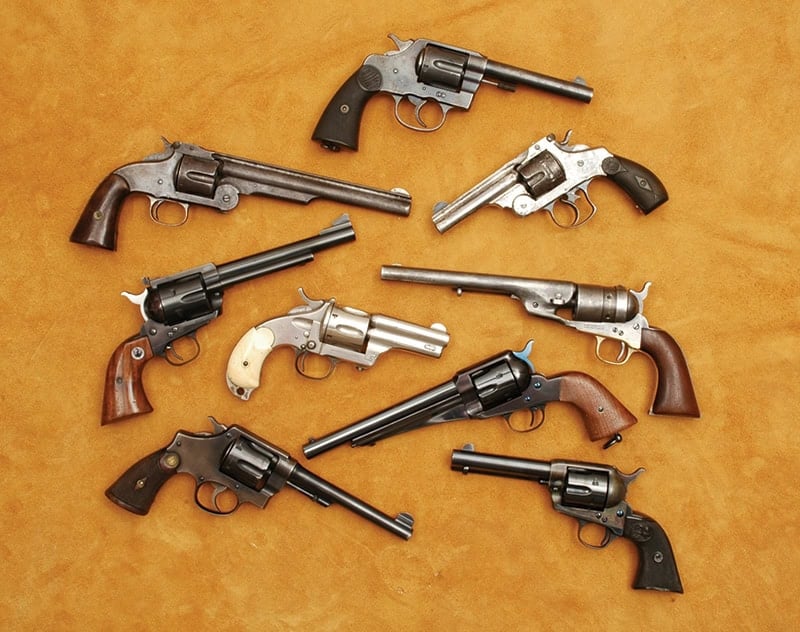
American .44 caliber revolvers came in a wide variety of types.
Left to right, top row: S&W 1st Model No. 3, Colt New Service, S&W Model 1881 DA.
Middle row: Ruger Blackhawk, M&H Pocket Army, Colt Richrds Conversion.
Bottom row: S&W Hand Ejector 2nd Model, Remington Model 1879, Colt Frontier Six Shooter.
To the company’s delight, the govern-ment bought it. At least they bought 1,000 revolvers so chambered, which Smith & Wesson delivered to them in 1871. These were spread in U.S. Cavalry units throughout the west, and it’s worth noting modern archaeology has proven that no fewer than four of them were used in the Battle of the Little Bighorn in 1876. That’s interesting because the Colt SAA .45 had been standard issue in the 7th Cavalry since 1874. They were likely officers’ privately owned handguns or perhaps were used by Indian warriors.
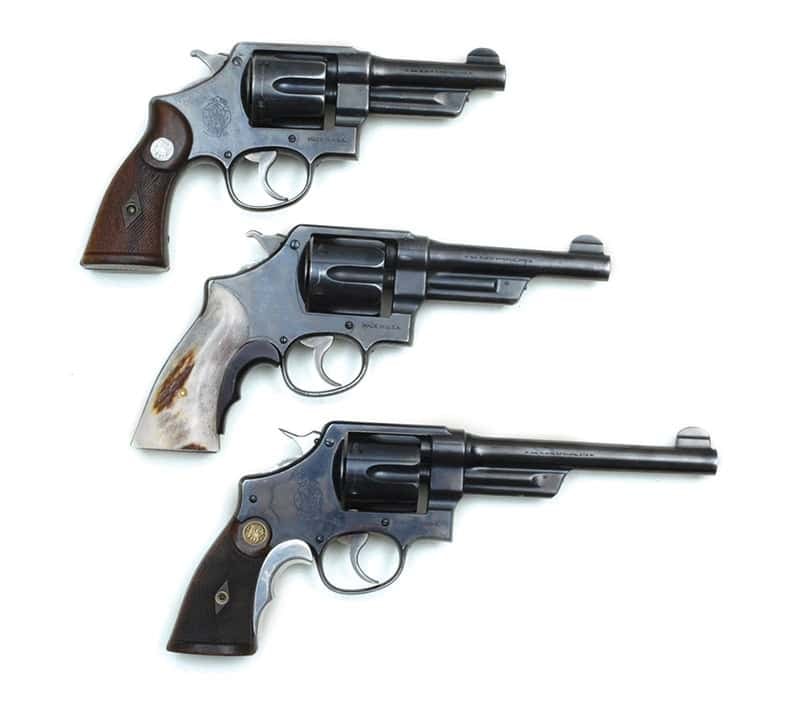
Smith & Wesson made their Hand Ejector .44s in three standard barrel lengths.
These are the Hand Ejector, 3rd Models also called Model 1926s in 4", 5" and 6.5".
Komrade .44
Then the Russians stepped into the pic-ture. They thought the new Smith & Wesson revolvers were pretty nice, but thought the .44/100 cartridge was a stinker. Why? The bullet was the so-called “heel-type”, with a reduced diameter shank fit-ting inside the cartridge case, and its lubri-cant being in grooves on the outside of the bullet. They were right. That wasn’t a real bright idea, since all sorts of crud stuck to the lube and was fired down those nice shiny barrels. On the plus side it probably made for lethal if slow acting wounds.
The Russians pointed out that if S&W made their bullets the same diameter as the inside of the cartridge case and their barrels to match, then the whole shebang would work better. Duh? This new cartridge was appropriately called the .44 Russian, and then Smith & Wesson retroactively named their .44/100 round the .44 American. The latter cartridge was America’s first reloadable handgun round, and the former was the first American handgun round to be capable of true accuracy. It has been written that target shooters of the late 1800s could put five .44 Russian bullets into a 3″ circle at 50 yards using target-sighted Smith & Model No. 3 revolvers. That’s impressive even by today’s standards.
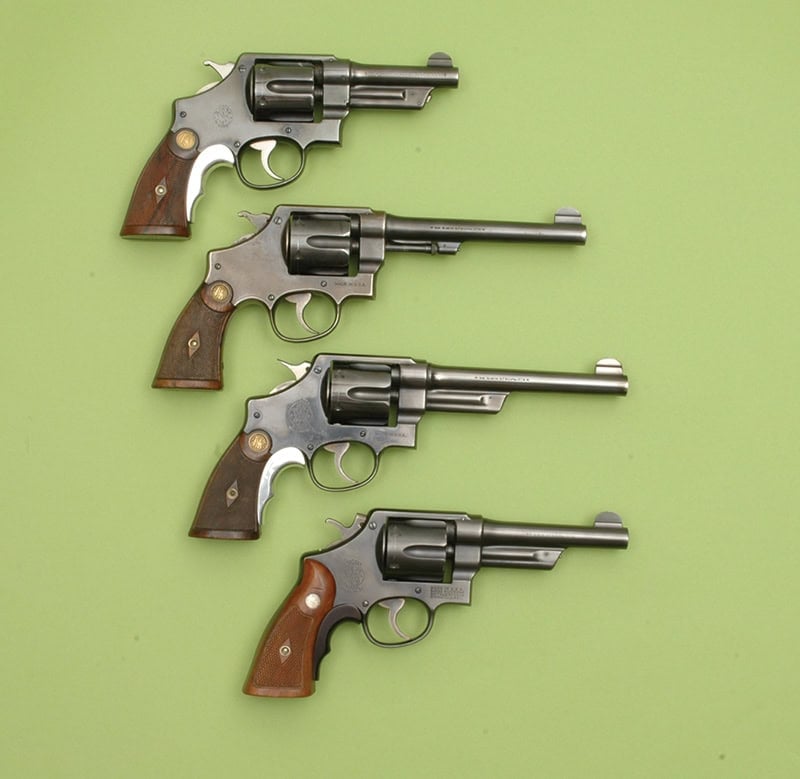
Smith & Wesson Hand Ejector .44 Specials.
Top to bottom: 1st Model (Triplelock), 2nd Model, 3rd Model, 4th Model.
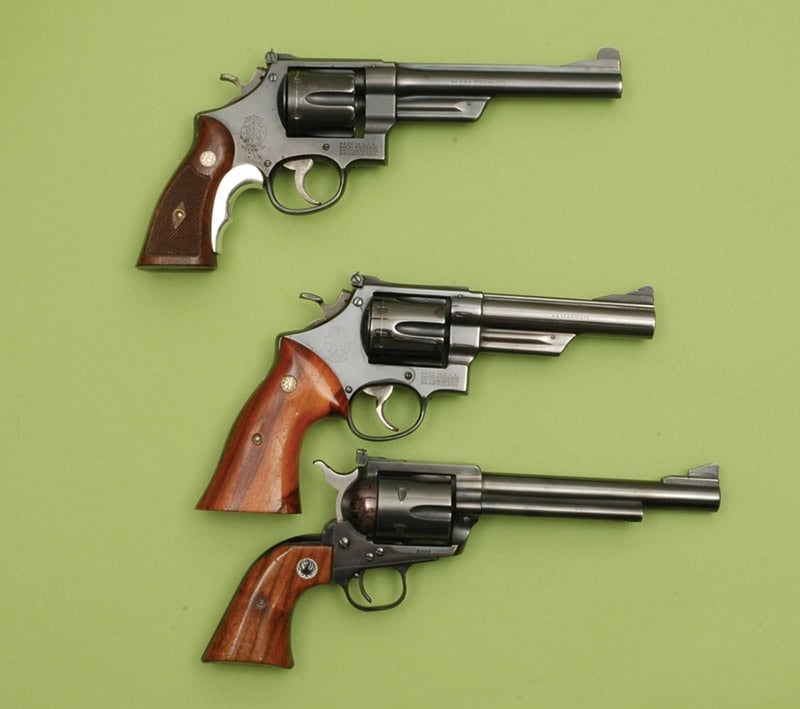
The main revolver used in experiments by Elmer Keith, the S&W Model 24,
lead to the introduction of the .44 Magnum.
Top to bottom: Ruger Blackhawk, S&W pre-Model 29, .44 Magnum.
A brief look at those early Smith & Wesson Model No. 3s is appropriate —they changed quickly because the Russians were paying in gold. When they asked for something different they got it. The S&W Model No. 3 went through four distinct revisions. From 1870 to 1872 there was the first version chambered for .44 Henry rim-fire, .44 American and .44 Russian. It had the early plow handle shape of grip, and was mostly made with an 8″ barrel.
In 1872 came the 2nd Model Russian. It had a “knuckle” at the top of the grip which changed it into a saw-handle shape, and the strange looking spur on the trigger guard. Its barrel length was 7″ and the only caliber offered was .44 Russian. Then in 1874 came the 3rd Model Russian, which retained the grip and trigger guard spur features, but added a large screw on the topstrap. That was a cylinder release fea-ture. Barrel length was shortened to 6.5″, and it was made in both .44 Russian and .44 Henry rimfire calibers; with most of the latter ones going to Turkey.
In 1878 Smith & Wesson revamped the Model No. 3 into the New Model. Its fea-tures were so many they can’t all be described here. Suffice to say the New Model remained in the S&W catalog until 1912. In the 1880s S&W also had a Model 1881 Double Action in .44 Russian.
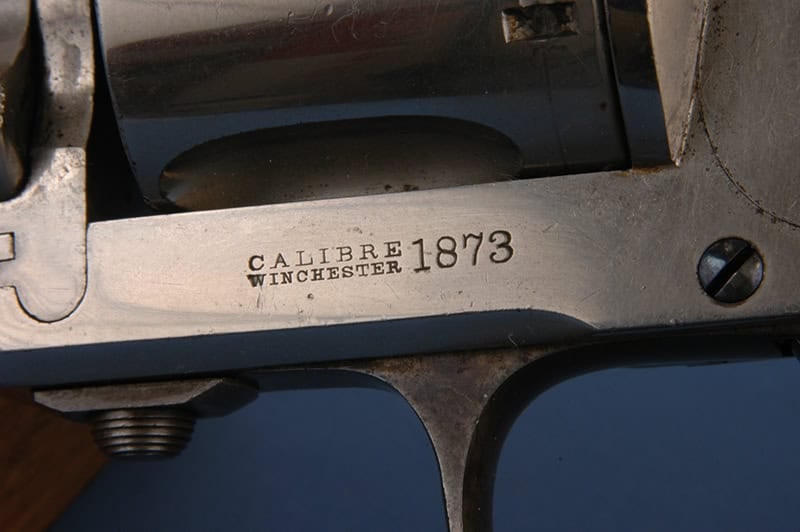
When Merwin & Hulbert revolvers were made in .44 WCF caliber this is how they were marked.
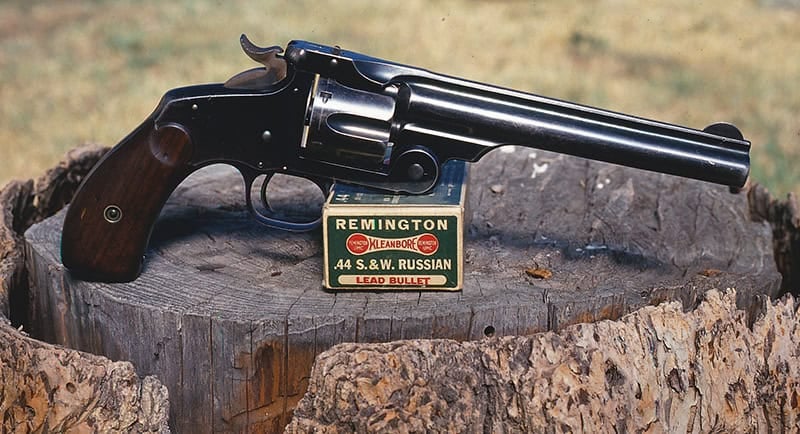
For 30 years the primary big bore revolver in Smith & Wesson’s catalogue was
the New Model No. 3 chambered for .44 Russian.
Colt’s Ideas
All this time Colt wasn’t just sitting around. In 1871 they began assembling left over cap & ball parts into “conver-sions”. The first was the Richards Con-version, with a second one being called the Richards/Mason Conversion. Both were chambered for the .44 Colt car-tridge; another heel-type bullet affair. The U.S. Army also bought about 1,200 of these in the early 1870s and spread them among cavalry units in the west.
After the official adoption of the Single Action Army in .45 caliber in 1873 Colt was too busy with their manufacture to worry much about .44s for a couple of years. Then in 1875 they made a special run chambered for .44 Henry rimfire, and these even had their own serial number range of one through 1800.
Late in 1877 or early 1878, someone at Colt finally realized that Winchester’s hot selling new “rifle” cartridge would fit in the SAA. This was the .44 WCF, and again it was pretty puny as far as rifle car-tridges went, but was a humdinger in handguns. It used 40 grains of black-powder under 200 grain bullets, and it left all of Smith & Wesson’s .44s in its dust. They were lucky to break 750 fps regard-less of bullet weight while the .44 WCF could just about make 1,000 fps.
Out west the town folk got along with the little .44s, but those people going into the wilderness liked the COLT FRON-TIER SIX SHOOTER, which is what the company saw fit to name their single actions when chambered for the .44 WCF. Around the beginning of the 20th century Colt also offered their New Service double action in .44 WCF and .44 Russian and later the .44 Special too.
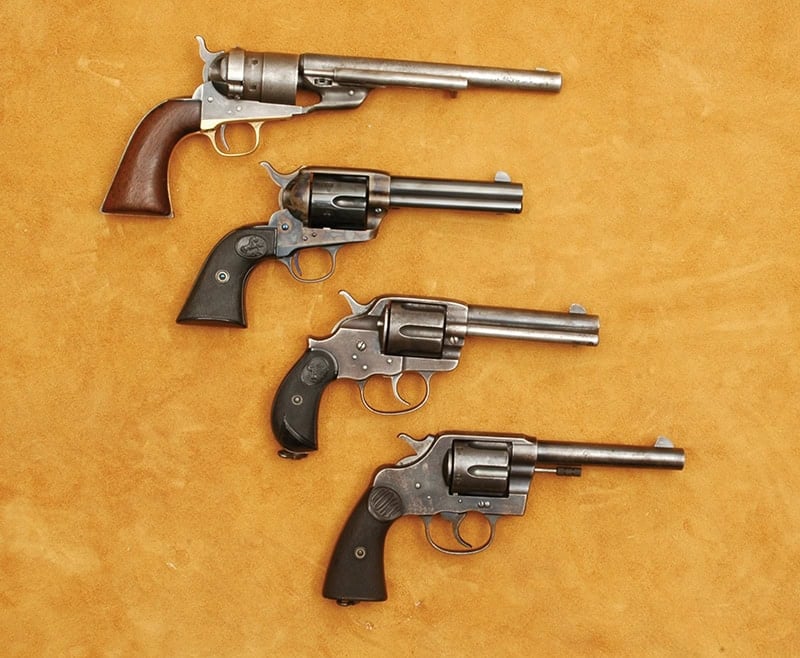
Colt made four basic versions of .44 caliber revolvers.
From top: Colt Richards Conversion, Colt SAA, Colt Model 1878DA, and Colt New Service.
The More The Better
Other companies followed Colt’s lead in borrowing the .44 WCF for handguns. Remington did so with their Models 1875 and 1890, as did Merwin & Hulbert in their uniquely functioning revolvers. Instead of caliber stamping their revolvers .44 WCF or .44-40 M&H marked them “Calibre Winchester 1873”. In those days firearms and ammunition buyers must have been smarter. Can you imagine what kind of lawsuits such a cal-iber marking would cause today?
Smith & Wesson even made a special run of their Model No. 3s with cylinders long enough to accommodate the .44 WCF, and also added it to their Model 1881DA. Colt eventually put the .44 WCF in two other models — the Model 1878DA and New Service.
After the flurry of activity in the 1870s the .44 caliber handgun situation was qui-escent for decades. That’s when Smith & Wesson saw fit to bring out both their new N-frame revolver and its .44 S&W Special introductory cartridge. The new .44 was nothing more than the old .44 Russian round with case lengthened from .97″ to 1.16″. Bullet weight, style, diameter and even velocity remained the same. That’s right; instead of the new larger .44 Special cartridge being the “big brother” to the smaller .44 Russian; it was actually its bal-listic twin. For most of their production life both cartridges featured 246-grain round-nose, .429″ bullets at a nominal 755 fps.
Regardless, the .44 S&W Special remained the top dog of Smith & Wesson big bore handguns for nearly 50 years. During this time the guns themselves pro-gressed through four generations. These are aptly called 1st, 2nd, 3rd and 4th Model Hand Ejector, .44 Specials. Most of the changes made to them were internal. In fact the only really noticeable outward change was between 1st and 2nd Models, when the shroud around the ejector rod was dropped. It was put back for 3rd and 4th Models.
Essentially all four versions had the same options. They were made in either full blue or full nickel-plated finishes, and standard barrel lengths were four, five, and 6.5″. Also each version was made either with fixed sights or adjustable target-type sights.
During the first half of the 20th cen-tury the only other notable American handgun manufacturer turning out big bore revolvers was Colt, and they put S&W’s .44 Special in their New Service and SAA revolvers.
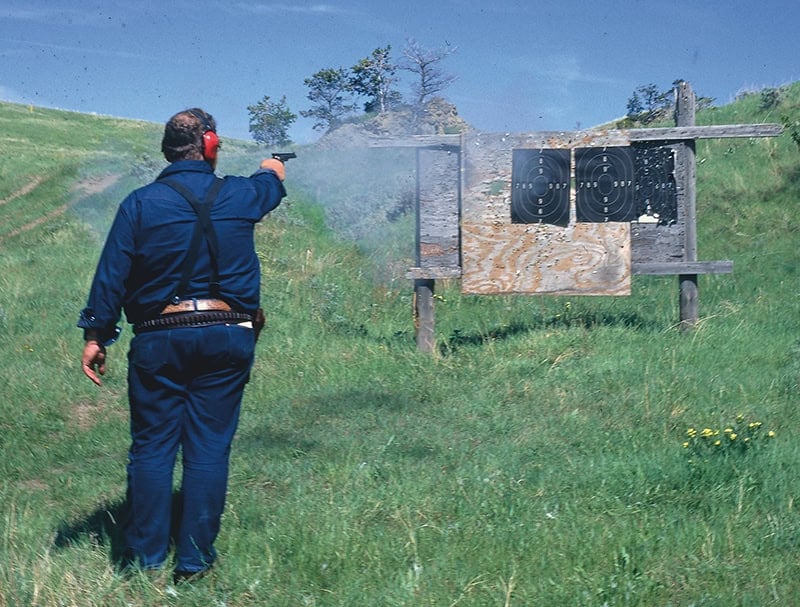
Tank on the trigger.
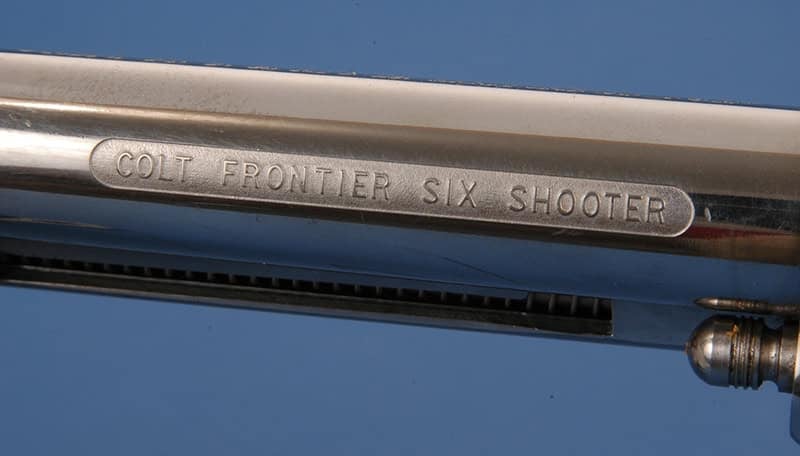
Colt gave the Single Action Army revolver when chambered for .44 WCF
its own name — Colt Frontier Six Shooter.
.44 Fever
It was the adjustable-sighted, S&W 4th Model Hand Ejector .44 Special (late-named Model 24) that was most likely the inspiration for the .44 Remington Magnum. Elmer Keith had been touting hot-loaded .44 Specials and using that handgun to fire them in. Smith & Wesson decided that was a good act to follow and in the last days of 1955 got the brand new .44 Magnum revolvers out the door. Ruger was right on their heels with a single action Blackhawk .44 Magnum.
To say that for 50 years now the .44 Magnum has been successful would be a drastic understatement. It has been wildly successful! Although it is a bear to shoot from a recoil standpoint, and with full charge loads is really only useful for hunting big game or defending yourself from some large predator, .44 Magnums have been sold everywhere handguns are allowed. I won’t go into great detail about all the handguns that have been chambered for the .44 Magnum. Besides, with this year being the 50th anniversary of the cartridge’s introduction I’m sure there will be plenty of articles in the gun press detailing its history.
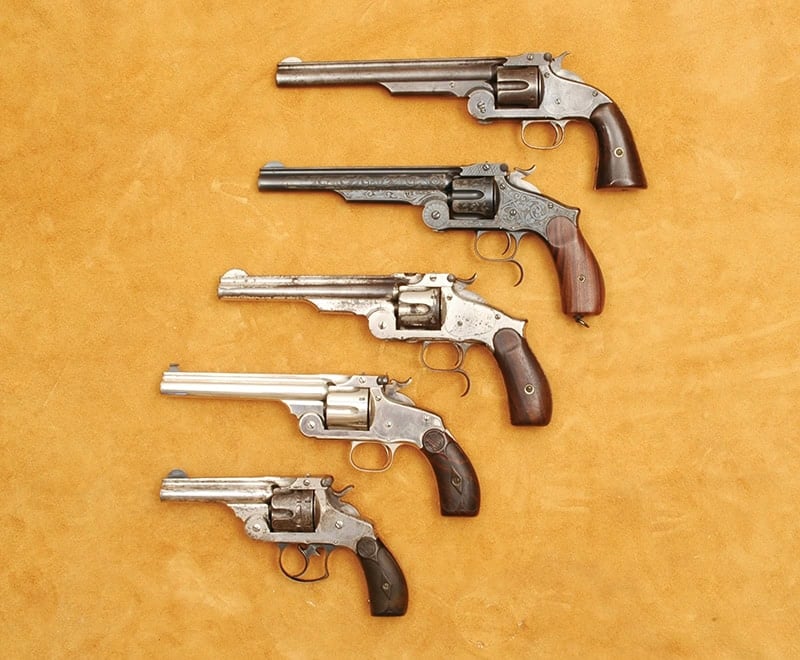
Smith & Wesson had many versions of .44 caliber revolvers in the late 1800s.
From top: 1st Model Russian & American, 2nd Model Russian, 3rd Model Russian,
New Model Russian and Model 1881DA.
American history is full of .44s. Bob Ford supposedly killed Jesse James with a bullet to the back of the head from S&W New Model .44 Russian. Sheriff Pat Garrett killed Billy the Kid with a shot through the heart from a Colt Fron-tier Six Shooter (.44-40). Both .44 Amer-ican and .44 Colt cartridge cases were dug up at the site of the 1874 Adobe Walls fight between buffalo hunters and Indians. I grew up in Mingo County, West Virginia, the site of the Hatfield/McCoy feud and the vicious Coal Mine Union Wars of the 1920s. There were plenty of S&W .44 Specials floating around gun stores and pawn shops there when I was a kid. And the stories of .44 Magnum use by both police and outdoorsmen are legend.
We’re now deep into the autoloading era of handguns world-wide, but I doubt if the cult of the .44 caliber revolver in America will ever totally die out. And that’s a good thing.
Get more wheelgun content every week!
By submitting this form, you are consenting to receive marketing emails from: . You can revoke your consent to receive emails at any time by using the SafeUnsubscribe® link, found at the bottom of every email. Emails are serviced by Constant Contact