Innovative Accuracy
Dan Wesson Revolvers
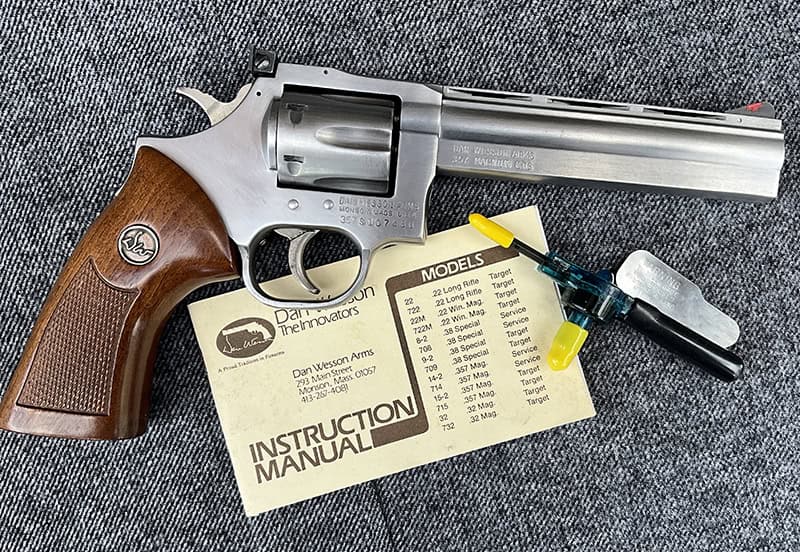
Dan Wesson revolvers were high quality with unmatched accuracy. Image by Alan Garbers.
Dan Wesson is well known for its high-end 1911-style semiautomatics, but a Dan Wesson revolver started my four-decade journey to who I am today. In 1983, I was coming to the end of my enlistment in the USCG. While I enjoyed burning up Uncle Sam’s free 5.56 NATO and 45 ACP ammunition, I didn’t actually own a firearm.
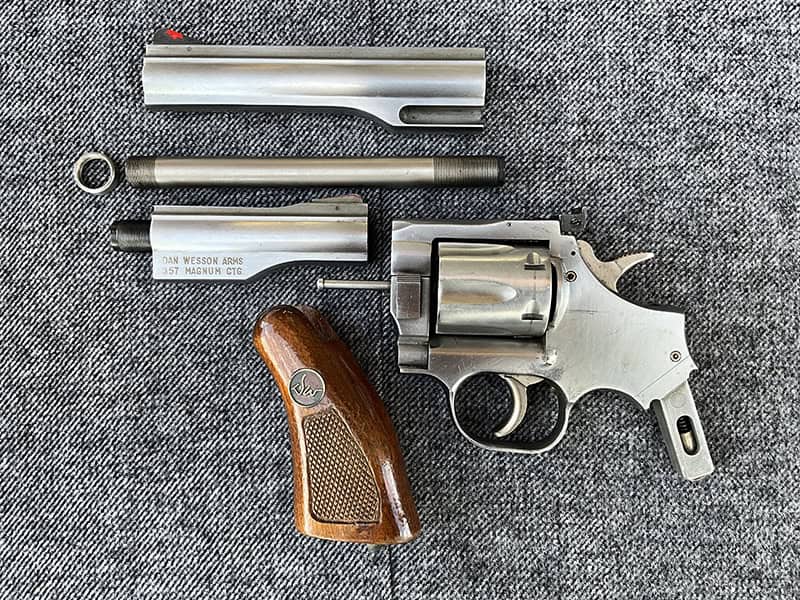
The user could change barrels and grips within minutes. Image by Alan Garbers.
I pored over gun mags, weighed my meager finances, and decided on a Dan Wesson .357 Magnum stainless steel revolver with a six-inch heavy barrel for the exorbitant cost of $250. This was not a spur-of-the-moment decision. I read everything I could and carefully weighed the pros and cons. Honestly, the pros were many, and the cons were, well, zero.
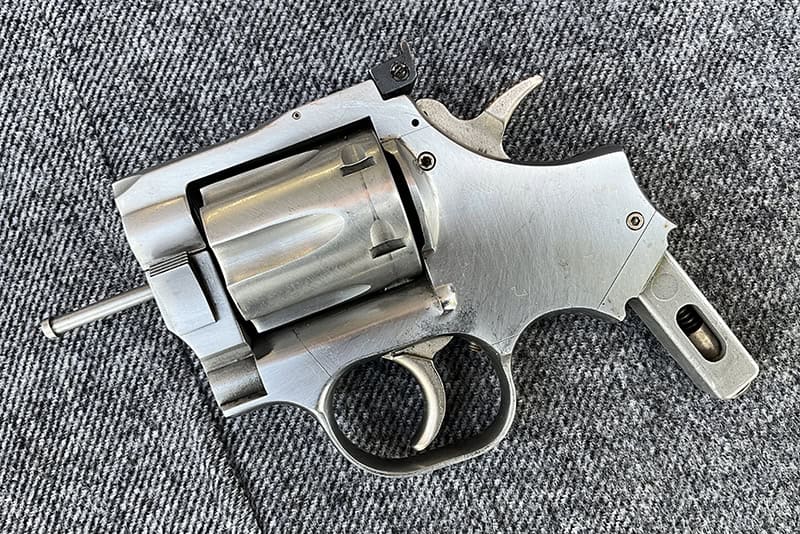
The Dan Wesson 357 provided strength and innovation, including cylinder latch placement,
which provided the best accuracy and ease of use. Image by Alan Garbers.
Dan Wesson descended from the Smith & Wesson dynasty, but when the family sold the business, Daniel Wesson decided to take his revolver innovations in a different direction, turning the gun world on its head.
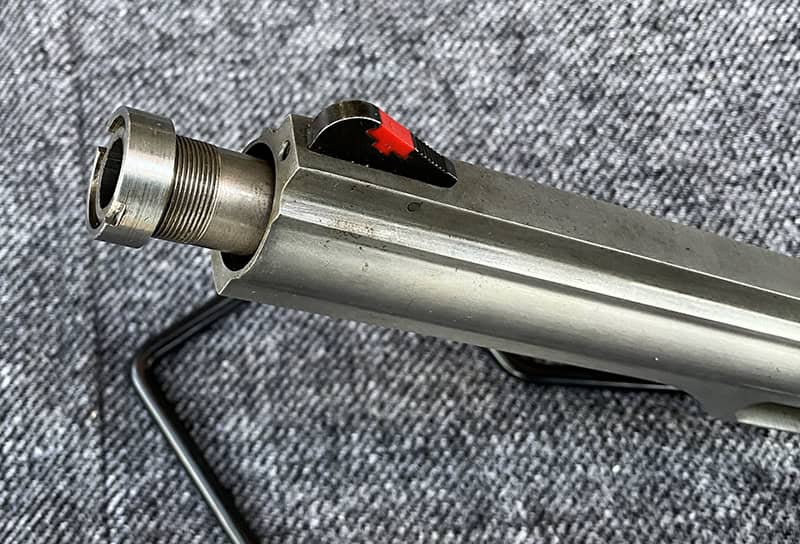
The key to the design is the barrel nut pushing against the shroud, locking the barrel into
the frame threads, keeping the assembly under constant tension. Image by Alan Garbers.
The biggest advancement was the ability to remove and change the barrel with a simple set of provided tools. No longer did it require a skilled gunsmith. Anyone could swap out the barrel in a matter of minutes. What made this so simple was the use of a barrel, a shroud, and a barrel nut. By removing the barrel nut, the outer shroud slid off, leaving the barrel to be removed with just two fingers. The design was genius and provided another benefit: increased accuracy. During assembly, the barrel nut was tightened, which applied pressure against the shroud, which in turn transferred to the frame and pulled the barrel forward in the frame threads, placing the barrel under tension. This provided exceptional accuracy, and barrels could be had from two inches to ten inches, in some cases even longer.
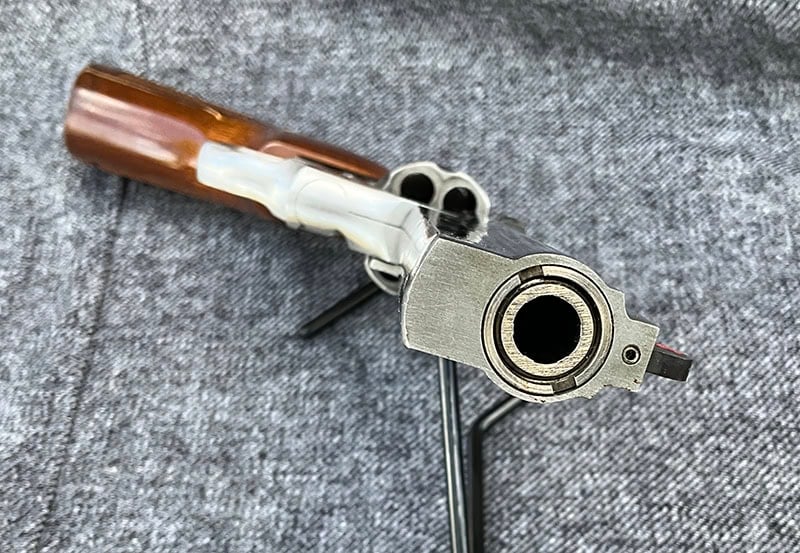
The flush barrel nut was recessed into the shroud. Image by Alan Garbers.
Other features included the placement of the cylinder latch at the frame’s forward end. This provided precise chamber-to-barrel alignment and made opening the cylinder a one-handed affair. The design also had a small grip boss, allowing custom grips to be designed in just about any configuration, big or small.
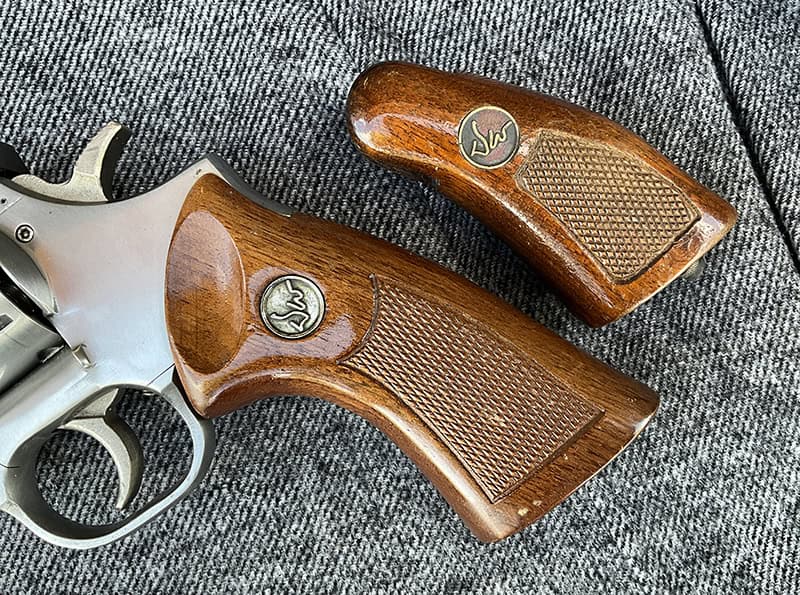
Dan Wesson and grip makers offered grips in many designs and types of wood. Image by Alan Garbers.
At the time, Dan Wesson revolvers had a negative image because the first generation used an external barrel nut many found aesthetically offensive, leading to them being called “ray guns”. The external barrel nut was soon replaced with a recessed nut, which provided a smooth barrel face. Other silly arguments arose, and trust me, I heard them all. But they couldn’t argue with the accuracy.
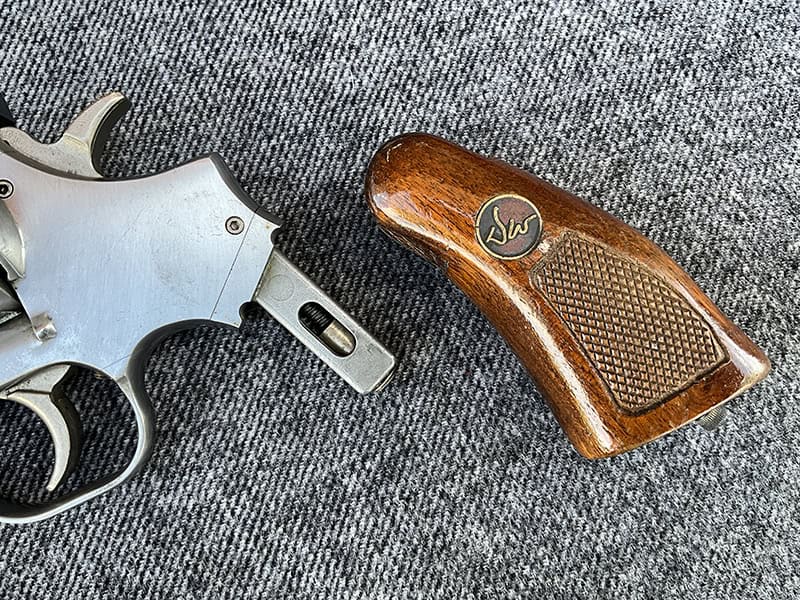
The design of the grip boss allowed just about any grip style or size. Image by Alan Garbers.
Dan Wesson revolvers were offered in .22 rimfire, .357 Magnum, .41 Magnum, .44 Magnum, .357 Maximum, and many other powerful cartridges. The IHMSA silhouette-shooters flocked to the brand for its extra-long barrels, which now fetch a premium. Extremely popular were the Pistol-Pacs, which included the frame, grip, four barrels in progressive length from two to eight inches, a padded case, tools, and an embroidered patch. Pristine original Pistol Pacs sell at a premium today.
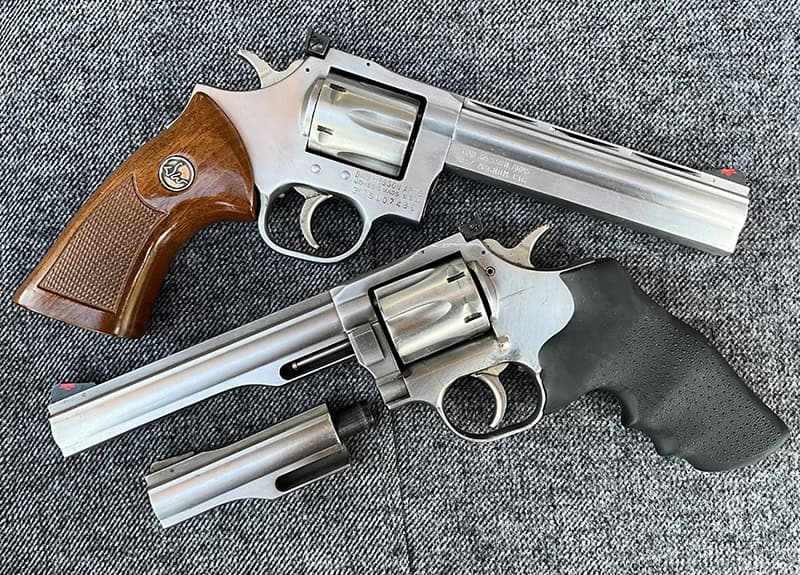
The only thing limiting how many ways a Dan Wesson revolver could be configured
was the size of the shooter’s wallet. Image by Alan Garbers.
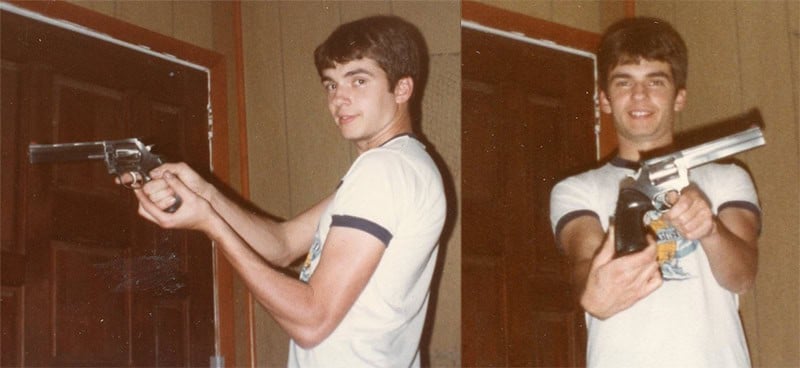
In 1983, the author was proud as punch of his new Dan Wesson 357.
While the quality of the Dan Wesson line was superb, it wasn’t enough to keep shooters from turning to semi-automatics. Dan Wesson followed the trend and began offering top-end 1911-style autos and still does today. While the revolver line made a brief resurgence a decade ago, it was phased out again. Will it make a reappearance? The Dan Wesson rep I spoke with at Shot Show just laughed off my question and shook his head.
With a growing family in the early 1990s, my beloved Dan Wesson was sold to pay bills. Thirty years later, gone but not forgotten, I found an exact replacement, and its true love all over again!
Get More Revolver Content Every Week!
By submitting this form, you are consenting to receive marketing emails from: . You can revoke your consent to receive emails at any time by using the SafeUnsubscribe® link, found at the bottom of every email. Emails are serviced by Constant Contact