Kimber CDS9 Threaded:
Small Gun, Big Attitude

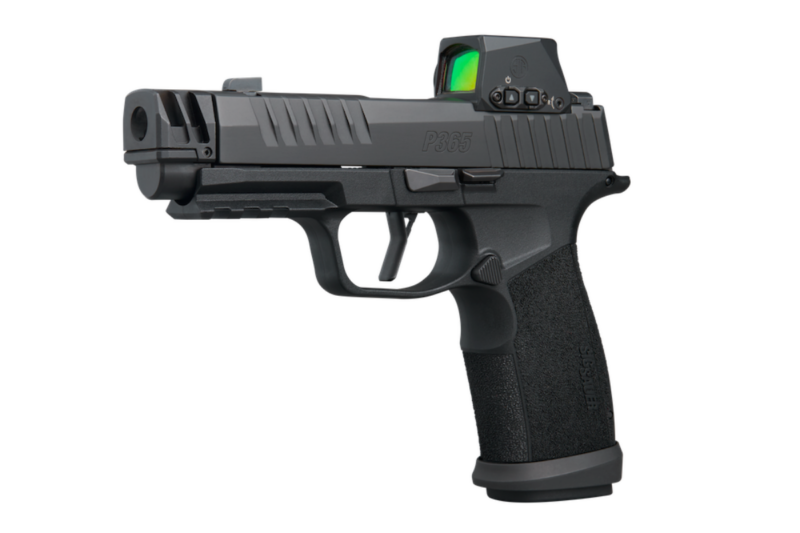
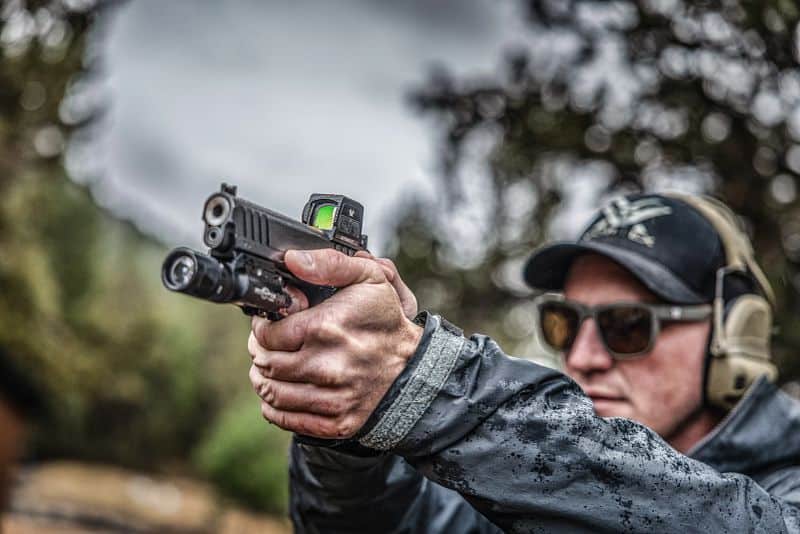
The senior sibling has all the extras like a threaded barrel and optics cut slide.
There's a model just like it without the threaded barrel.
When pondering the unique value proposition of this pistol, I was going to describe it as a “miniaturized combat pistol optimized for carry.” Then I looked at what the “CDS” name stands for. It turns out CDS represents “Covert Double Stack.” Close enough.
Bottom line? It’s a little pistol that’s big. At least enough to meet two key criteria for a self-defense gun. First, it’s hand-filling enough to manage 9mm ammo comfortably, which means it’s pleasant to shoot. Which means you’ll be more inclined to practice with it. Second, it’s got the respectable capacity to meet any reasonable carry need, and even enough for a “home defense” pistol. Two for one!
CDS9 Family
The Covert Double Stack is a family of four as I write this. There are two Classic models, one optics-ready and the other with iron sights only. Those start at an MSRP of $795. The CDS9 [OR][RL] is also optics-ready, but adds some goodies like front and rear “snake scale” slide serration, a front accessory rail, black and gray two-tone frame and slide, and “looks kinda like wood” VZ Frag G10 grip panels. The CDS9 [OR][RL][TFS] has all that plus a threaded barrel.
Dimensions vary just a bit with configuration, but in the standard 13-round configuration, you can plan on about 5” tall, 6.2” long and 1.1” thick with its double-stack magazines. The non-threaded barrel length of this one is 3.18” while the threaded version brings that to 3.64”.
Magazines
The model shown here is the Cadillac, you know, with all the bells and whistles. Its MSRP is $1,075.
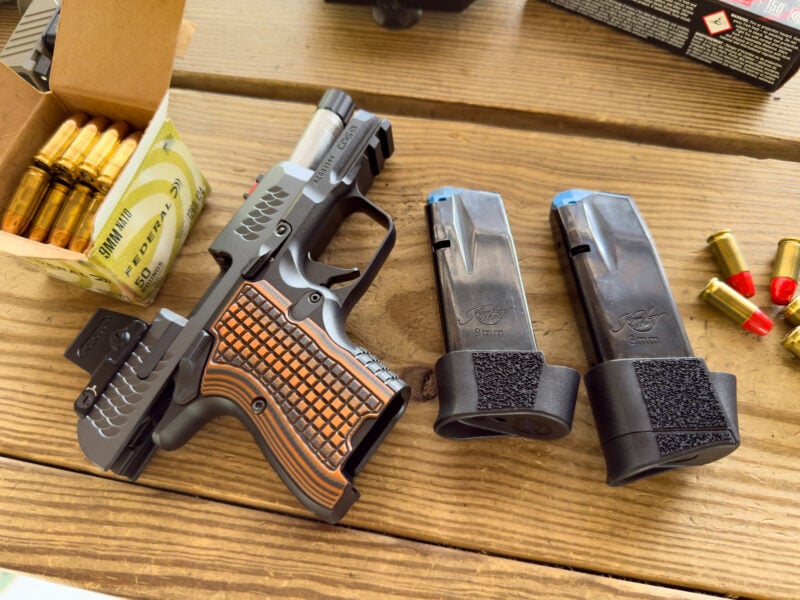
This model came with two slightly extended magazines. The base pads of the magazines are actual grip extensions, complete with texture on both sides and a small pinky hook at the bottom. This CDS9 comes with two magazines: the default 13-round and an extended 15-round version. All are steel and drop freely when released. Even the 13-round was plenty long enough when installed to allow all three fingers of my firing hand to rest comfortably on the front of the grip. You can also get 10-round magazines.
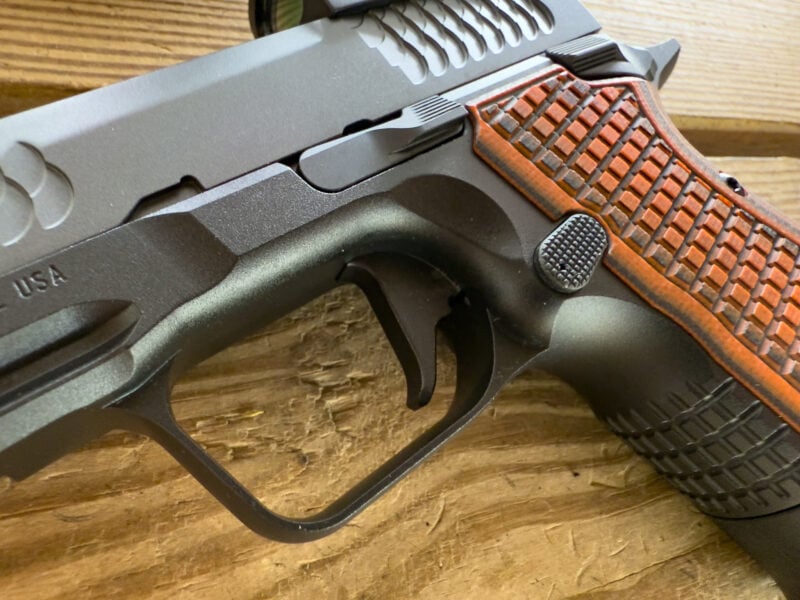
The magazine release button is larger than most simple buttons — a nice feature.
Ambi. Really.
The CDS9 is truly ambidextrous, meaning controls are ready to go on both sides. In this case, both the safeties and the slide lock levers are already present, not just reversible. The other thing I notice about the safety levers is that, as far as my naked eye can tell, they are identical on both sides. You don’t have the dominant right-hander safety on one side and an afterthought downsized safety lever on the other. They are also cleverly designed so that they’re inset with the grip. Nothing really protrudes, but I found them very easy to positively engage and disengage with my firing hand thumb. I like them a lot.
The one thing that is reversible is the magazine release. It’s an oblong textured button, again inset with the grip. By default, it’s on the left-hand side of the pistol, but it’s still easy to activate with the firing hand’s thumb.
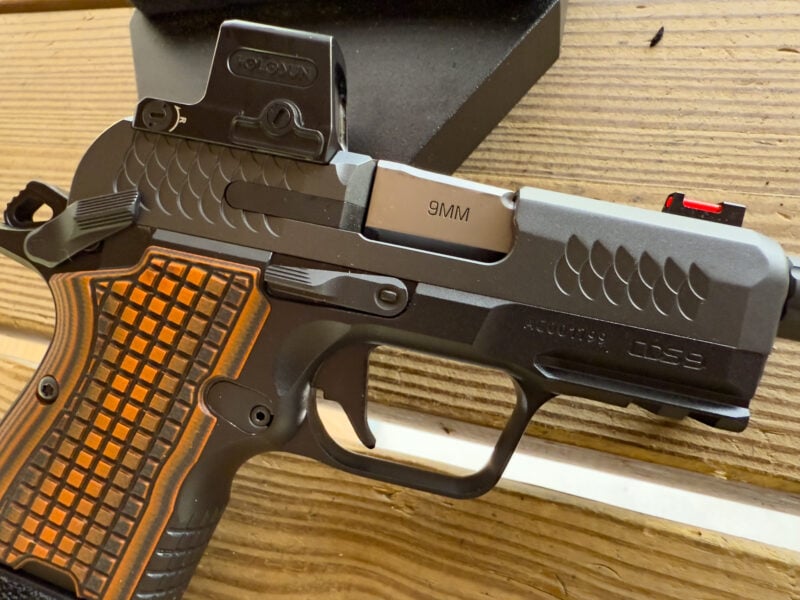
Tom mounted a Holosun EPS Carry optic for testing.
Optics Ready
The CDS9 comes ready to go in all model configurations for mounting an optic. The footprint is the RMSc type, so plan on using compact optics on this pistol, which is perfectly appropriate given its overall size and dimensions.
The cover plate for the slide cut that is installed by default includes the dovetail cut for the iron rear sight, so that goes away when you install an optic. That sight is all black with fine horizontal serrations to reduce glare. Given the pistol’s overall compact size, there is simply no room for an additional iron sight behind the optic mounting area, as the ejection port and rear of the slide and hammer are pretty close together. The RMSC barely fits between the two. The front sight is a fiber-optic model.
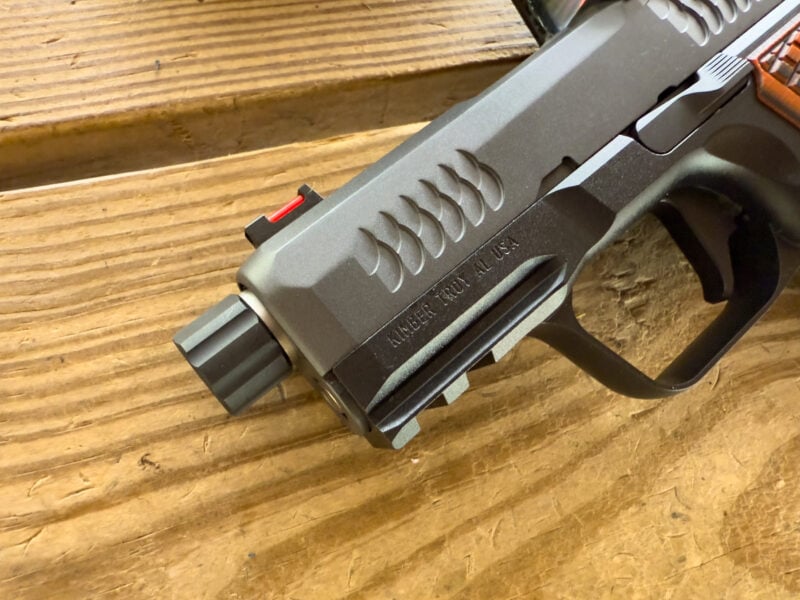
Note the flat trigger face.
Trigger and Handling
This is a single-action pistol, and the trigger face itself is relatively wide, flat, and has a straight design with a small hook at the base.
I used my Lyman digital trigger gauge to measure the pull weight and found it ranged from 4 lbs., 10 ounces to 5 lbs., 0.8 ounces consistently. The take-up is smooth, but again, if I were to be nitpicky, I would like the break to be a little crisper. But to be fair, this is a carry gun, not competition gear.
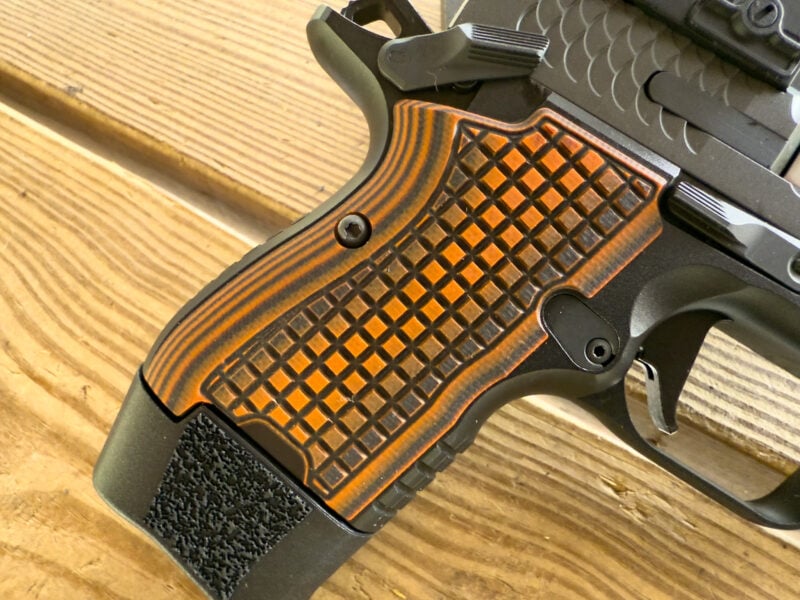
The grip panels have a wood-like appearance, but they're made from G10.
To Thread or Not to Thread
I requested the “loaded” version, complete with a threaded barrel. Given the capacity and adequate size for comfortable and confident shooting, this would make a fine home defense gun, too.
I’ve found the combination of a smaller, shorter gun with a suppressor is quite handy, and there’s a lot to be said for mounting a suppressor on a house gun. No blast, and if you ever have to fire indoors, it’s far less likely to “ring your bell” so to speak, keeping the ability to hear and communicate intact.
OK, you got me. Yes, there are valid reasons for the suppressed model, but part of the reason I requested this one is that it’s just fun. I had a great time at the range shooting this with a SilencerCo Osprey suppressor. No blast, dampened recoil, and a lot less noise allowed me to focus on the shooting!
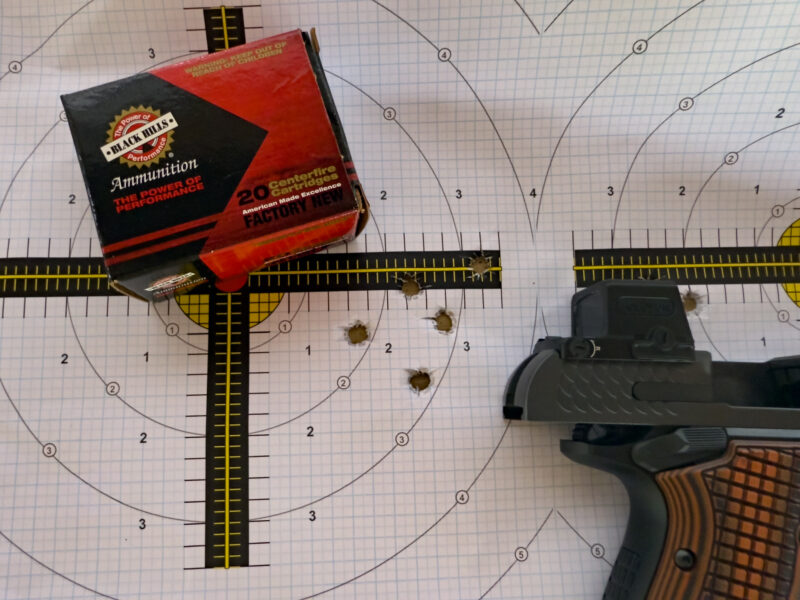
Tom did all accuracy testing from 25 yards.
Performance
I took the Kimber CDS9 to the range and, of course, I had to stick a suppressor on it. I brought along my SilencerCo Osprey suppressor and did almost all of the shooting with that mounted. I did want to get a feel for the freehand performance without the bulky suppressor up front.
I warmed up with some 9mm handloads, but did most of the “official” shooting with four different types of premium ammunition:
Black Hills 115-grain JHP
Federal Punch 124-grain
Hornady American Gunner 115-grain with XTP projectiles
Norma MHP self-defense ammo (a little lighter at 108 grains)
Shooting was pleasant. Clearly, this isn’t in the category of ultra-lightweight, ultra-compact, and that’s a good thing. The frame is aluminum, and of course, the slide is steel. So, the empty weight of this pistol as configured is about a pound and a quarter, which helps with 9mm recoil quite a bit, as does the wider grip to account for the double-stack design. It fits well in the hand, so it’s easy to control and doesn’t deliver a sting.
I did accuracy testing at a full 25 yards using a Ransom multi-caliber rest. This is about the best universal bench rest support I’ve ever used because it is just rock-solid stable. It’s the next best testing platform behind a full-blown Ransom vise setup.
I shot five-shot groups at 25 yards using all four types of ammo and recorded the following:
The Black Hills printed 1.85-inch groups
The Federal Punch produced 2.7 inches
The Hornady American Gunner gave me a 0.9-inch five-shot group
The Norma MHP clocked in at 3.7 inches
Perfectly solid results, especially for a compact pistol.
All in all, this is an enjoyable little pistol and ideal for concealed carry. Think in terms of the benefits of a larger classic 1911 type pistol with its single action operation, all metal design, and ease of shooting, combined with a package designed for carry and defensive use with its double stack magazine and compact size and weight.
Get more exclusive online content from American Handgunner delivered straight to your inbox. Sign up for our free American Handgunner Insider newsletter.