The Little Revolver With A Big Bite
The Forehand & Wadsworth British Bulldog
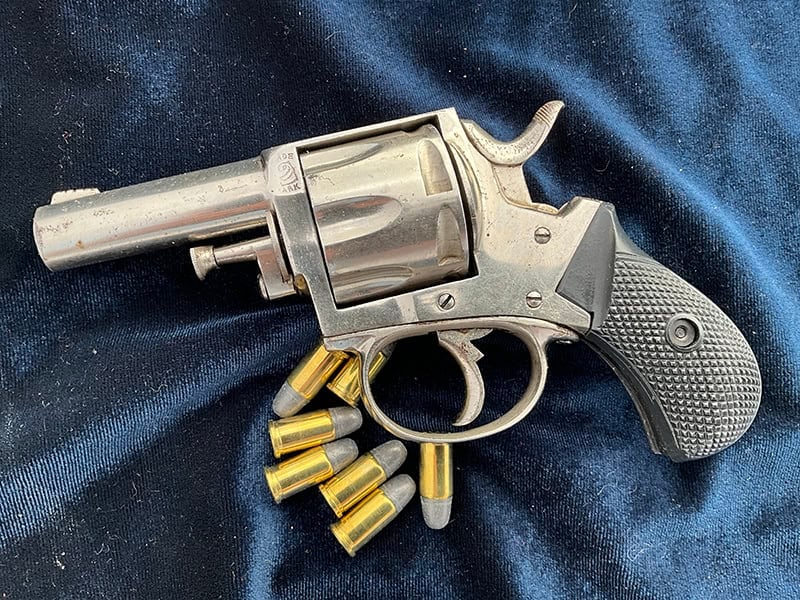
Bull-Dog revolvers were affordable, concealable, double-action, and reliable,
which made them the perfect hideout gun. Photo by Alan Garbers.
I seem to have a knack for finding guns when I’m shopping for a guitar. It has happened more than once. I am not going to ponder what that means, as I might not like the answer.
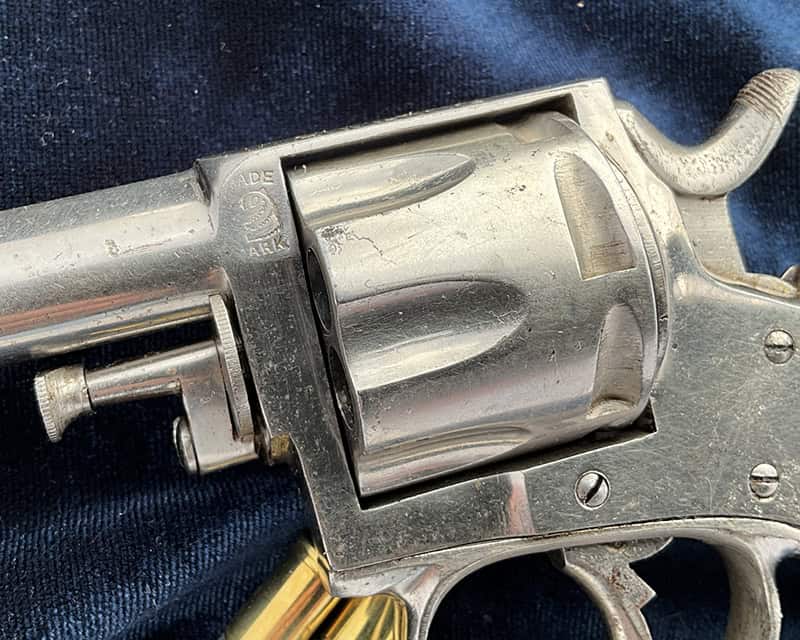
The Forehand & Wadsworth often has a Bulldog trademark on the left side of the frame.
Photo by Alan Garbers.
This time, I spotted a Forehand & Wadsworth seven-shot revolver chambered in .32 S&W British Bulldog inside the glass display case. Considering it was about 140 years old, the portion of the revolver I could see was in very good shape. Unfortunately, someone had butchered a set of modern Pachmayr rubber grips to fit it, giving it the appearance of a reject from an inner-city gun buy-back program. The shop owner wouldn’t let me remove the grips to ensure the frame was unmolested, but he did offer it to me at a price that made the risk worth it.
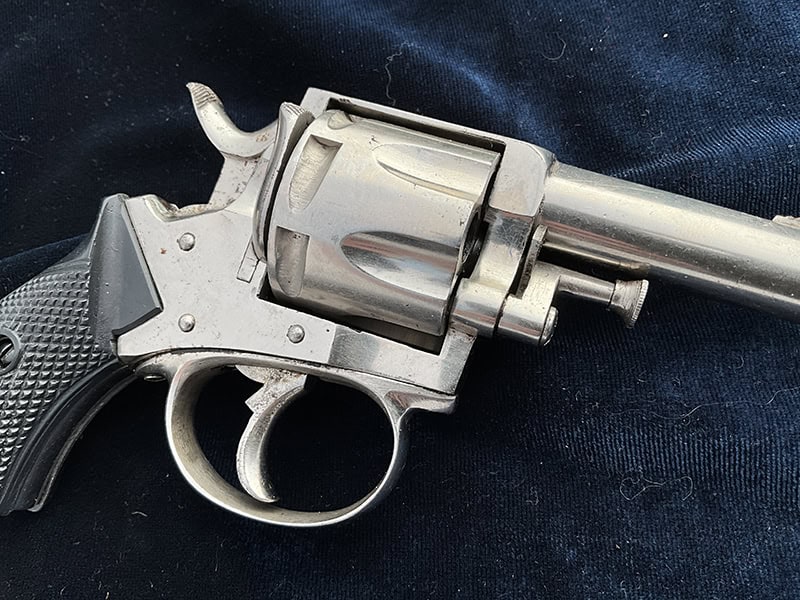
Economy of design provided reliability. Photo by Alan Garbers.
You may be wondering why I would want a cheaply made revolver chambered in an anemic cartridge. Yes, the Colt Peacemaker personifies the Wild West, but most towns had regulations against carrying firearms within city limits, so many citizens turned to smaller pocket guns. In fact, from the end of the Civil War until the early 1900s, experts estimate over 2.5 million pocket guns snuck their way into cash tills, nightstands, coat pockets, and silk purses around the country. Forehand & Wadsworth advertised that no gentleman should be without one of their Bulldog revolvers while walking the streets of New York at night. One could argue the warning is still true today!
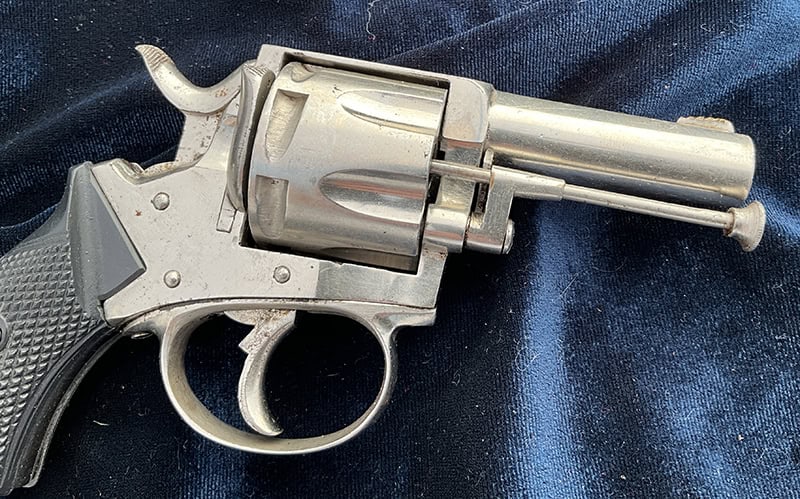
Loading and unloading the gun was simple, but not as fast as break-top revolvers.
Photo by Alan Garbers.
The Forehand & Wadsworth Bull-Dog, a knockoff of the Webley Bulldog, was cheap but reliable, selling for $3. The frame and barrel were made from a single piece of steel, making it stronger than break-top designs. The ejector was a removable pick used to poke out empty cases. While double-action, the cylinder spun freely until the hammer was cocked. The seven-shot revolver was more advanced than many competitors’ offerings and was available in several calibers. Forehand & Wadsworth produced well over 100,000 Bull-Dog revolvers between 1879 and 1890.
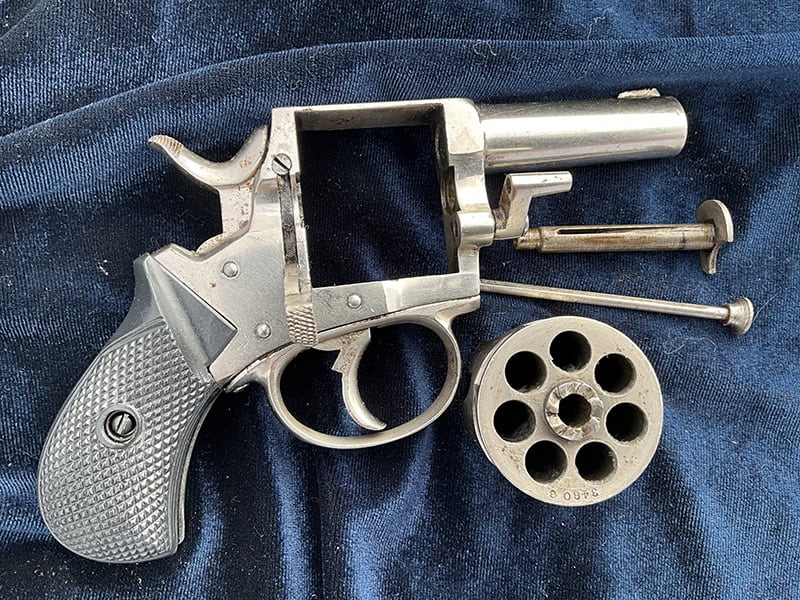
Teardown of the revolver is easily done without tools. Photo by Alan Garbers.
Once home, I removed the abomination that passed for grips to find the frame perfectly intact. It also exposed the serial number, which firmly placed the revolver in the 1882 timeframe. My next task was to find the correct replacement grips. After searching eBay and dozens of other gun parts resellers, I could not find any original grips, but I did find a reproduction set made by Triple K Brand. I am not confident in fitting grips, so I stopped with them a little proud of the frame. They are not perfect, but they bring the revolver back to its original appearance.
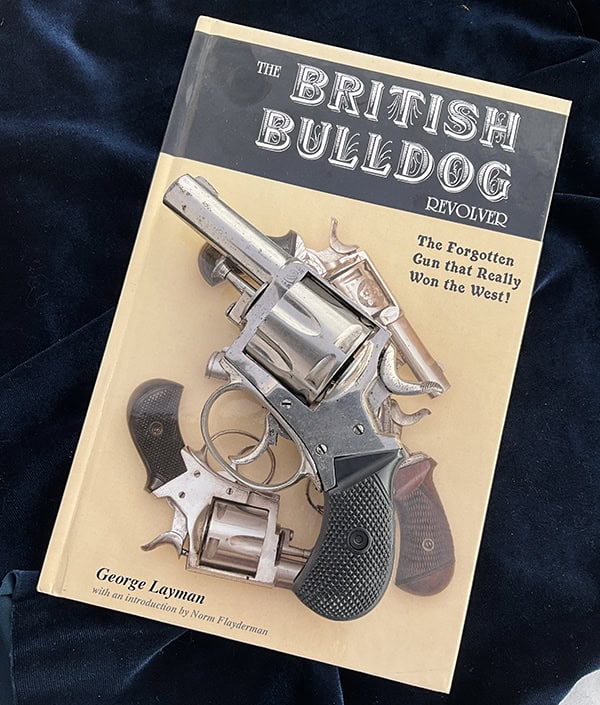
Any collector should have a copy of Layman’s
The British Bulldog Revolver. Photo by Alan Garbers.
These revolvers were made in the black powder era, so they were never proofed for modern propellants. While the .32 S&W is a low-power cartridge, I don’t want to have any accidents. In most cases, these revolvers were neglected, and corrosion slowly took its toll, which is what drew me to this specimen. Teardown was easy, and cleaning the gun removed a century of grime.
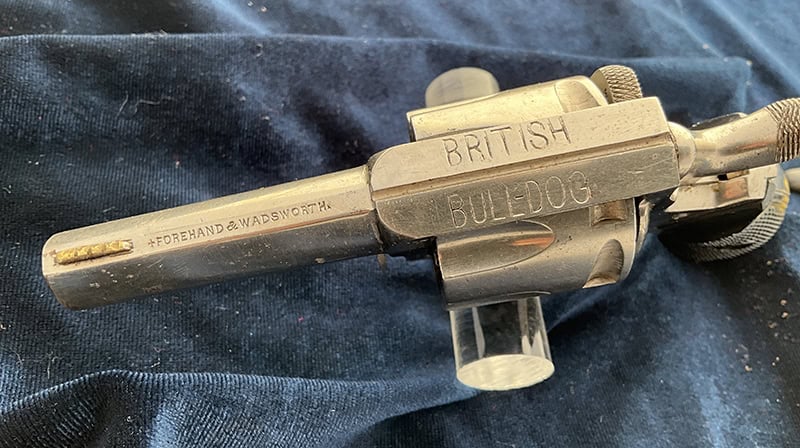
While most revolvers were branded BRITISH BULL-DOG, TEXAS, CALIFORNIA,
and INDIAN BULL-DOG revolvers were also popular. Photo by Alan Garbers.
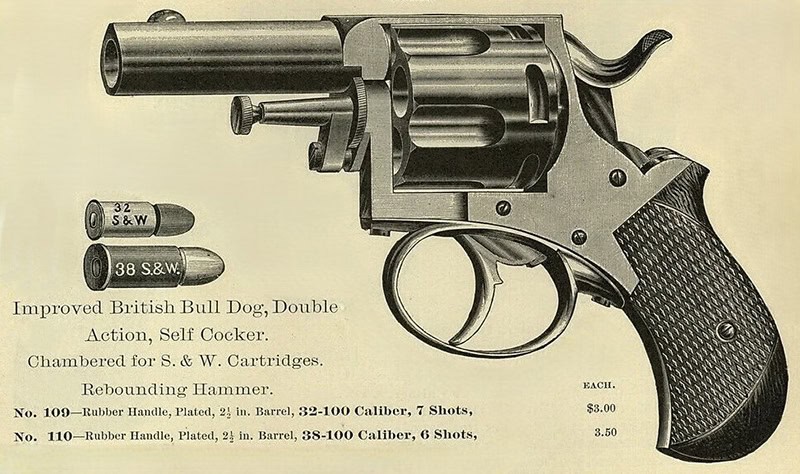
Simmons Hardware Company offered the British Bulldog in their expansive catalog.
From the author’s collection.
So, who originally owned this revolver? A barkeep, shopkeeper, madam, outlaw, or lawman? We will never know, but it’s fun to ponder. Since they are not well known to collectors, they are reasonably priced, and with the many variations like the Texas Bull-Dog, California Bull Dog, and Indian Bull Dog, they are fun to collect.
Get more wheelgun content every week!
By submitting this form, you are consenting to receive marketing emails from: . You can revoke your consent to receive emails at any time by using the SafeUnsubscribe® link, found at the bottom of every email. Emails are serviced by Constant Contact