The Open-Bolt MACs
The Worst of Absolutely Everything
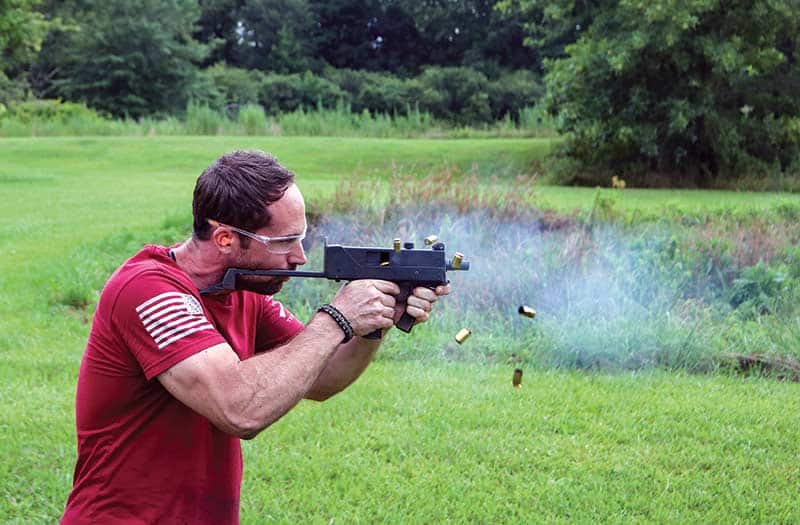
It’s a really god thing the Military Armament Corporation didn’t talk
Uncle Sam into replacing his M1911 pistols with MAC10 submachine
guns. Imagine the mischief a whole pile of Army Privates could get
into on a shooting range with a bunch of these bad boys.
Greed is humanity’s infernal engine. If properly harnessed, mankind’s insatiable desire for money can actually accomplish a great deal of good. It was capitalism that brought us such stuff as antibiotics, the internal combustion engine, modern industrial agriculture, the Pet Rock, and silicone breast implants. It wasn’t some altruistic love of humanity that gave us Viagra. The guys who developed that stuff wanted their own private islands. I rather suspect they got them, too.
That same unstoppable force drives firearms evolution. Back in the late 1960s, Uncle Sam’s M1911 pistols were getting fairly long in the tooth. Those in the know appreciated that whoever landed the contract to replace those rascals was looking at a Viagra-grade payday.

The open-bolt RPB SAP was only produced for about
three years before the BATF put the kibosh on all such guns

The .380 ACP M11 SAP is an objectively cute firearm. However, little if anything about it was particularly efficient.
Origin Story
Mitch WerBell was a WWII-era spy who founded SIONICS. SIONICS stood for Studies in the Operational Negation of Insurgents and Counter-Subversion. His forte was building sound suppressors.
Gordon Ingram was a WWII veteran with a knack for gun design. His iconic MAC10 submachine gun was formed predominantly from steel stampings and was designed to be both compact and cheap to produce. Together, WerBell, Ingram and a few others formed the Military Armament Corporation, intending to hit it big. Their plan was to replace John Browning’s M1911 with the MAC10 SMG.
The company never actually used the term MAC10. We gun nerds dreamt that one up. They called their nifty little bullet hose the Ingram M10. Regardless, this tidy SMG was exactly the wrong solution to the Army’s sidearm needs. Despite being compact and easy to carry, the MAC10 was inordinately heavy and an absolute menace in inexperienced hands. The 9mm and .45 ACP versions both cycled faster than 1,000 rounds per minute. The subsequent miniaturized MAC11 fired .380 ACP and ran at a blistering 1,600 rpm.
They got close, but those massive military contracts never materialized. U.S. Army Special Forces and Navy SEALs used a few, as did the British Special Air Service. Thanks to some aggressive sales efforts, these diminutive buzz guns ended up lightly sprinkled across the globe.
The challenge was that normal Americans were not willing to pay a $200 transfer tax to buy a gun that cost $120 new. Also, American export restrictions prevented MAC from selling the gun’s two-stage suppressors overseas. Despite the guns being cheap to produce, the cash flow couldn’t support the company.
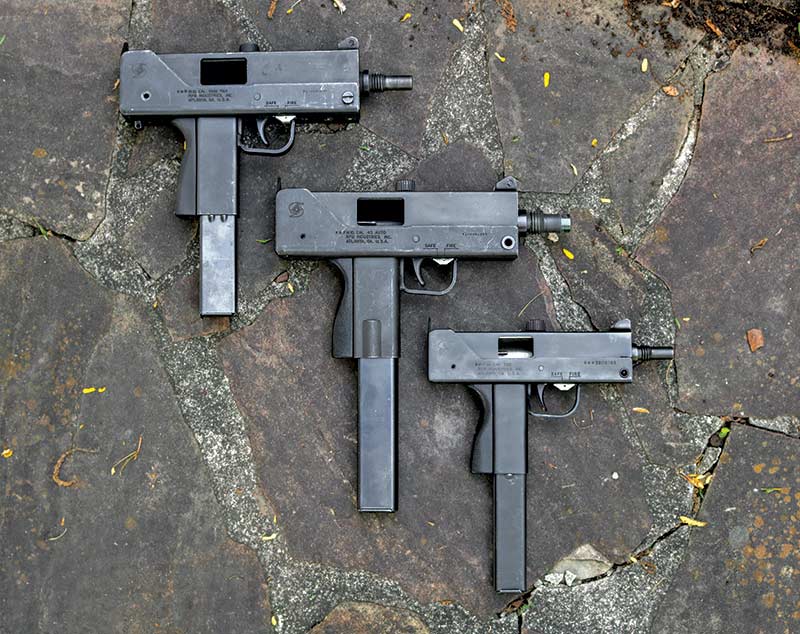
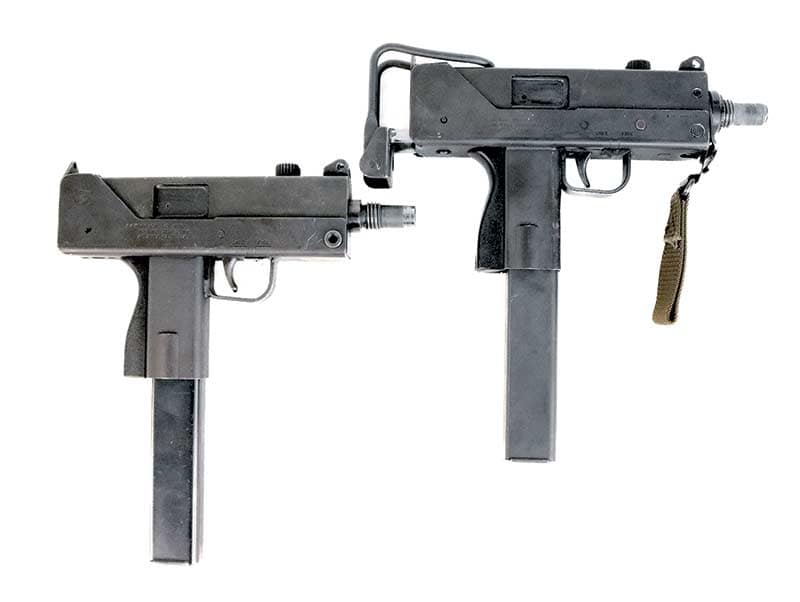
The RPB open-bolt SAPs were offered in .380ACP, 9mm Para and .45.
The two larger guns can be delineated at a glance by the distinctive
bulge in the magwell in the .45 version.
Transitions
In 1975, MAC imploded. Its assets were auctioned off in June of 1976 at what was the most epic gun auction in human history. MAC10 SMGs were sold by the pallet for as little as $6 apiece. RPB Industries rose from the ashes.
Three former MAC employees — Ray Roby, Charles Pitts and Richard Brueggeman — formed RPB Industries, which was later bought by Wayne Daniel and a few others. Using original MAC parts as a foundation, these guys took the MAC gun in an entirely new direction.
Realizing that the laws governing private ownership of automatic weapons were always going to make full-auto versions a niche market, in 1979, this mob obtained BATF approval to produce semi-auto open-bolt versions of the original MAC-series subguns. In contrast to the full-auto predecessors, these big, weird pistols sold quite well.

The M11 SMG and SAP both fired .380 ACP and used a common chassis.
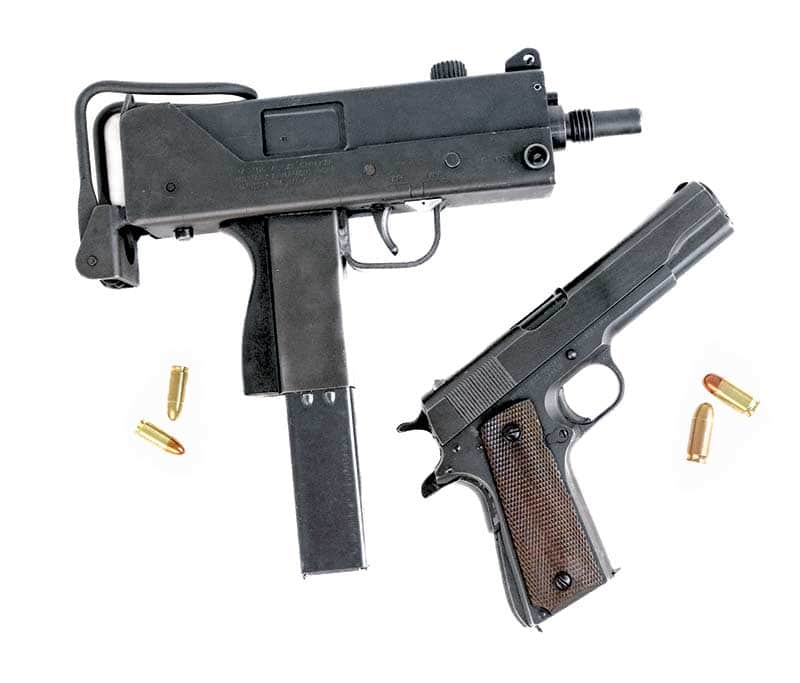
The MAC10 SMG was originally intended to replace the M1911 .45 as the standard sidearm for the American Army.
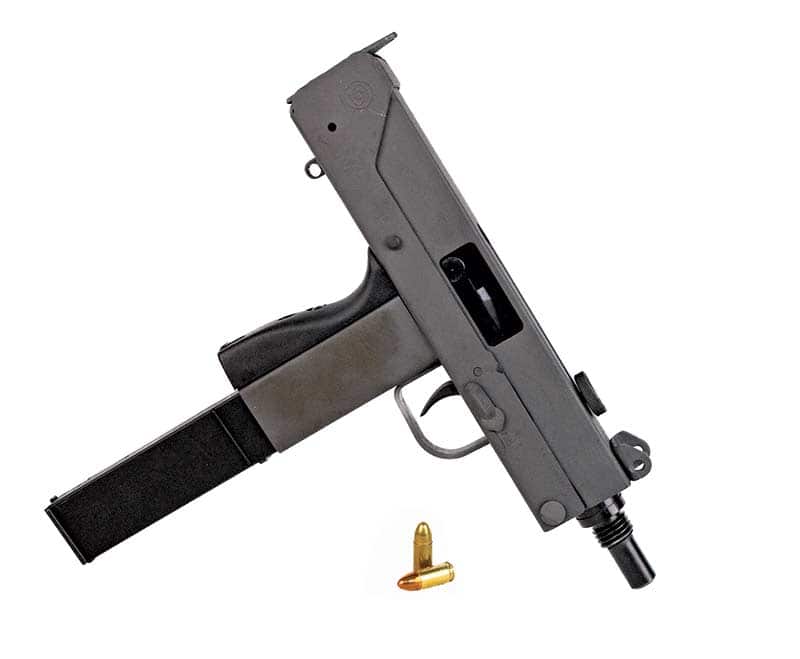
The subsequent closed-bolt M11/9 was an objectively horrible gun. The gun’s notorious trigger slap was actually painful after more than a few rounds. However, they were sold by the thousands.
The .45 ACP MAC10 is surprisingly controllable on rock and roll.
The semiauto SAP is an awkward boat anchor.
Details
The semiauto RPB MAC pistols operated exactly as did the SMG versions. The bolts locked open prior to firing and included little dimples machined into their faces that ignited the primers. The internal components were modified for semiauto fire only, and there was no provision for a buttstock. The upper assembly, bolt and magazines were otherwise interchangeable.
The rub was that these guns were really, really easy to convert to full auto with basic hand tools. Coming as they did during the cocaine wars in South Florida and elsewhere, Law Enforcement began encountering examples of these semiauto open-bolt RPB MACs that were illicitly converted to rock and roll. Practically speaking, this really didn’t make a great deal of difference in the gun’s tactical efficacy. However, then as now, machineguns were scary. As a result, in 1982, the BATF changed its mind and said any subsequent open-bolt MACs were indeed considered machineguns whether they actually fired full auto or not. Those already in circulation were grandfathered.
The American gun culture exemplifies economics in action. With the supply fixed and demand increasing over time, the prices on these old open-bolt guns rose astronomically. Expect to give $2,500 or so for these weapons today.
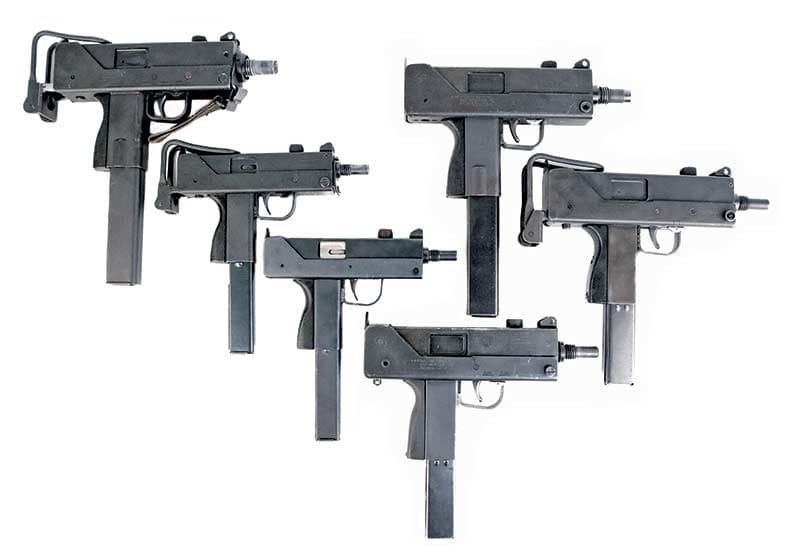
Here’s a family portrait. Each semiauto RPB SAP
was adapted from its full-auto big brother.
Small, Medium & Large
RPB open-bolt semiauto MACs can be distinguished by the “SAP” designation hand-stamped on the side. As the lower receivers started out the same between the semiauto and SMG versions, this is what set them apart. SAP stands for Semi-Automatic Pistol.
Some but not all .380 ACP versions sport a curious nickel-plated bolt. This weapon feeds from an adorable double-stack, single-feed 32-round box magazine, which is tough to charge to capacity without a loader. The M11 SAP is not much larger than an M1911 pistol. The controls and manual of arms are otherwise identical between the SAP and the SMG.
The 9mm SAP feeds from a double-stack, double-feed 32-round magazine patterned after that of the Walther MPL submachine gun. This is a superb feeding device that can be loaded easily with nothing fancier than a standard set of human fingers. SAPs all use a two-part threaded pin up front to keep the gun together.
The .45 ACP SAP uses the same basic frame as the 9mm version, but the magwell is markedly fatter to accommodate the larger magazine. The gun feeds from slightly modified M3 Grease Gun mags. These 30-round double-stack, single-feed magazines are a serious pain to load without a dedicated tool.
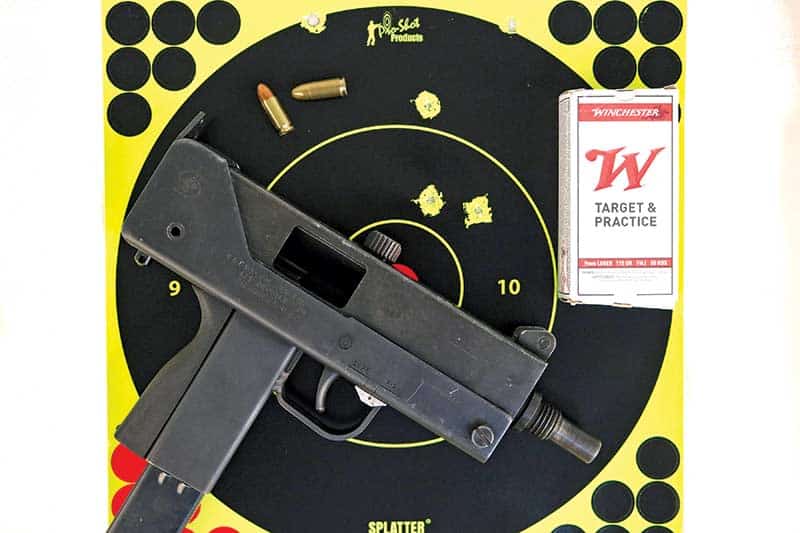
This is pretty typical for the 9mm SAP fired offhand at 10 meters.
Trigger Time
Everything about these MAC SAPs is worse than a corresponding conventional handgun. The 90º grip-to-frame geometry is awkward, and the fixed, stamped-steel peep sights are little more than ballast in the absence of a proper buttstock. The triggers are thick and gritty, and the open-bolt design jumps around a bit, given the extra mass of the bolt slamming forward for each shot fired.
That having been said, I have fired these three guns a fair amount and have never had a stoppage with round-nosed ball ammo. Magazine changes are fast, and the big mags last a good while. Accuracy is about what you might expect for a massive, bulky open-bolt semiauto pistol made from a submachine gun. You can keep your rounds in a pie plate across the room, but much farther out, and you’ll need a different gun.

The top half was common between the full-auto ,br> submachine gun and the semiauto SAP.
The Rest of the Story
That unexpected open-bolt reclassification killed RPB. However, SWD arose from that wreckage and eventually marketed the semiauto closed-bolt M11/9. These guns were cheap and could pass muster with the BATF. The trigger on the M11/9 is objectively ghastly, but the gun looks sinister, and that’s not nothing. M11/9 sales eclipsed anything MAC or RPB previously offered. We Americans do love our scary guns, and the M11/9 rode that wave.
Small companies still produce closed-bolt semiauto MAC clones even today. The luster generally fades after the first few rounds, but these big-boned pistols have an enduring sex appeal. Oftentimes, as with supermodels and supercars, we Americans frequently opt for form over function.