The Phantom Medevac
When Phailure is Not an Option
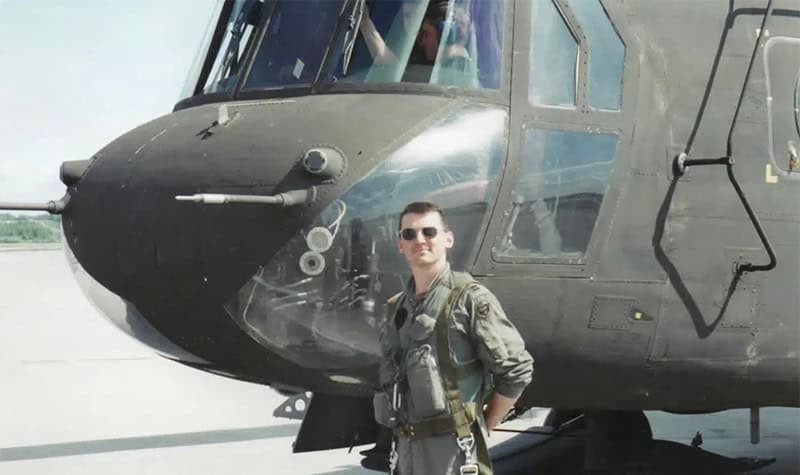
When I was young, bulletproof, and immortal I flew combat helicopters for Uncle Sam.
That was an undeniably cool job.
Folks gravitate toward military service for a variety of reasons. Part of it, for me at least, was indeed the toys. I got paid a decent wage to go to work every day and fly combat helicopters. Not gonna lie, that was a pretty sweet hustle. However, there was a great deal more to it than that.
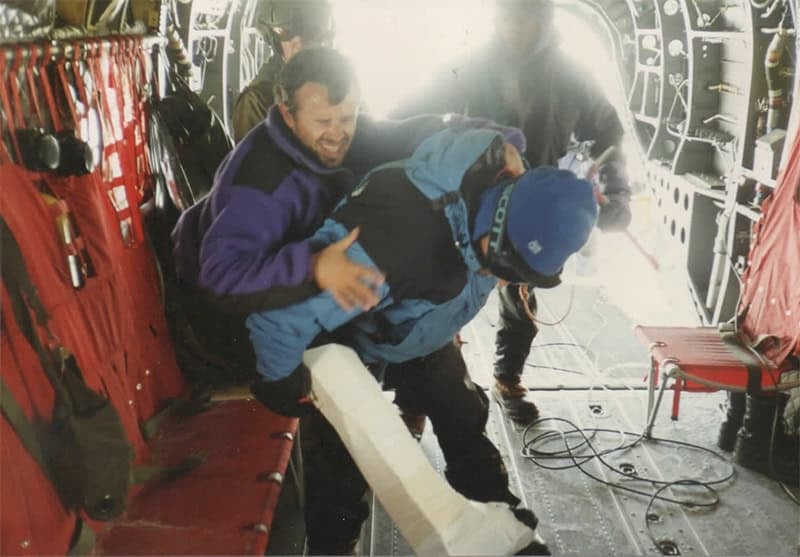
This is a picture of Juanjo Garra, an injured Spanish climber we snatched
off of the side of Mt. McKinley, Alaska, back in 1996.
Motivations
Soldiering is undeniably dangerous. That’s kind of the point. All those amazing machines have as their raison d’etre to rip the very life out of other human beings. Even under ideal circumstances, bad things invariably happen. I lost two close friends while in uniform. Believe me when I tell you, that sucks — like a lot.
Soldiers are invariably young, fit, and idealistic. That makes them passionate. While the job is an undeniable rush, it is those rare opportunities to use your combat skills to help people that form some of the most compelling memories.
I personally helmed the Army’s High Altitude Rescue team in Alaska for two years. Our mission was to take CH-47D helicopters to the top of Mt. McKinley, Alaska, to rescue injured climbers. My crew and I actually saved a guy’s life on the side of that mountain one afternoon. Best … Day … Ever.
Back in 1986, an F-4 Phantom pilot with the North Dakota Air National Guard got a similar emergency tasking. He and his formidable warplane were actually used to save the life of a helpless child. The details might just help restore your faith in humanity.
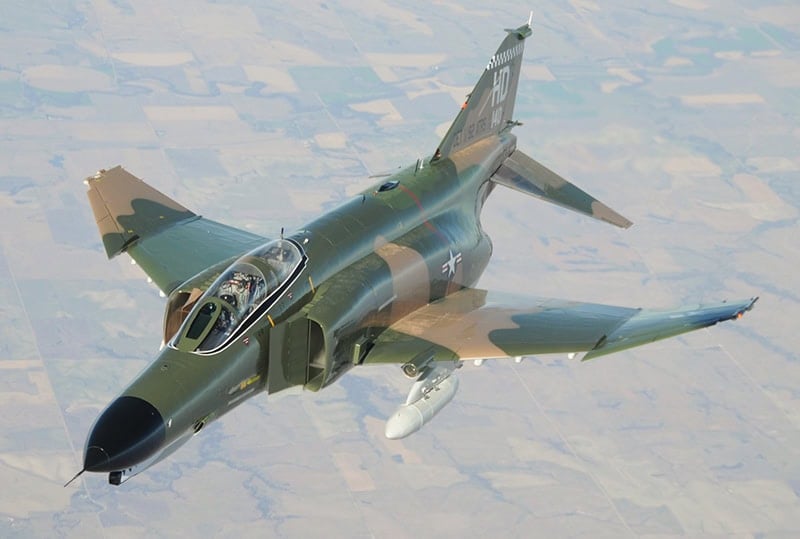
The F4 Phantom II was a formidable warplane. Public domain.
The Real Hero
Three days before Christmas in 1986 in Fargo, North Dakota, Steven and Karen McCann faced the unendurable. Their four-month-old son, Michael, died unexpectedly. Amidst a loss greater than I might reasonably imagine, they made the courageous decision to donate their little boy’s organs in hopes that some other suffering kid might live.
At the exact same time, a five-month-old named Andrew De La Pena struggled in a children’s hospital at Stanford University Hospital in Stanford, California. Baby Andrew was born with a lethal cardiac condition called endocardial fibroelastosis. Everything that could be done had been done. If he didn’t get a heart transplant, Andrew De La Pena was going to die. The system connected the two children and kicked into overdrive.
At 11:45 p.m., the surgical team led by Dr. Edward Stinson harvested Michael’s tiny, healthy heart, and the clock started ticking. They had four short hours to get that precious walnut-sized organ across the Rocky Mountains and into Baby Andrew. The straight-line distance was 1,800 miles.
Sirens screaming, an ambulance raced the cooler with the little organ to a waiting Lear jet. The crew was prepped and ready to go. However, when they tried to crank the plane in the frigid North Dakota air, one of the two engines failed to start. The pilots worked frantically, but that blower was irretrievably dead. Everyone knew that a little boy in California was dead along with it. In desperation, a member of the transplant team rang up North Dakota Governor George Sinner.
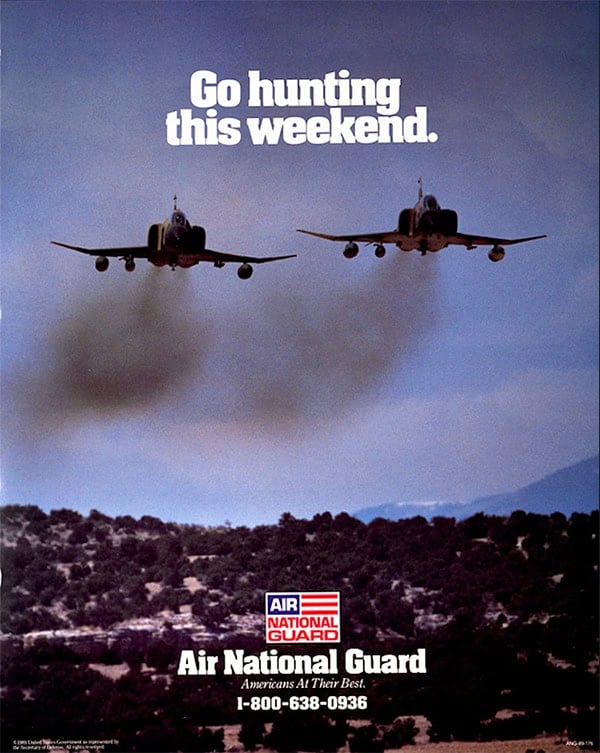
The military has the coolest toys. However, sometimes it is the unconventional
applications that make these machines all the more remarkable.
Public domain.
Bent-wing Angels
Across the airfield sat a pair of McDonnell Douglas F-4 Phantom II fighter jets fueled and armed on ramp alert. If something truly horrible occurred over North America, these big iron birds stood ready to blast it from the sky. Governor Sinner made a call.
Literally half a minute after Major General Alex Macdonald put down the phone from the governor’s office, he was talking to First Lieutenant Robert Becklund, one of the two duty pilots. This particular Phantom was a two-seat machine. However, that night, the rear seat was occupied by a small red-and-white cooler.
The Phantom blasted into the night sky afterburners a ‘blazing. The powerful warplane rattled quite a few windows en route, but 1LT Becklund didn’t much care. For Andrew’s mom, Debrah, Santa was coming a couple of days early, his twin J79 turbojets shaking the earth.
First Lieutenant Becklund later became Colonel Becklund, commander of the 119th Fighter Wing. As for Baby Andrew, well, that kid was a fighter. He got the chance to be a little boy and eventually have a life. Andrew was a student at Loyola University in New Orleans when Hurricane Katrina struck and prevailed. He found he had a knack for languages and developed fluency in several.
Andrew De La Pena later developed lymphoma, but spanked that as well. In 2018, at age 32, Andrew met his donor parents. It was then that Karen and Steven McCann finally got to see their little boy’s heart in action. Andrew remains close with them to this day.
We live in a fallen world. The evidence for that is all around us. However, every once in a while, you hear a story that moves you. In this case, a powerful warplane was used to give a helpless little kid a shot at life. Perhaps there’s hope for us after all.
Get MORE GunCrank Diaries every week!
By submitting this form, you are consenting to receive marketing emails from: . You can revoke your consent to receive emails at any time by using the SafeUnsubscribe® link, found at the bottom of every email. Emails are serviced by Constant Contact