The Accidental Outpost
La Navidad
Depending upon how you count them, there are between 193 and 195 recognized countries in the world today. The Vatican and Palestine are the two most ambiguous examples. Nowadays, nations go to war over the most trivial geographical infractions. However, the world was once a much more rollicking, less regimented space.
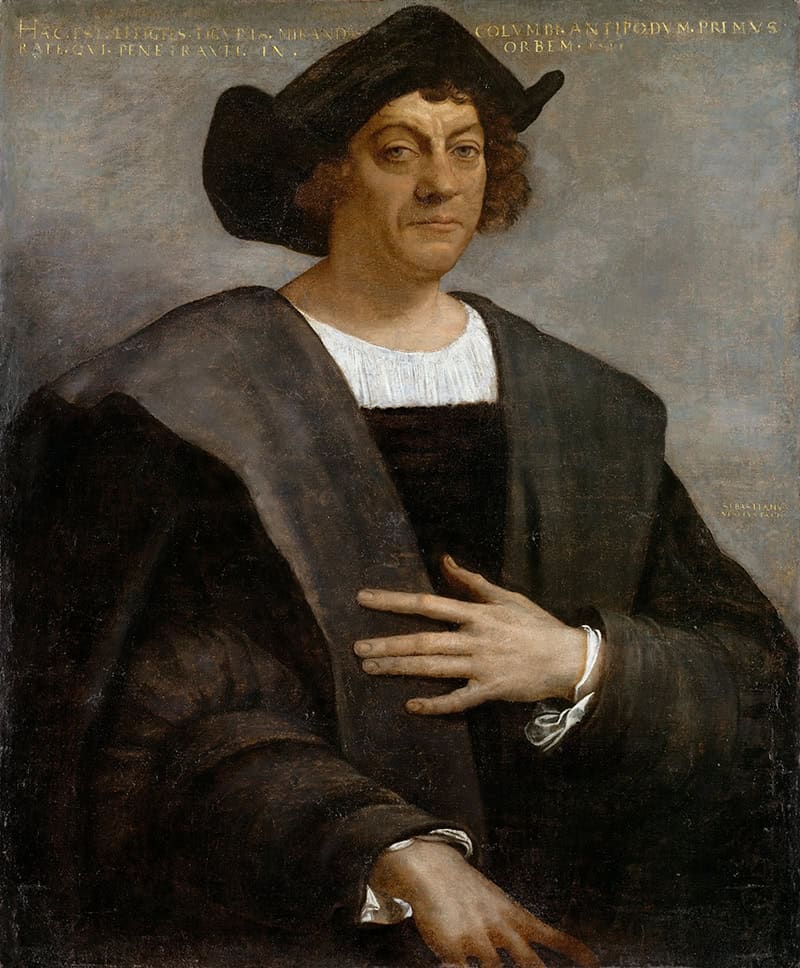
This fetching lad is the esteemed Christopher Columbus. Depending upon your perspective,
he was either a valiant explorer or a bloodthirsty imperialist.
The Guy
In fourteen hundred ninety-two
Columbus sailed the ocean blue.
He had three ships
The Nina, The Pinta and the Santa Maria, too.
He left from Spain;
He sailed through sunshine, wind and rain.
Most everybody knows that Christopher Columbus was the first European to explore the Americas. There is controversy and ambiguity, because there will forever be controversy and ambiguity. Leif Erikson the Viking just popped over for a visit but didn’t stick around some 500 years earlier. And there is the Native American perspective that they didn’t really need exploring at all and would sooner have simply been left alone. Regardless, 534 years ago, Chris and his mates were poking around Hispaniola (modern-day Haiti) when rank laziness conspired to shape the affairs of men.
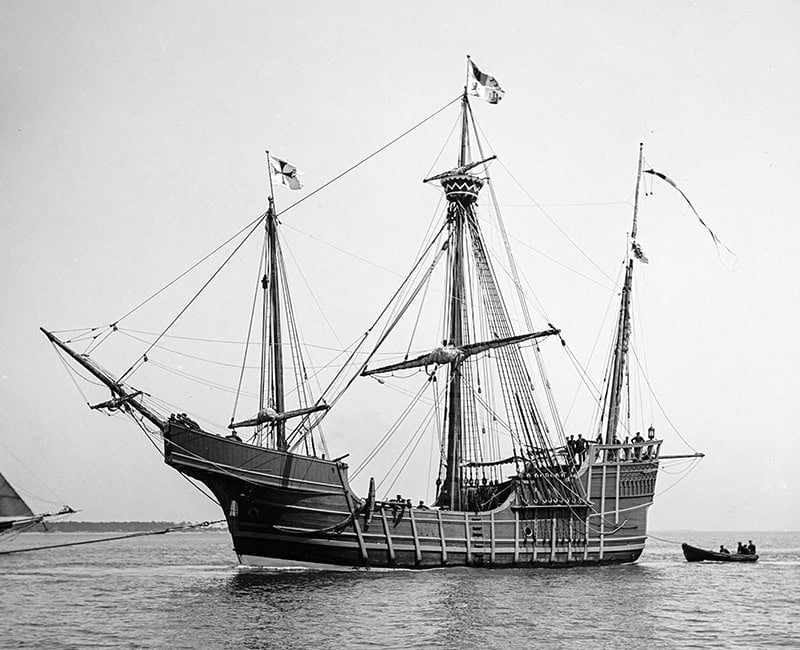
This is a reproduction of the Santa Maria, Columbus’ flagship.
Considering what was being asked of it, she wasn’t much of a boat.
The Ship
Columbus’ flagship was the Santa María. She was a 15th-century carrack that had been previously christened La Gallega. It was a long time ago, and the specific dimensions are in dispute. Most historians agree that the Santa Maria was about 62 feet long on deck and displaced some 125 tons. She was crewed by between 40 and 45 sailors.
62 feet is not a terribly big boat to be traversing the entire breadth of the Atlantic Ocean. And that was the largest of his three. Columbus’ expedition was indeed a fairly bold enterprise.
On Christmas Day 1492, Columbus and his buddies had just killed an eventful few days navigating around the northern coast of Hispaniola, avoiding obstacles and trading with the local Taino people. They had gone two nights without sleep and were all fairly spanked. With the sea a dead calm (“like water in a bowl” per his later description), Columbus retired to his cabin for a little shut-eye. He left the ship in the hands of his capable but equally exhausted helmsman.
At around 11 pm, the helmsman, feeling like there really wasn’t much untoward that could occur in seas this smooth, passed the reins off to a grumete or cabin boy and hit the rack himself. Columbus had specific standing orders never to do this. However, when the cat’s away …
The Accident
As everybody else on the Santa Maria slept soundly, this poor, inexperienced kid just held the course. Without anyone being the wiser, prevailing currents pushed the heavy vessel toward a sandbar. The first inkling that something was amiss occurred when the rudder scraped the sand.
The poor kid screamed like he was being skinned. Columbus and the ship’s master, Juan de la Cosa, rushed to the deck. However, by then it was too late. The ship was most thoroughly grounded.
This was bad, but it wasn’t the end of the world. These were experienced sailors. Columbus directed De la Cosa to launch a small boat, secure an anchor, and then winch the Santa Maria backward off of the sandbar. However, the tide was going out. The clock was ticking.
The Coward
There was no Coast Guard cutter or rescue helicopter standing by. They were a zillion miles from home, surrounded by unexplored territory and a bunch of sketchy natives. If they screwed this up, these guys were done. As such, when De la Cosa got out in his small boat, he just scuppered off to the nearby Nina and left Columbus to fend for himself.
The Nina’s skipper wisely refused to allow the coward De la Cosa to board, so he returned to the Santa Maria a humble and broken man. However, by then the damage was done. The Santa Maria was doomed.
The Catastrophe
These big wooden ships looked substantial, but they weren’t designed to support their own mass outside the water. As the sea receded, the ship’s seams split. The Santa Maria was irretrievably ruined. As the tide came back in, she filled with water.
A local Taíno chief named Guacanagaríx paddled out to help along with some of his mates. The crew salvaged the cargo and harvested as much of the ship’s timber as possible. However, the remaining crew members would not all fit aboard the remaining ships.
Columbus used the salvaged materials from the Santa Maria to construct a fortified settlement, the first of its kind in the Americas. He named it La Navidad (Christmas) because the accident occurred on Christmas Day. Necessity forced him to leave behind thirty-nine of his men. So the first official European settlement in the New World was the result of a sleepy helmsman, a cowardly ship’s master, and a cabin boy who was just doing the very best he could.
Get More Guncrank Stories Every Week!
By submitting this form, you are consenting to receive marketing emails from: . You can revoke your consent to receive emails at any time by using the SafeUnsubscribe® link, found at the bottom of every email. Emails are serviced by Constant Contact