A Few Things Worth Knowing Before You Shoot Steel Targets

The target looks abused, but it's just jacket, coating and lead.
If you run your hand across it, the surface is smooth and safe.
Shooting steel is addictive. Satisfying. Confidence building. Oh, and fun.
You know instantly whether you connected. You’re not hiking downrange every few minutes to staple up something new or fighting that ever-tangled roll of tape or pasters. OK, so you get a workout hauling the heavy stuff around. Call it cardio with a happy ending — you get to shoot after you set it all up. Net-net? It’s flat-out fun.
So steel is great. Steel is also one of those activities where a little carelessness can ruin your whole afternoon, and possibly your life.
Don't Shoot Just Any Hunk of Metal
This is the rule people break most, usually because they found a chunk of plate behind the barn and figured, “Good enough!” It isn’t.
Targets built for shooting are made to spec. Proper thickness, sure, but more importantly, they’re made from hardened steel engineered to take a bullet strike without deforming.
The standard you’ll see most is AR500, a through-hardened steel tough enough to destroy the bullet on impact instead of letting it dig in. That’s the entire point. You want the bullet to lose the head-butting contest every single time.
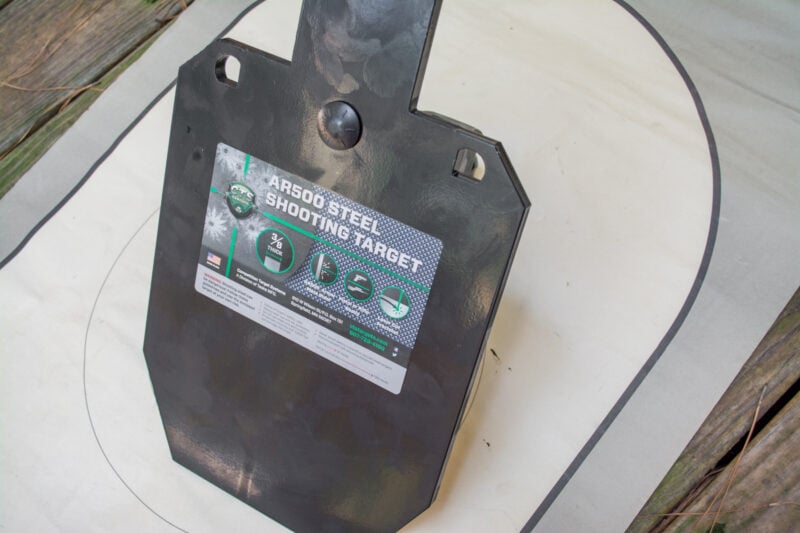
This scaled down silhouette is my favorite steel plate. It's lighter to tote around
and makes a perfect target size — not too easy!
Mild steel, construction plate, an old shovel blade… these dent, crater, and pit. And a dented, cratered, pitted surface is exactly what sends fragments flying back in directions nobody planned for.
Here’s a quick true story from an outdoor gun club years ago. Somebody was shooting, unknown to the rest of us at the time, a square steel plate about a hundred yards downrange. After the incident, when we looked at the thing, it was exceptionally thick and heavy steel. It just wasn’t hard enough because it was old scrap.
Anyway, to make a long story short, amongst the scattered shots from up and down the line, we heard a high-pitched, high-speed whizzing sound go right over our heads into the woods back behind the parking lot, which was behind the firing line itself. Yep, a 180-degree ricochet. It was pretty clear by the sound that if that had hit somebody on the firing line instead of flying over our heads somewhere, it would have penetrated skin and bone with lethal energy. That thing was moving. A straight back ricochet like that sounds impossible, but it is absolutely not. It can, and it does happen, and in this case, a pitted steel plate was responsible for sending a rifle round right back at the line.
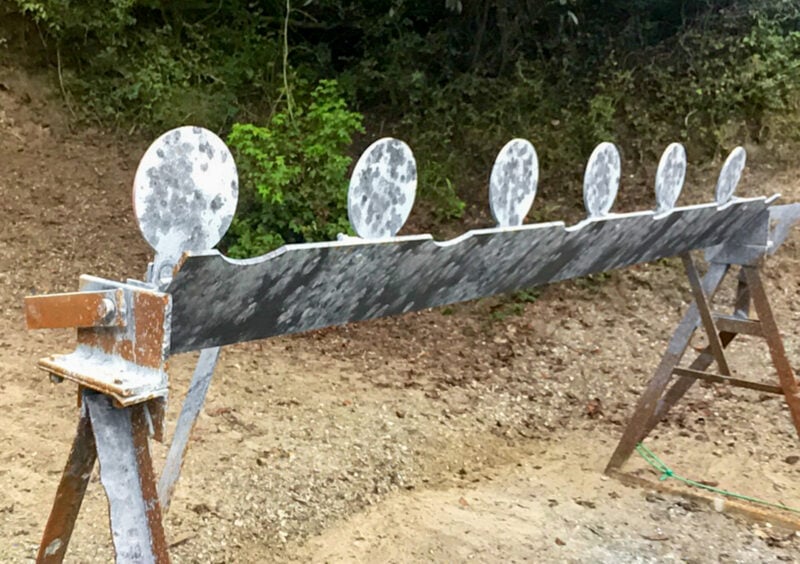
This old-school plate rack looks abused, but the surfaces are still smooth enough.
Note the shield directing low shots downward.
Know What Your Target Is Rated For
Not all steel is built for all jobs. Some plates are happy with rimfire and standard pistol calibers and nothing more. Others are rated for specific rifle rounds. Thinner plates, often quarter-inch thick, are meant for handguns only and have no business taking rifle fire or hot magnum pistol loads. Thicker three-eighths-inch plates can generally handle rifle duty within published limits.
Read what the manufacturer tells you.
Respect the Distance Guidelines
Every reputable target company publishes minimum safe distances, and they’re not suggestions. As a rough baseline, plan on something like 15 yards for pistols and 100 yards for rifles, though your specific target’s instructions are always the final word.
Mind the velocity, not just the caliber. A lighter bullet screaming along fast can hit harder than a heavy one loafing downrange. Whenever you switch calibers or loads, spot-check your plate. If you start seeing little nicks or marks form, back up. More distance means less wear and a longer life for your steel.
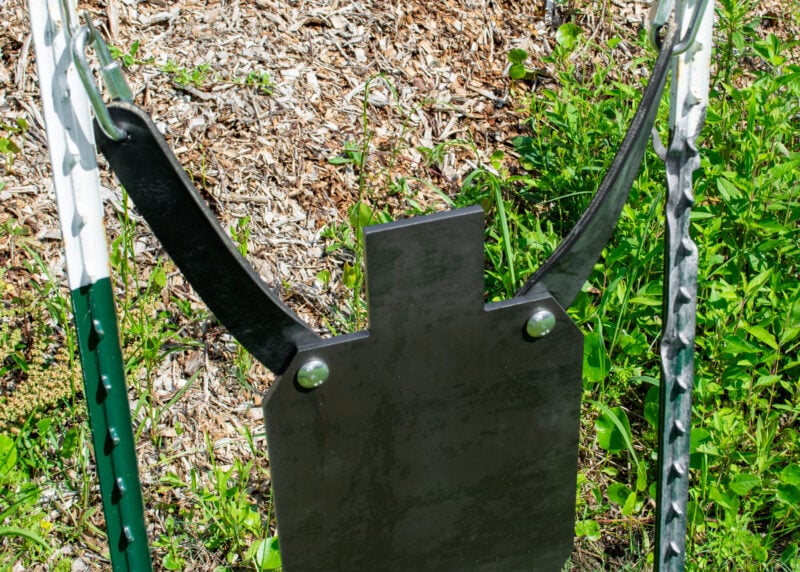
The hanging method is important as well. These are heavy rubber straps, kind of like slices of tires.
They allow the target to swing, dissipating energy and reducing the risk of ricochet.
When a Plate Goes Bad, Retire It
Here’s the easy one. The moment your target shows cratering, pitting, or cracks, it’s done. As in trash.
I don’t care what it costs. Don’t shoot it. Hang it on the wall as a conversation piece, cover a pothole, drop it in the boat for ballast, or weld it into yard art. Anything but put another round into it. Those scars are launch ramps for fragments, and you do not want to be standing where those little craters point.
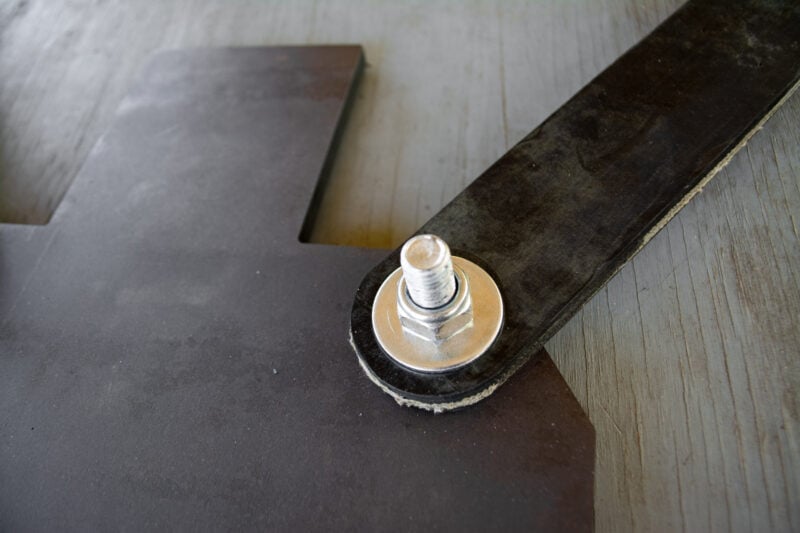
Here you can see the rubber material. Also, I always mount exposed hardware on the back side of the target.
Why All the Fuss?
Because mismatching caliber, steel, and distance produces wildly unpredictable results. A bullet might punch clean through the wrong target. It might glance off and head somewhere unexpected. Worst case, it comes straight back at you.
Ask anyone with serious steel time how often they’ve caught a fragment. On a different occasion, my son caught a fragment in his forearm that had to be pulled out with pliers. And that was at an industry event using proper targets and proper distance. Weird stuff happens. Follow the rules, wear your eye protection, and the odds remain overwhelmingly in your favor. Careless steel shooting is dangerous.
The Hardware That Hangs It
A good mounting system does important work. My preferred designs angle the plate downward so impacts and fragments get steered toward the dirt instead of back at the firing line. Many pair that angle with a spring or flexible mount that soaks up impact energy and cuts the odds of a high-speed ricochet.
The clever ones also tuck the mounting hardware behind the plate, so the bolt and bracket stay protected from stray hits. Modular setups are a bonus. The rigs that break down and ride in your trunk let you set up just about anywhere it’s legal and safe to shoot, no permanent range required.
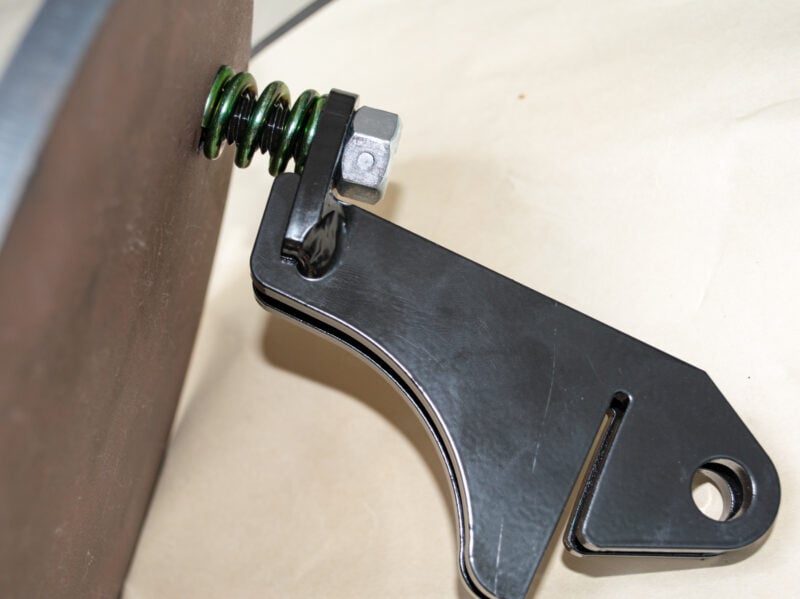
Another great mounting option using springs. This allows the target to move when hit.
Positioned at the top, that movement directs jacket debris toward the ground.
Two Smart Ways to Feed It
Here’s something folks forget. When you hit proper steel, the bullet doesn’t pass through. All that mass has to go somewhere, which usually means it fragments and scatters. Good targets herd those bits toward the ground, but your ammo choice matters too.
One approach is polymer-coated lead. It’s built like a traditional bullet, soft lead at the core, but instead of a copper jacket, it’s coated with a flexible polymer skin. The coating keeps your barrel cleaner and lets that soft lead break apart more gently on impact, with fewer sharp shards in the mix.
The other approach is frangible ammo. These bullets are typically made from compressed metal powder, often copper, sometimes bound with polymer. Hit something hard, and they don’t so much ricochet as vaporize into dust.
You can run standard lead or jacketed ammo, too, as long as you stay inside the rated caliber, velocity, and distance limits. The one hard no? Steel-core and penetrating rounds. Ever. Those chew up your plates, and chewed-up plates throw fragments right back at you.
Putting It to Work
For a recent session, I set a couple of plates 15 yards out and went to work making a mess of some perfectly nice black, new-target finishes. I ran a few pistols through them, a 9mm, a .45, the usual suspects, and the steel didn’t blink. When the smoke cleared, there wasn’t a single nick or dent to be found, just a healthy splatter of lead, copper, and polymer across the faces.
The polymer-coated rounds did exactly what they promised, leaving a colorful smear and otherwise coming apart. The frangible loads turned to powder on contact. Plain jacketed bullets broke up fine, too, just with a little more debris, which is a good reminder to keep those safety glasses on.
By the end, I’d burned through more than a bit of ammo. And that’s the trouble with steel. The clang and the instant feedback are addictive. When done per the specifications and instructions, with the right plates and the right ammo, it’s also plenty safe.
Get more exclusive online content from American Handgunner delivered straight to your inbox. Sign up for our free American Handgunner Insider newsletter.