Now This is Terrifying
Prion Diseases
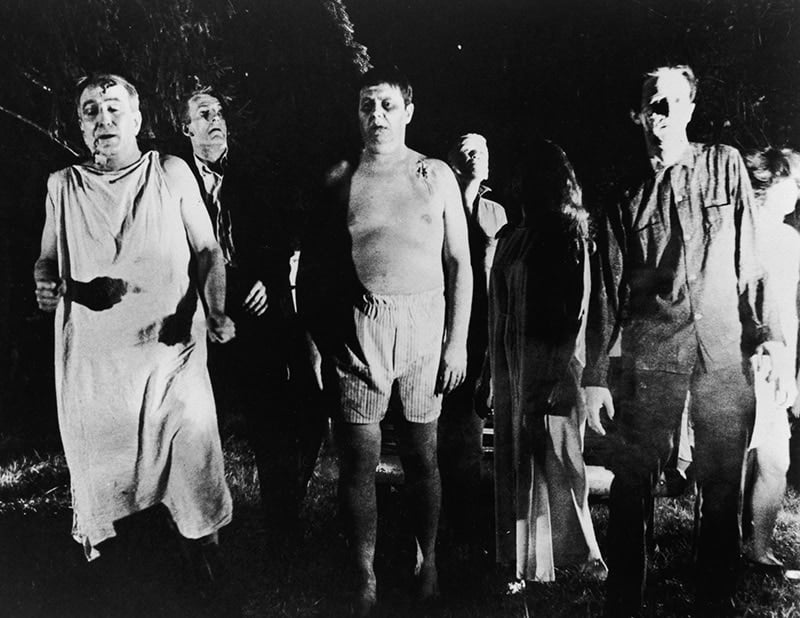
It has been postulated that prion diseases might have formed the basis for modern zombie legends.
Public domain.
Stanley Ben Prusiner was born in 1942 in Des Moines, Iowa. As a high school student, Prusiner developed a unique chemical repellent for box elder bugs. This earned him the appellation, “The Little Genius” by his teachers. He eventually grew up to become a neurologist and biochemist.
It’s always a little bit unsettling to have your presuppositions questioned. Certain foundational dogma simply shouldn’t change. Our universe is defined and constrained by physical laws. When you find an exception to those laws, it can shake you to your core. Dr. Prusiner challenged the very foundations of microbiology.
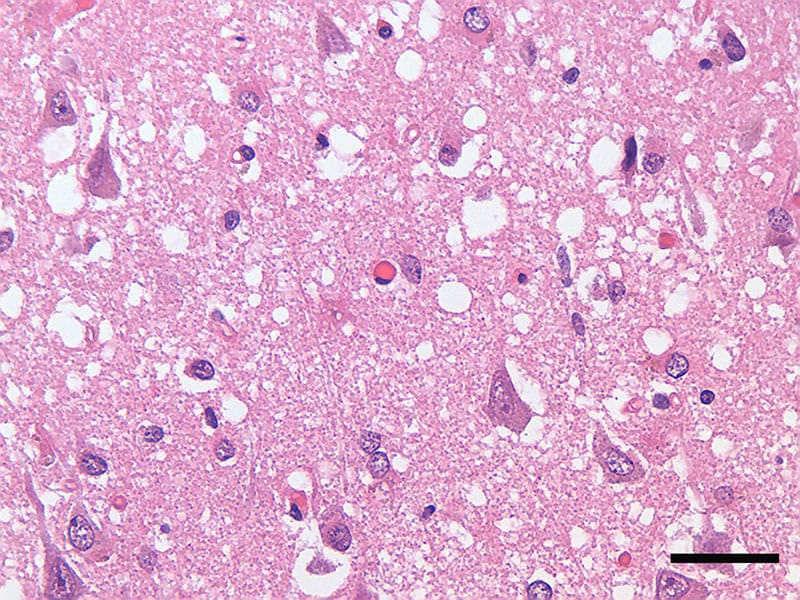
This image was taken under a conventional light microscope. It demonstrates spongiform
degeneration in the cerebral cortex of a patient who had died of
Creutzfeldt-Jakob disease (CJD). Wikipedia photo by Tulemo.
The Basics
Here’s a peek behind the curtain into the sausage factory that is modern medicine. Much of what I do day-to-day is not terribly precise. If someone has a specific sort of problem, then you treat it in a specific sort of way. More often than we physicians might like to admit, we’re not completely sure what is causing a particular malady. We might also not fully appreciate how our specific therapies might work. However, with experience, the profession has come to develop certain novel cures for common human maladies. This all turns on the concept of evidence-based medicine and extensive empirical observation.
In the case of infections, until Dr. Prusiner’s groundbreaking revelation in the 1980s, we all rightfully assumed that infections were generally caused by viruses or bacteria. Bacteria are somewhat akin to tiny microscopic plants. It is for these diabolical little beasties that science developed antibiotic drugs. Examples might include strep throat, urinary tract infections, most pneumonias, and skin structure infections like erysipelas.
By contrast, viruses occupy a gray area between life and inert organic matter. Folks who are into such things describe this space as the “Edge of Life.” Viruses cannot independently reproduce, nor do they support their own metabolism. They cannot generate their own energy, and they require a host cell to replicate. However, viruses do possess identifiable genetic material and adapt to changing environments. They are arguably nature’s perfect parasites.
Examples of viral infections include head colds, HIV, the many-splendored manifestations of herpes, hepatitis, the flu, and the ever-popular COVID-19. The turbocharged HIV research of the late 20th century brought us some novel viral treatments. We use such drugs to mitigate the effects of flu, herpes, and COVID today. However, for most viral infections, you just support your body and let the infection burn itself out naturally.
For decades, these two wide classifications were adequate to account for the overwhelming preponderance of human disease. And then Dr. Prusiner started poking around in a new and novel direction. His discoveries were frankly horrifying.
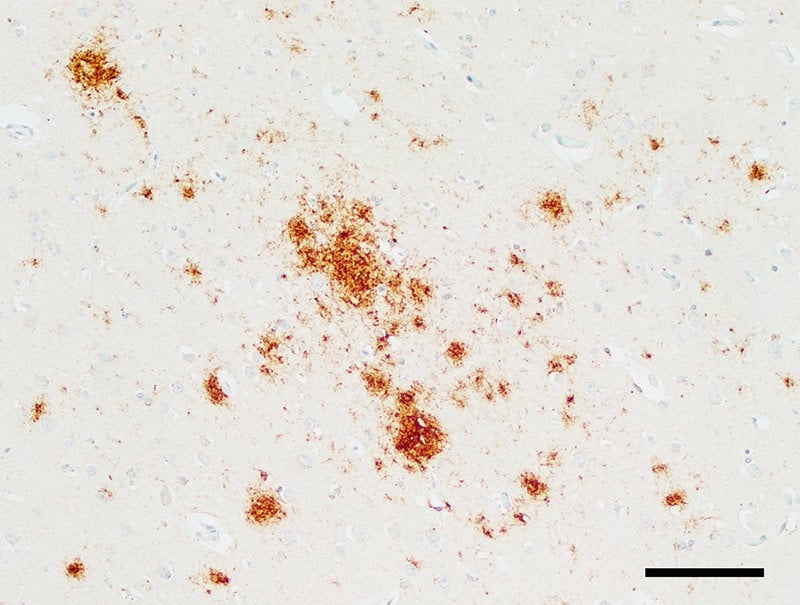
This is a micrograph of prion protein deposition (brown) in the cerebral cortex of a personM
who succumbed to Creutzfeldt-Jakob disease. Wikipedia photo by Tulemo.
Be Careful What You Look For
In the 1990s, Prusiner and his colleagues occupied themselves investigating transmissible spongiform encephalopathies. The most familiar is mad cow disease. The human analog is called kuru or Creutzfeldt-Jakob Disease (CKD). These diseases ultimately produce countless microscopic voids in affected brain tissue. Such infections are invariably fatal.
Kuru was first documented among cannibals in Papua New Guinea. There was a higher prevalence of the disease among women and children than in military-age males. It was later discovered that oral consumption of human brain tissue was the primary infectious vector. When a tribe vanquished an enemy, the victorious males got first dibs on the spoils. They ate up all of the good meat and left the gnarly stuff like brains for the women and kids. The toxic combination of some truly egregious behaviors in the latter stages of the disease, along with the nexus to brain-eating, has been postulated as the basis for many of the world’s traditional zombie legends.
Dr. Prusiner studied these weird maladies and concluded that they were indeed infectious. However, they were not caused by bacteria or viruses in any traditional sense. Prusiner said, “One scientific theory, viewed as heretical in that it seems to challenge the role of nucleic acids as the exclusive carriers of genetic information … (involve a) deadly variety of a normal protein that has the ability to amplify itself in the brain. The hypothetical protein is called a prion.”
Prion is a portmanteau combining the words “proteinaceous” and “infectious.”

It seems the entire universe really is out to get us.
Details
Prion diseases are legitimately unsettling. We only discovered them in the late 1980s, and their effects mimic those of Alzheimer‘s Disease. The causative agents of prion diseases are simply misshapen proteins. They are even less alive than viruses. However, they move from one host to another, generally through eating infected flesh.
Lots of disease-causing pathogens establish a foothold after being eaten. Pig meat, for example, is invariably swimming in parasites. However, the act of cooking reliably denatures them. You still eat their dead little corpses, but that can no longer hurt you after a proper trip through the oven. I found that unsettling when I first learned of it, but I still do love me some nice crispy bacon.
Prions, by contrast, are shockingly heat stable. It is really tough to cook viable prions out of a piece of infected meat. This is the reason the UK slaughtered basically all of its cows back in the ’80s. When bovine spongiform encephalopathy really starts to take off, the only solution is to cull it out manually. Prions also cause Chronic Wasting Disease in deer. We’re all just hoping that stuff can’t make the jump from whitetails to humans. There is no effective treatment.
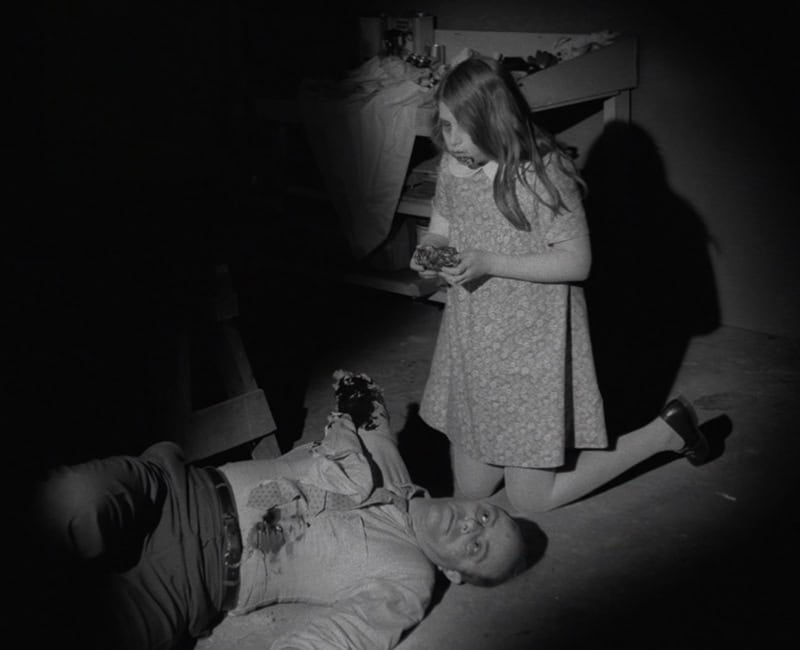
Prion diseases move from one host to another, generally through eating infected flesh.
Ruminations
So, just when you thought it was safe to fixate on the economy, Russia, Iran, or North Korea, Dr. Prusiner goes and discovers a whole new class of terrifying stuff just lurking out there, ready to kill us all. He did win the Nobel Prize for his efforts. However, I’m not sure, but I might have been happier just not knowing about prion diseases. Sleep well, my friends. It seems the entire universe really is out to get us.
Get More Guncranks Every Week!
By submitting this form, you are consenting to receive marketing emails from: . You can revoke your consent to receive emails at any time by using the SafeUnsubscribe® link, found at the bottom of every email. Emails are serviced by Constant Contact