What Old Sixguns Still Teach
Better Than New Pistols
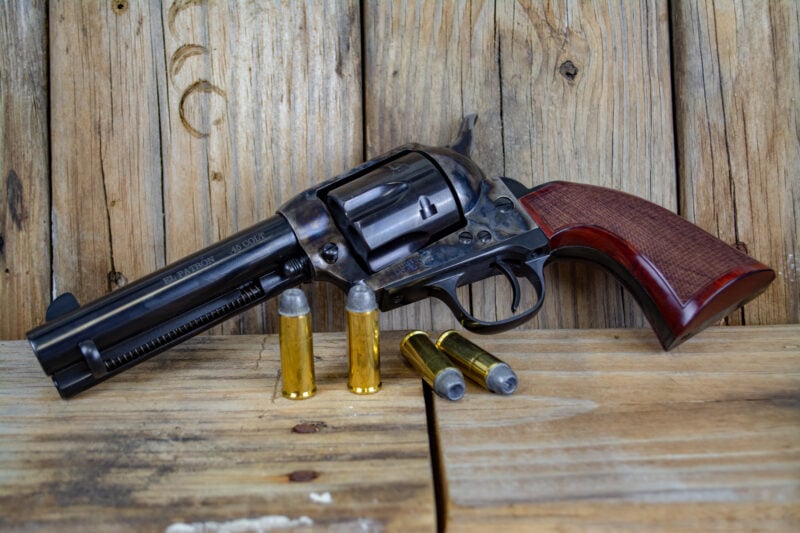
We're blessed with the amazing new builds of old designs, like this Uberti 1873 El Patron in .45 Colt.
Slow is the most underappreciated training habit in the shooting disciplines. In fact, it’s arguably the most underappreciated training tool for almost anything in life.
That’s a tough sales pitch in the handgun world, where we measure split times in hundredths of a second and magazine capacity in double digits. Modern pistols are marvels of efficiency. Insert magazine, run the slide and commence converting money to noise. If your first shot wasn’t quite what you hoped, you can have 10 or sometimes closer to 20 more ready for follow-up activity.
But you know what they say, and it’s absolute truth: haste makes waste. Practicing a repetitive technique fast, like sighting and properly breaking a shot, always results in poor results. The skill and speed come from repeating the desired motion, over and over and over again, in exactly the same way. If every repetition is a bit different than the one before, you’re not locking in any specific skill.
A traditional single-action revolver is far less able and tempting to encourage reckless speed. It makes you load cartridges one at a time, cock the hammer before every shot and poke out empty cases individually when you burn through that single-digit cylinder capacity.
It’s also the point.
An old-style sixgun turns every step into a separate and deliberate act. Nothing happens automatically, so the shooter has to pay attention to what the gun is doing, where it’s pointing and what the sights look like when the shot breaks. And the whole cycle must be repeated for the next one. The design predates the Telegraph, but still remains a better teaching tool than the polymer wonder.
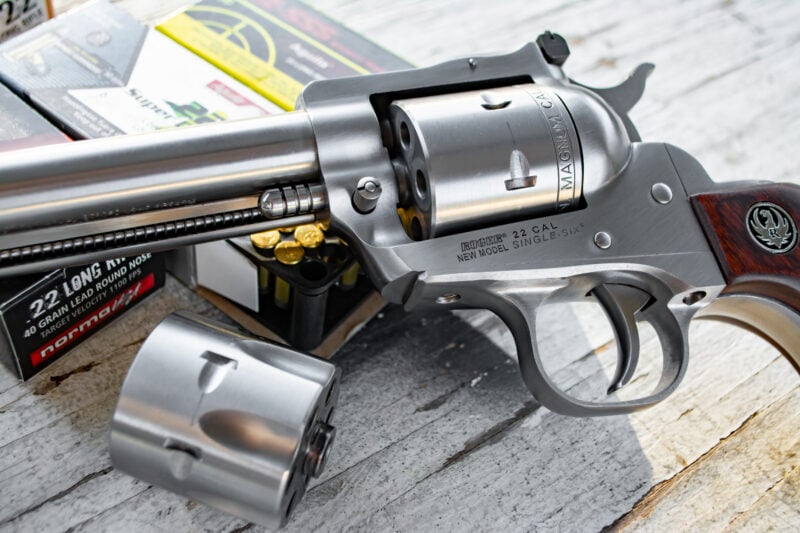
Still my favorite "first shots" gun for a first-time shooter: the Ruger Single Six.
Classic design with some modern features.
The Gun That Requires User Intervention
With a semi-automatic, one trigger press starts a series of automated events, the benefit being to reduce the workload on the user. The cartridge fires, the slide moves, the empty case is yanked out and tossed, a fresh round is shoved into the chamber, and the action resets, ready for another trigger press. Your job is to keep the sights on target through proper control of the handgun and decide whether or not to fire again.
A single-action revolver stops after every round and waits to be operated. To fire again, you must cock the hammer. That rotates the cylinder, lines up a fresh chamber and prepares the trigger for the next shot. The gun won’t (and can’t) continue until the shooter completes the next deliberate step.
That forced pause is a learning benefit, especially for new shooters. It breaks each shot repetition into individual events the student must consider and, just as importantly, understand. Cock. Rebuild the grip. Create the right sight picture. Press the trigger. Follow through and see the results without worrying about the next shot.
There’s no rule saying the process has to be painfully slow. Skilled single-action shooters can run these guns at astonishing speed. For range practice, however, the built-in pause makes it much harder to fire the second shot just because the first one didn’t work out as desired.
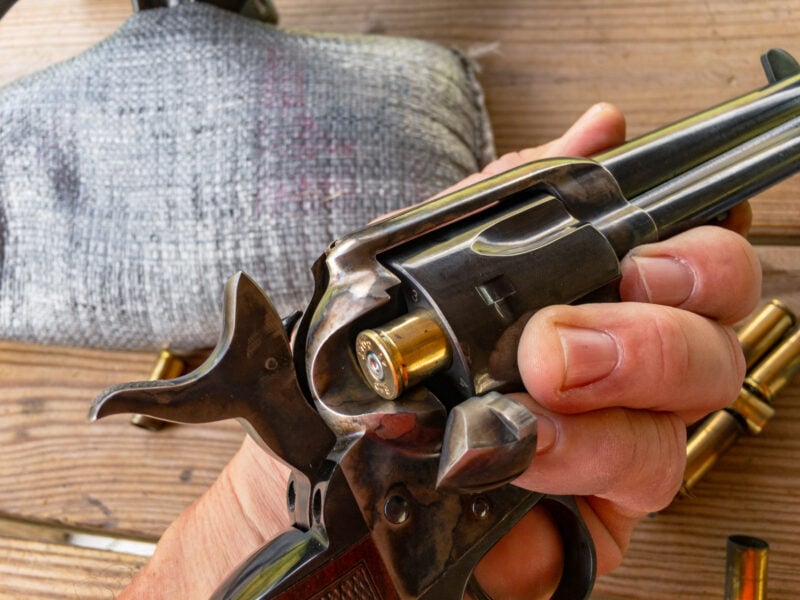
I believe the "manual" aspects of loading and unloading single actions teaches
and reinforces a lot of good habits.
Awareness of Loading and Unloading
A loaded gun is always a loaded gun, so it’s always up to the user to be aware of a gun’s status. However, like shot-to-shot operation, loading and unloading bring the user right into the guts of the process.
With a semi-automatic, loading a magazine happens away from the pistol, in a sense disconnected from the firearm itself until the magazine is inserted. Then, when the magazine is inserted, the process becomes a bit of a mystery, as there’s no direct visibility into what’s going on inside during the chambering process, or lack thereof.
Loading a traditional single-action happens in the gun itself, chamber by chamber, while your support hand works near the cylinder and loading gate. Traditional single-actions usually load through a gate on the right side of the frame. Open the gate, put the action in the correct loading condition for that particular revolver and rotate the cylinder by hand as cartridges go in one at a time. Unloading reverses the process, with the ejector rod pushing out one case after another. All very deliberate, hands-on, and unambiguous.
The process creates a secondary benefit. There’s a lot of administrative handling during all this, which can encourage and build solid muzzle awareness habits. Loading, unloading, clearing and showing safe are not intermissions from gun handling. They are gun handling.
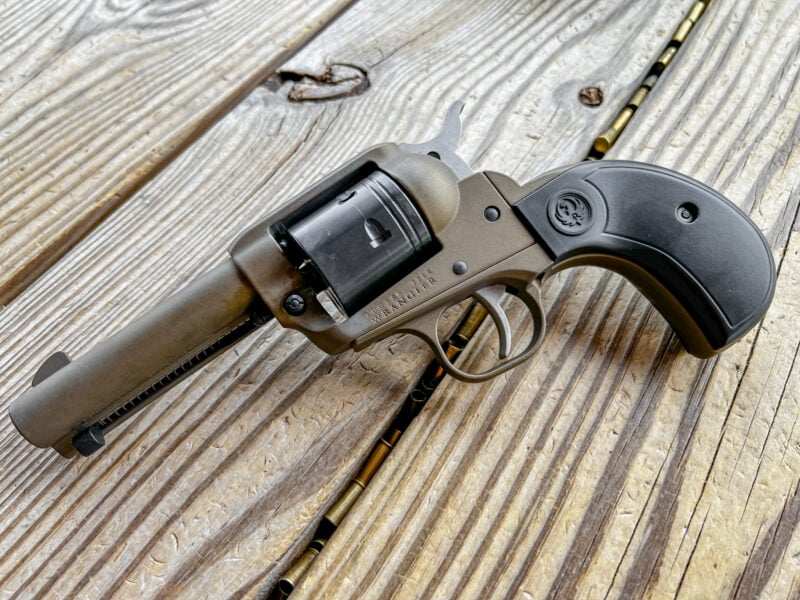
For an affordable first learning gun, the Ruger Wrangler is hard to beat, dollar for dollar.
Mechanical Reinforcement
The famous “load one, skip one, load four” routine has some useful learning value as well.
In case you’re not familiar, a quick diversion. On original Colt Single Action Army-pattern revolvers and many faithful reproductions, the firing pin is mounted directly on the hammer. Lower the hammer over a live chamber and the firing pin may rest against the primer. That can be problematic to say the least. Carrying with the hammer down over an empty chamber removes the primer from that equation.
The old loading sequence is a handy way to arrange five cartridges so the hammer finishes over the empty sixth chamber. It is also a perfect mini lesson in revolver mechanics. Safe handling also depends on how any particular gun works, and every time you load a single-action this way, you’re getting a reminder about the impacts of cocking the hammer and cylinder rotation.
We don’t all have to be certified mechanics to drive a car, but if you know the basics, like what happens when the engine runs without oil, the knowledge will serve you well.
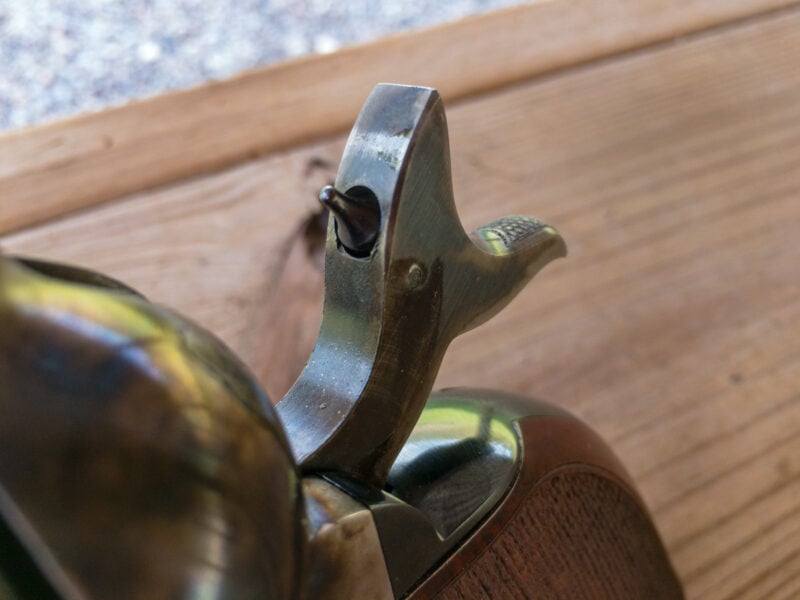
Here's one that makes students think about the "whys" of safety practices.
The old-school firing pin on the hammer.
Sights That Teach
The sights on a classic sixgun are about as simple as simple gets. No gimmicks, no optical engineering cheating tricks to make things easier.
The typical arrangement pairs a narrow front blade with a groove cut into the top of the frame. On many guns, the rear sight picture doesn’t fully appear until the hammer is cocked. There are no glowing dots, high-visibility inserts or geometric shapes you stack into some modern art design to line up front and rear sights. You get a black blade, a black notch and whatever light happens to be available.
And yet, those sights can shoot surprisingly well. Imagine that! The operator is more important than the gimmicks.
Their lack of visual help forces the shooter to work. The front blade has to sit at the proper height in the rear notch with equal light on each side. Fixed sights also encourage experimentation with hold and ammunition. The gun may print high, low or sideways with a particular load, and there may be no handy adjustment screw to rescue you.
That’s not a defect in the lesson. It teaches the difference between aiming consistently and expecting every handgun to arrive perfectly regulated for every bullet weight, velocity, distance and pair of eyeballs.
First, one must build preferably small, repeatable groups. Only then does it make sense to figure out the best way to move that group to the point of aim.
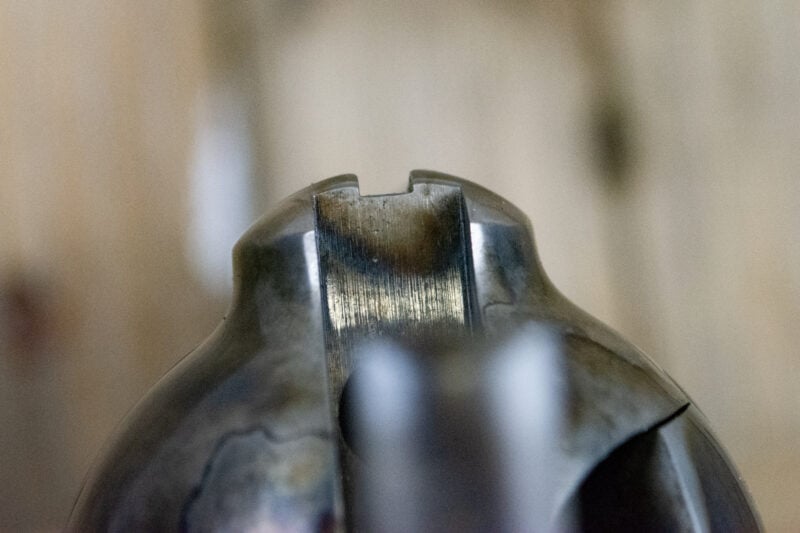
For learning the basics of not only sight picture, but effects of different loads on point of impact,
it doesn't get simpler than this.
The Trigger Signal
A good single-action trigger can be delightfully crisp. The hammer is already cocked, so the trigger has one job: to release the hammer. There’s usually little travel and no long double-action pull to manage.
Sounds easy, right?
A clean trigger takes away potential excuses for lousy technique, but it also makes tiny mistakes easier to diagnose. If the sights were aligned and the gun moved as the shot broke, the trigger finger or the rest of the hand probably contributed.
The goal remains the same with any handgun: press the trigger without moving the gun. A slow, steady press during practice makes errors visible. If the front sight dips, twists or disappears at the break, there’s your answer. A fresh cartridge won’t automatically appear to tempt you into firing again to salvage your dented pride. The revolver will wait on you to complete another routine and a second chance to get everything right.
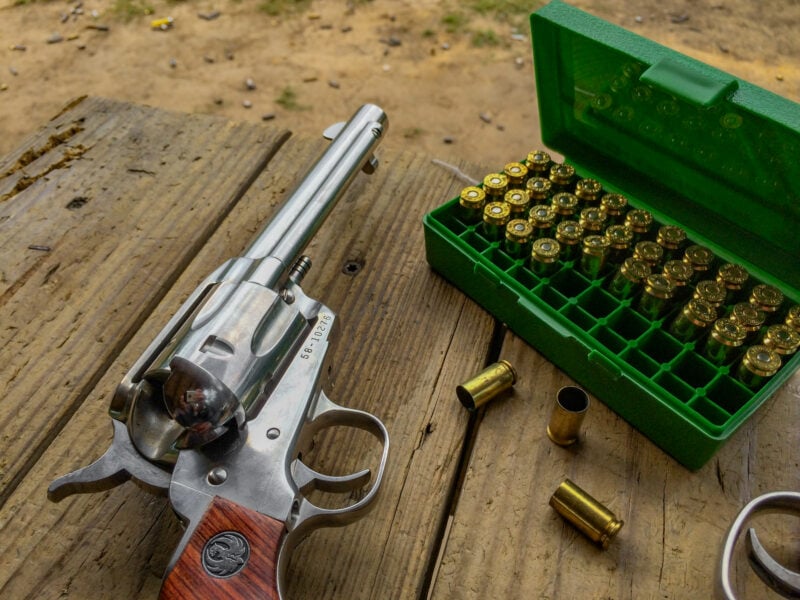
There's no reason you can't mix old and new. This Ruger Vaquero single-action revolver shoots .40 S&W.
Recoil Lessons
Classic single-action grips also manage recoil differently than the squared, hand-filling grips common on modern service pistols. The rounded “plow handle” shape allows the revolver to roll upward in the hand, especially with .45 Colt loads and snappy .357 Magnum rounds.
Trying to prevent every bit of movement can turn the shooter into a human vise that actually slows follow-up. Letting the gun have its way with recoil movement isn’t the answer either. The useful middle is to maintain control, allow the grip to move as designed, then recover it consistently while cocking the hammer for the next shot.
That sequence teaches follow-through because the shooter has to stay engaged after the shot breaks. Where did the front sight go? Did the grip shift sideways? Did the support hand come loose? Can the gun return to the same place without undue exertion?
Honest Lessons
None of this means a single-action revolver is the universal answer for defensive use, competition or serious training. It is slower to load, slower to unload and slower to fire for most people. In a sense, and no disrespect to the wonderful experience of shooting single-actions, they are limitations for certain usage scenarios.
But limitations can make good teachers.
Bring a six-gun to the range and shoot a cylinder without a timer. Load it correctly for its design. Keep the muzzle under control through every step. Cock the hammer without disturbing the grip. Build a careful sight picture, press the trigger without moving the gun and watch the sights through recoil. Then unload it with the same attention used to load it.
Five or six shots will suddenly contain a surprising amount of learning.
Get more exclusive online content from American Handgunner delivered straight to your inbox. Sign up for our free American Handgunner Insider newsletter.