Clear Coke for the Russian
Coca-Cola is more than just a soft drink. Coke is an international phenomenon. The company claims that Coke is sold in more than 200 countries around the world. Considering the UN only recognizes 195 independent nations, including the Vatican and Palestine, that’s pretty much everybody. People around the world consume 1.8 billion Coca-Cola beverages daily. There are just over 8 billion people on Planet Earth. Nearly one fourth of them drink a Coke product each and every day. Those are the sorts of sales figures that are adequate to make a proper capitalist swoon.
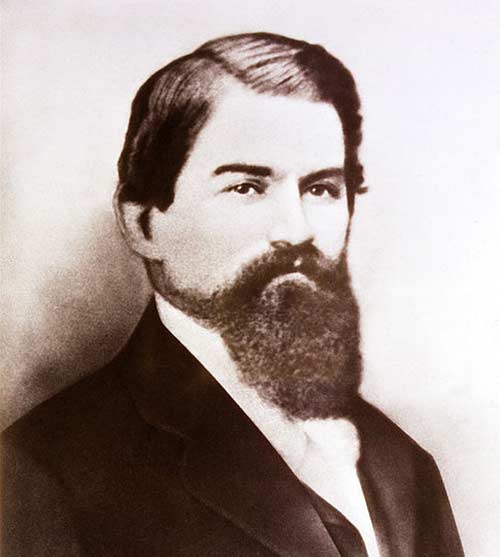
This is John Pemberton, the drug-addicted inventor of Coca-Cola.
Photo: Public domain.
Origin Story
John Stith Pemberton was a Confederate Colonel wounded during the American Civil War. In addition to being a cavalry officer, he also had a medical degree. During the course of his recovery, Pemberton became irretrievably addicted to morphine.
Pemberton first marketed a homebrewed concoction he titled Pemberton’s French Wine Coca Nerve Tonic. Coca leaves (yeah, those coca leaves—the same stuff Colombian drug lords use to make cocaine today) gave his tonic a kick. Kola nuts provided the caffeine. Combining these two ingredients gave this delightful drink its iconic name. As it did not include alcohol, Pemberton marketed his cocaine-infused elixir as a temperance product.
Pemberton invented Coca-Cola back in the late 19th century. He sold his rights to Coke in 1888 to Asa Griggs Candler. Asa Candler didn’t know a great deal about chemistry. However, he was an amazing businessman.
Candler tried several different appellations, including “Yum Yum” and “Koke.” Candler actually purchased the exclusive rights to the name “Coca-Cola” for $300 cash from John Pemberton’s son Charley while they were actually at the old man’s funeral. In 1894, Charley Pemberton died of an opium overdose. I suppose the nut doesn’t fall far from the tree.
Coke spread steadily and inexorably around the world from there. During World War II, Coke went everywhere American GIs did. This allowed people from foreign lands who might otherwise never have tasted the stuff to give it a whirl. One man who was particularly taken with Coca-Cola’s unique taste was Soviet Marshal Georgy Zhukov. Zhukov was the supreme commander of Soviet forces during WWII
When Worlds Collide
Immediately following World War II, US Army General Dwight Eisenhower held a meeting with Marshal Zhukov. The US and the USSR were still nominally allies at the time. In the spirit of friendship, Ike offered Zhukov a cold Coke. Old Georgy was well and truly smitten.
The legendary antipathy between East and West was just taking hold. Zhukov, enamored as he was with this exotic American drink, could not allow himself to be seen consuming something so decadent. As a result, Zhukov approached American General Mark Clark to see if Coke could be produced in a form that more resembled vodka. Clark said he would see what he could do. General Clark’s request made it to the desk of President Harry Truman, who then placed a phone call to James Farley, the Chairman of the Board of the Coca-Cola Export Corporation.
Farley contacted Mladin Zarubica. Zarubica had been tasked with opening a new Coke bottling plant in Austria to take advantage of the booming post-war market. The mad geniuses at Coke put their heads together and came up with a new formulation that would taste the same, only without the distinctive brown caramel coloring.
The formula for Coke is a tightly held trade secret. Even today, only a handful of Coca-Cola employees are trusted with it. The resulting concoction was sealed in clear, straight glass bottles adorned solely with a white cap and red star. The packaging was provided by Crown Cork and Seal, based in Belgium. That first shipment consisted of fifty cases.
Curiously, there were some fairly stringent regulations governing the shipment of goods between American and Soviet sectors even then. The Americans were reticent to offer the Soviets any particular advantages. For their part, the Russian leaders were just terrified that capitalism might take root and see their people rise up and execute them all. However, this clear Coke was different. It was waved right through.
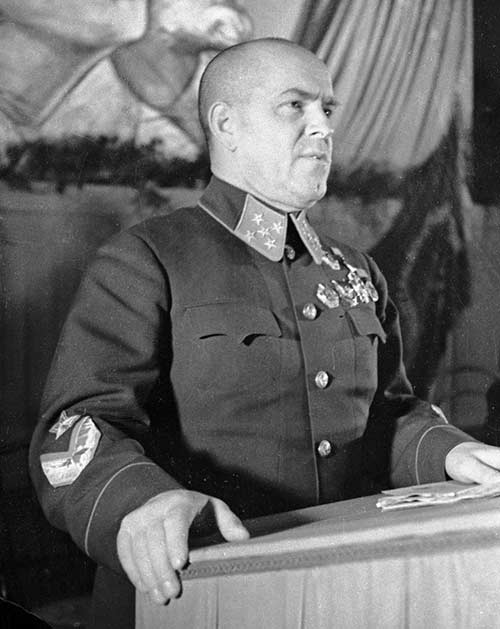
This is Soviet Marshal Georgy Zhukov. He really liked Coca-Cola,
but he was too chicken to actually be seen with it.
Photo: Russian International New Agency.
The Rest of the Story
While Marshal Zhukov was indeed said to be quite taken with his stealth Coke, that was not adequate to breach the divide between freedom and communism. The Coca-Cola plant in Austria only made clear Coke for less than a year back in 1946. The institutional antipathy grew to become intolerable in short order, and the covert shipments stopped.
I think that’s a terrible shame. If you took every penny the US spent on defense from the end of WWII through the fall of the Berlin Wall, we could have razed and rebuilt every manmade object in North America. With the crystalline clarity of hindsight, imagine the good we could have done with all that money. And to think that it all could have gone in a different strategic direction had Marshal Georgy Zhukov just shared his sparkly clear Coke with his buddy Josef Stalin and gotten him hooked as well. Have a Coke and a smile…