How to Work with a Gunsmith
Pistolsmithing

An unfired Colt 1911 is in the shop for a complete makeover
and in the process of getting a written estimate for the client,
which includes cost of parts, labor and shipping.
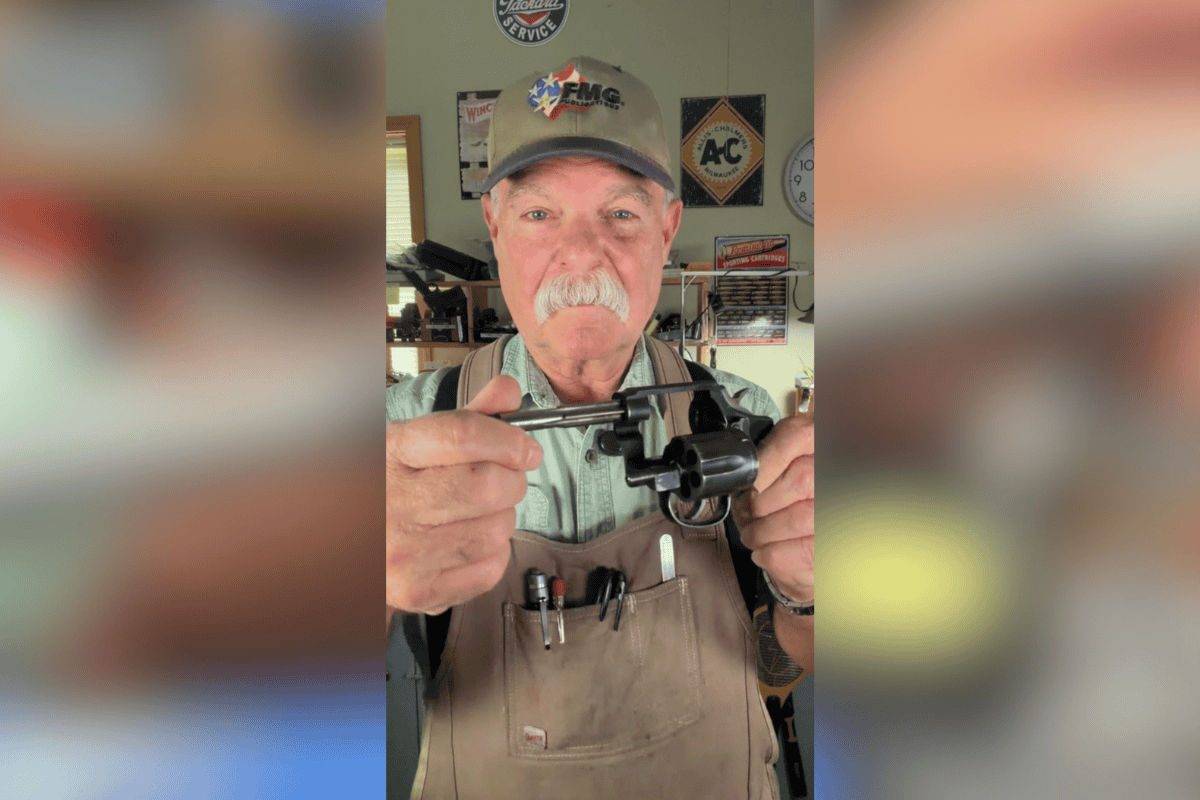
I get a few emails from readers asking about how to work with a “gunsmith.” First off, ask them if they work on the pistol you need to repair or modify. Some limit their scope of work to certain makes or models. Next, look for some credentials: feedback on previous work, groups, or professional organizations they belong to. Talk to them, ask if they are familiar with the type of gun you need worked on. If they can’t help you, they can probably point you in the right direction. Don’t be afraid to ask questions like “Have you done this before?” or “How long will it take?” or “What will it cost?” These are all questions you should be asking. And don’t sell some manufacturers short. Novak and Nighthawk both have gunsmiths on staff to help with sight installation and some custom work. I’m sure there are others.
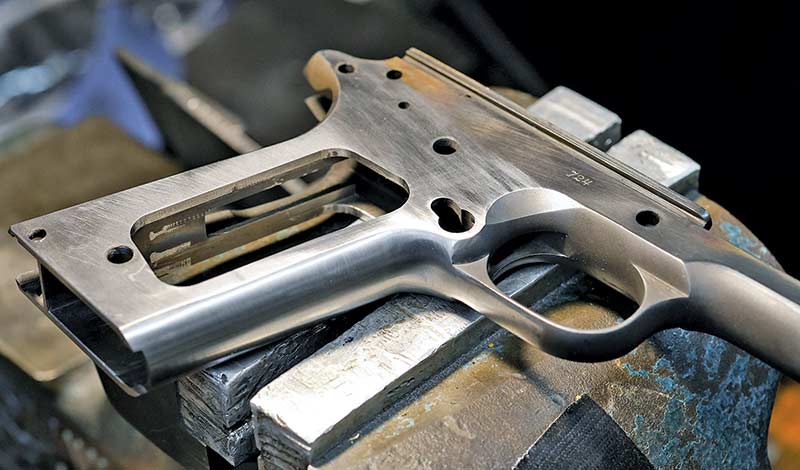
The newly replaced front strap on a first-year Colt .38 Super,
which could not be repaired after it was stippled. A new section
was welded in place.
Get it in Writing
Get a quote, in writing. Most smiths know exactly how much and how long something should take to get done. Many shops list prices on their website or can give you a good estimate for the task. If they don’t give you an estimate, be careful; you don’t want to get a surprise bill totaling more than the cost of the gun. Also, remember to get an estimate for the shipping; there are some horror stories out there. If they have been in business for a while, they know what costs should be.
Should I supply my own parts? No. Unless you are trying to use a rare vintage part, don’t ask a smith to work with your parts. Professionals choose the best parts for a reason. They are made well and usually fit properly. Most smiths will have part recommendations based on their past experiences using them. You wouldn’t bring a set of shocks to your mechanic, would you?
If it’s something special, have a discussion about it. I don’t mind using a rare part like an original BoMar sight or a Swenson thumb safety, but there are some parts I would not use.

A small fragment of a copper jacket that was lodged in
a S&W Pre-29 four screw revolver caused it to be inoperable.
Challenges
Sometimes it’s the little things that cause big problems. One recent case was a vintage Pre-Model 29 four screw Smith & Wesson revolver. The owner had an issue with the cylinder locking up and not rotating. It was locked up solid, the hammer would not cock, I could release the cylinder and it spun freely. The hammer would cycle with the cylinder open and catch in the locked position. It took a bit of snooping, but the culprit was a small sliver of copper jacket that lodged itself between the top of the barrel and the frame. It was just that simple: One small metal fragment seized up the whole works. After freeing the copper sliver, the revolver was inspected for timing since that could cause a jacket to separate if the cylinder is not aligned perfectly with the forcing cone and barrel bore. I used an insert gauge to check that it was within spec, and also checked the cylinder stop for timing. Sometimes it’s just a bad round. During testing, there were no signs of lead or jacket shaving. This just shows how one little thing can put a stop to your firearm.
Resurrection Update
Last issue, I talked about a rare three-digit Colt 1911 in .38 Super. The frame had been stippled at some point in its 96-year history. I removed most of the stippling with a file and sandpaper, but some divots were too deep. Next, it was welded by Jim French using a laser welder. Jim did a great job on adding material. To true it back to the original specs, I sent it to a good friend who does some outsourced work for Colt. Despite all the efforts, the front strap was still too thin. Now what? My friend is a master metalsmith, so after some discussion, it was settled that the front strap would be removed and new front strap material would be welded in. This is beyond my skill level, but not his. New material was added and trued to replicate the factory original. The next step is the slide; the original was long gone and replaced with a post-war Colt Ace slide. I sourced a vintage .38 Super slide, but it had the wrong roll marks.