The Spring Shooting Reset
You Know You Need
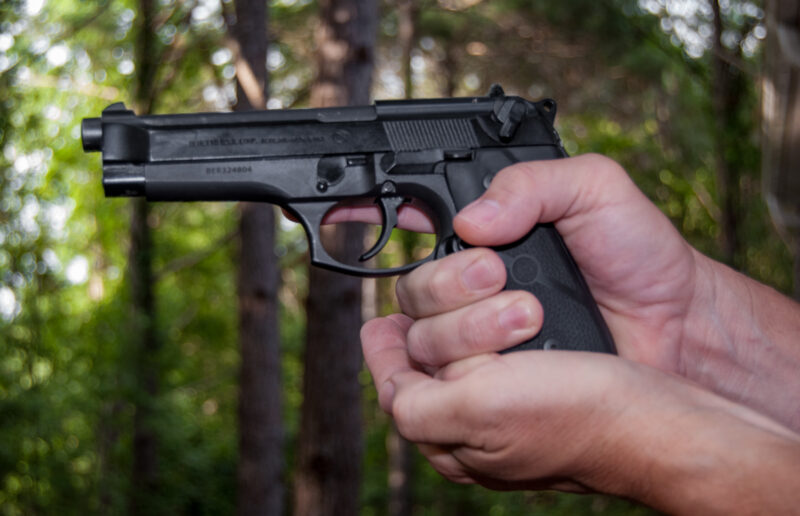
If you slack off too much during the winter "off-season," you may resort to doing something ridiculous like this!
Spring is upon us. You know what that means. Has it been weeks, maybe even months, since you’ve been to the range? If you’re like me, you know what happens.
You dust off your gear. Maybe if you’re particularly motivated, you give your primary gun a spring cleaning and head off to the range. You step up to the 7-yard line. We’re not completely delusional about our loss of skills over the cold winter months. You then proceed to shoot a group that looks like you’ve thrown bullets at the target while blindfolded.
The guy in the lane next to you might even quip, “Rough winter?”
“Shut up,” you say. “I’ve been busy.”
Welcome to shooting season.
This is your annual reminder that skills deteriorate faster than your New Year’s resolutions, and winter does not care about your ego.
The Winter Skill Fade is Real
Let’s be honest: most of us don’t shoot as much in winter. It’s cold. The range is cold. If you enjoy outdoor ranges like me, getting to the range means putting on 17 layers of clothing. Your hands are cold, so your reloads are slower, and your trigger control feels like you’re wearing oven mitts. Heck, maybe you are wearing mitts (or more likely, gloves).
So we tell ourselves we’ll just take a little break. We’ll pick it back up when the weather’s nicer. We’ll maintain our skills with dry fire. We don’t.
And then spring arrives, and we discover what happens when you don’t touch a skill for 8-12 weeks: it evaporates like your breath on a cold day.
I see this every March and April. The range fills up with shooters who think they’ll just pick up where they left off in November. And then they shoot their first group and realize they’ve basically regressed to square one.
Not quite square one because muscle memory is a beautiful thing and quite real, to a point. Which is why I’m writing this article instead of pretending it doesn’t happen to me, too.
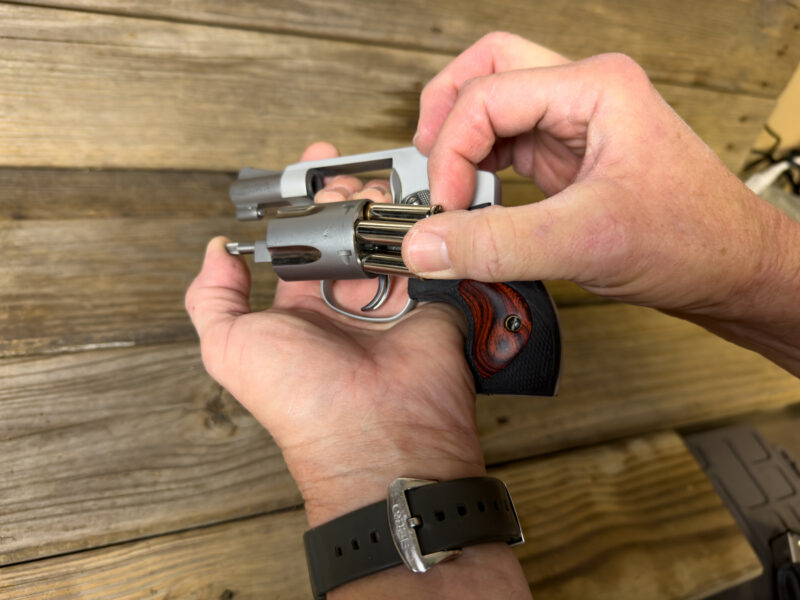
If you're one to prioritize things like reloads, those types of "finer motor skills" are the first to deteriorate.
What Goes First
Skill degradation isn’t random. It follows a depressingly predictable pattern, and the more advanced skills go first.
• Week 1-2 without practice: Your speed starts slipping. Draw times get slower. Split times between shots increase. You don’t notice because you’re not timing yourself.
• Week 3-4: Your accuracy at distance starts to suffer. That 15-yard shot that used to be easy suddenly requires concentration. You tell yourself it’s a fluke.
• Week 6-8: Your fundamentals start getting sloppy. Grip pressure isn’t consistent. Trigger press gets jerky. You’re anticipating recoil without realizing it.
• Week 10-12: You’re basically back to advanced beginner status. Everything works, but nothing works well. This is where most of us end up by March.
Your timeline of a slow and painful skills death may vary a bit, but nonetheless, every winter, it’s the same story for all of us. December performance and March performance are distant relatives.
The good news: skills come back faster than they initially developed. The neural pathways are still there; they’re just rusty. The bad news: they won’t come back on their own. You have to put in the work.
The Spring Reset That Actually Works
Here’s what doesn’t work: showing up at the range, shooting 50 rounds of whatever you feel like shooting, and hoping skills magically return.
Here’s what does work: a structured reset that rebuilds fundamentals in order, from the ground up. Think of it like spring training for baseball — you don’t start with game situations. You start with the basics.
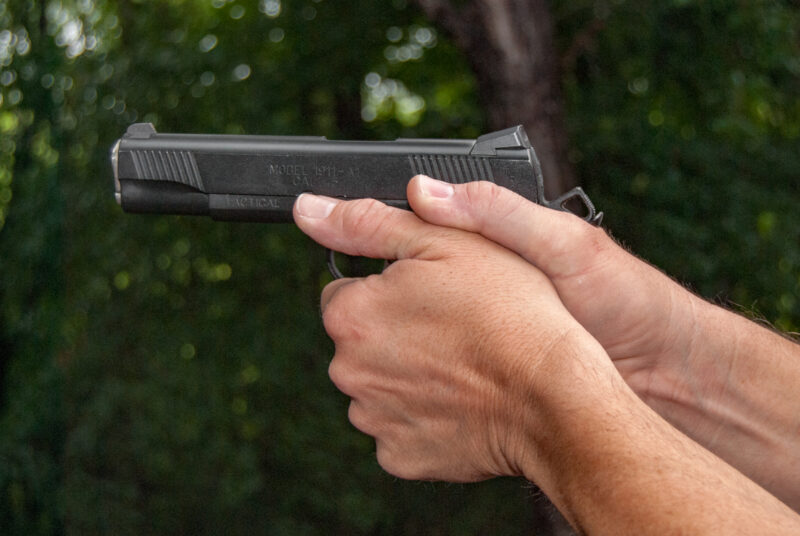
Get your proper grip back first! Everything relies on that!
Week 1: Grip and Stance Only
No target. No shooting for accuracy. Just grip and presentation. If you practice safe dry fire skills, you can do this at home.
Load your gun, establish your grip, present to target, hold on target for 3 seconds, then lower and re-holster. Do this 50 times. Focus entirely on grip consistency — same pressure, same placement, same two-handed lock every single time.
This feels boring and pointless. But your grip is the foundation for everything else. If your grip varies from shot to shot, everything else falls apart.
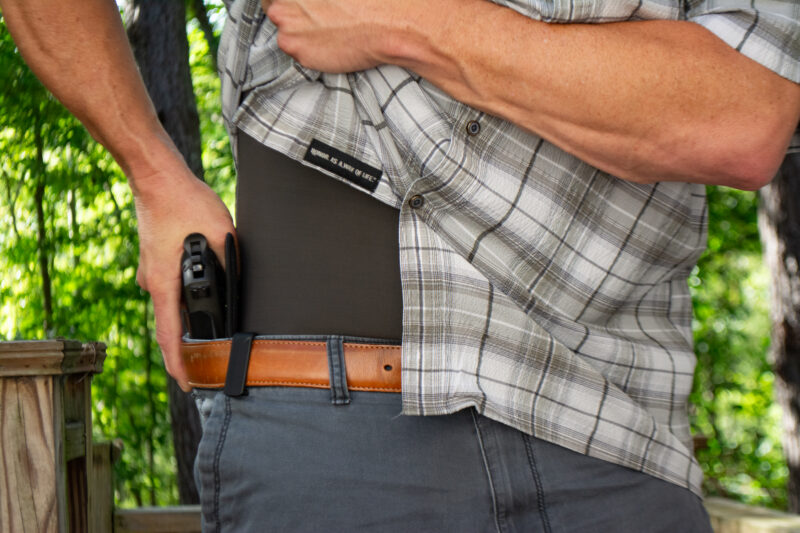
Here's one that gets rusty really quickly: drawing from concealment.
It's far too easy to slip into a "high error rate" situation when you have to
reliably clear cover garments during the draw.
Week 2: Trigger Press Isolation
Now you can actually shoot, but only at slow fire. Load one round at a time (yes, really). Or at least fire one shot at a time. Present, establish sight picture, press the trigger smoothly with only your trigger finger moving, follow through.
The one-round-at-a-time thing forces you to be deliberate. You can’t develop a rhythm. You can’t anticipate. Each shot is its own discrete event.
Distance? Seven yards max. Five might be even better. Target? Something small, but one you can still see. Use a Dot Torture target. You can print them at home. Goal? Press the trigger without disturbing the sights. If you see the gun dip or jerk when the shot breaks, you’re doing it wrong.
Consider shooting a whole box of ammo this way.
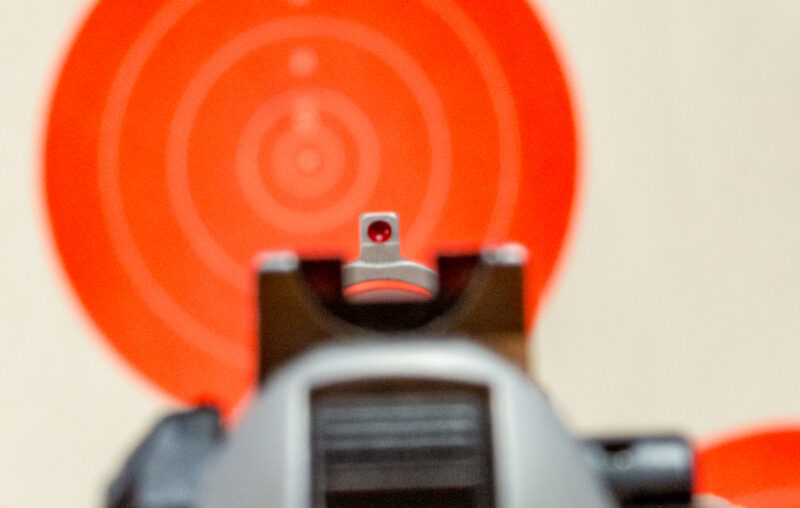
The brain gets fuzzy on sighting basics too, like focusing on the front sight, not the rear sight or target.
Week 3: Sight Picture and Follow-Through
Now we add distance. Back up to 10-15 yards. Stay slow fire. Focus on seeing your sights clearly, confirming sight alignment, pressing smoothly, and watching for sight lift after the shot breaks.
This is where most people rush. Don’t. Your goal is perfect sight picture on every shot, not speed. If you can’t see your sights clearly, you’re shooting too fast.
I printed a simple bullseye target for this and shot one round per bull. If the hit wasn’t centered, I didn’t move to the next bull. Instead, I figured out what I did wrong and shot the same bull again. This is humbling when you realize you can’t consistently hit a 3-inch circle at 10 yards after two months off.
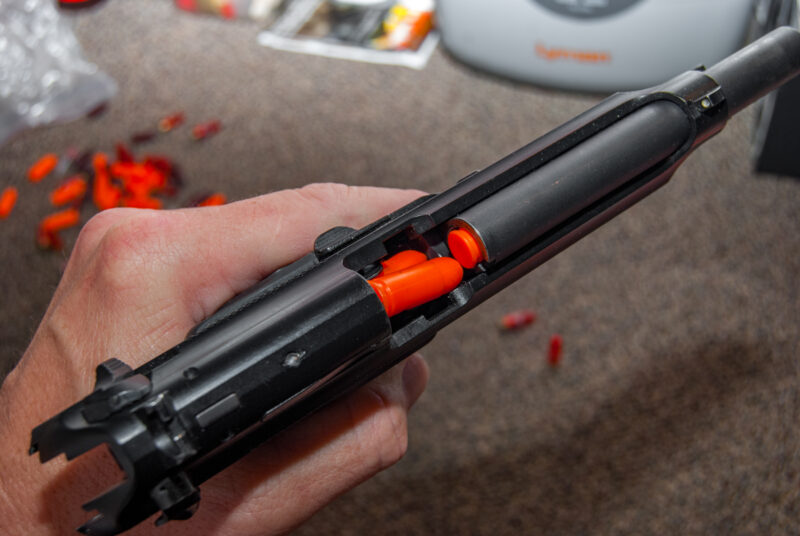
If you're motivated, there's no reason you can't "keep in shape"
with gun manipulation skills with a set of snap caps.
Week 4: Speed Reintroduction
Only after three weeks of deliberate fundamentals work do you start adding speed. And even then, we’re talking controlled speed, not “dump the mag as fast as possible.”
Start with Bill Drills at 5 yards: six rounds on target as fast as you can while maintaining acceptable accuracy. Time yourself. You’re not trying to set records.
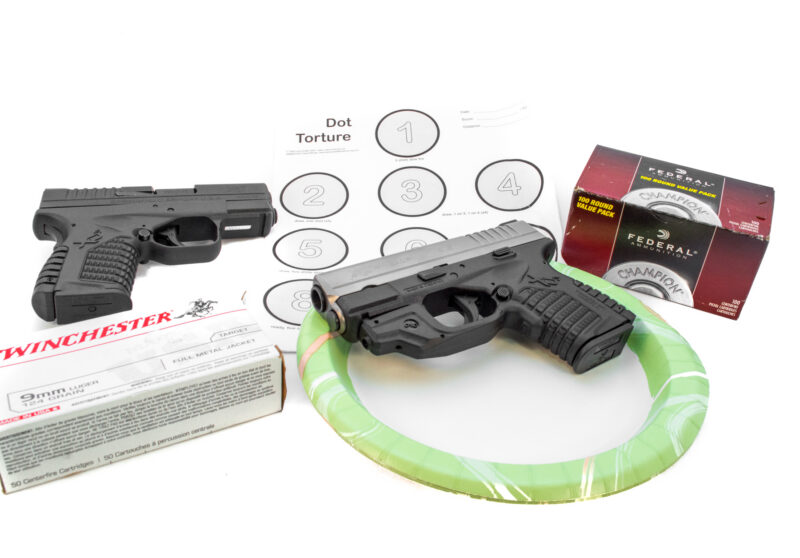
The basics are key. Doty torture targets are great for "one shot, small target" practice
and paper plates are good to recover multiple shot skills.
The Stuff Nobody Wants to Hear
You can’t skip fundamentals: I don’t care if you’re a USPSA Grand Master or a casual plinker. If you took 10+ weeks off, you need to rebuild fundamentals. Your ego will tell you to skip to the fun stuff. Your groups will tell you that idea was a delusion.
Volume doesn’t fix technique problems: Shooting 500 rounds of garbage technique just ingrains garbage technique. Slow down. Be deliberate. Fix the problems before you add speed or volume. I’m a big believer in that “one deliberate shot at a time” idea.
The reset takes time: You cannot rebuild skills in one range session. Plan on 4-6 weeks of focused practice before you’re back to where you were. This feels frustrating. Suck it up. You chose not to practice in winter; this is the consequence.
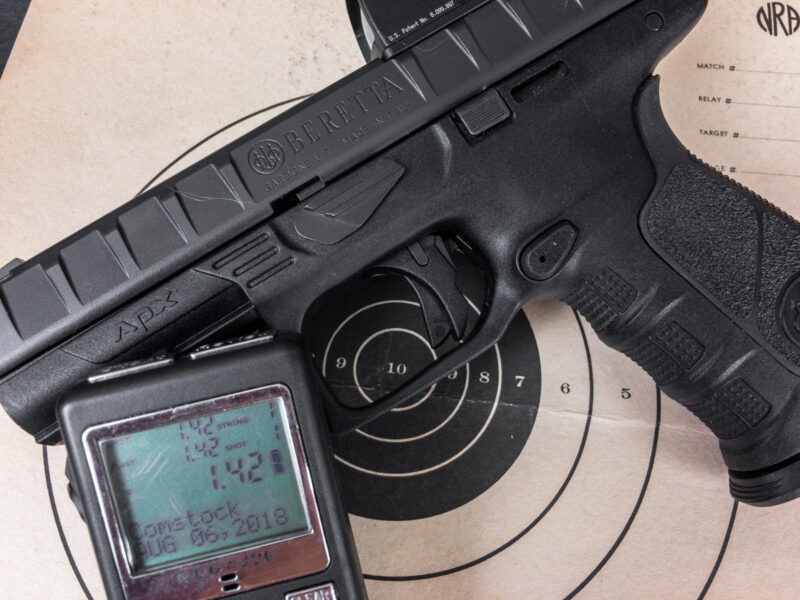
Only after you refresh on the basics should you break out the shot timer
to work on recovering any speed lost during the winter.
Start Your Reset Now
If you’re reading this in spring and realizing you haven’t been to the range since Christmas, don’t put it off. Plan a trip now.
Don’t be like most people. Go fix your fundamentals before you try to fix your speed. Spring is here. Time to remember how to shoot.
Get more exclusive online content from American Handgunner delivered straight to your inbox. Sign up for our free American Handgunner Insider newsletter.