Perfection Improved
The Texas Longhorn Arms Number Five
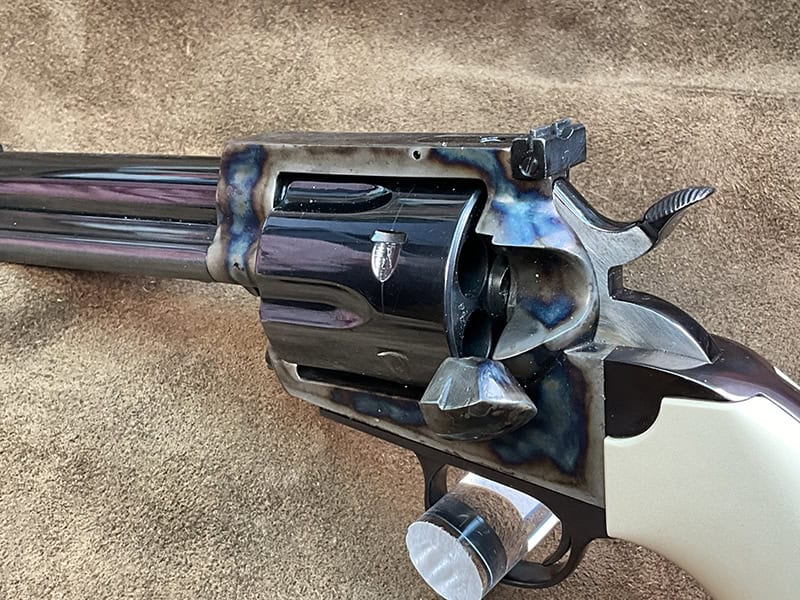
By placing the loading gate on the left, the shooter never has to switch hands to reload.
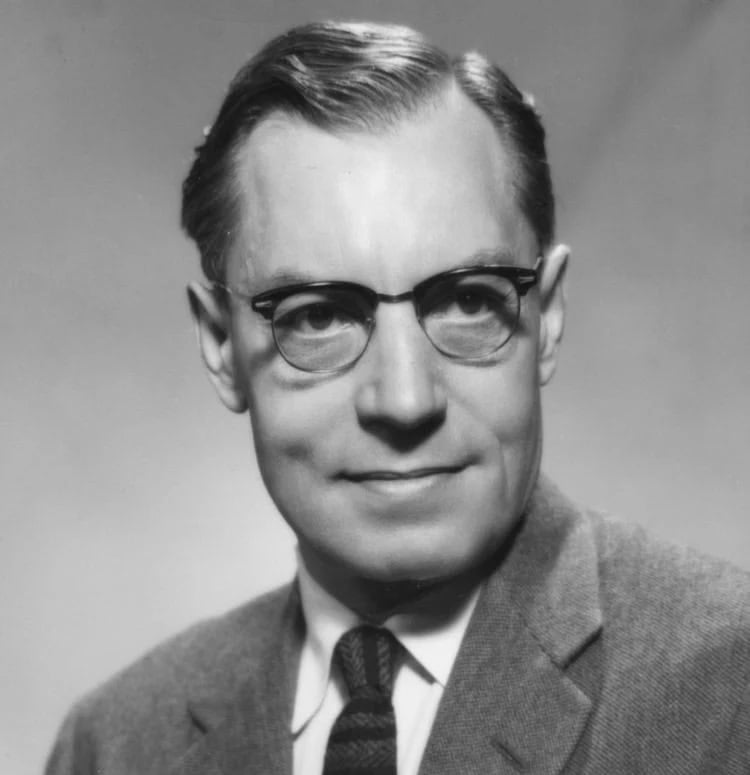
Elmer Keith was the real deal. Over his life, he was a cowboy, big-game hunter, US Army arsenal inspector, handloader, writer, editor, and a man on a personal quest to find the perfect handgun cartridge and the vessel to carry it. In today’s terms, he was an “influencer” like no other, and his influence is still felt a century later. Keith hunted game out to 300 yards with a handgun and, in his quest for greater range and killing power, was instrumental in the development of the .357 Magnum, .41 Magnum, and .44 Magnum, as well as handguns capable of withstanding their immense pressures.
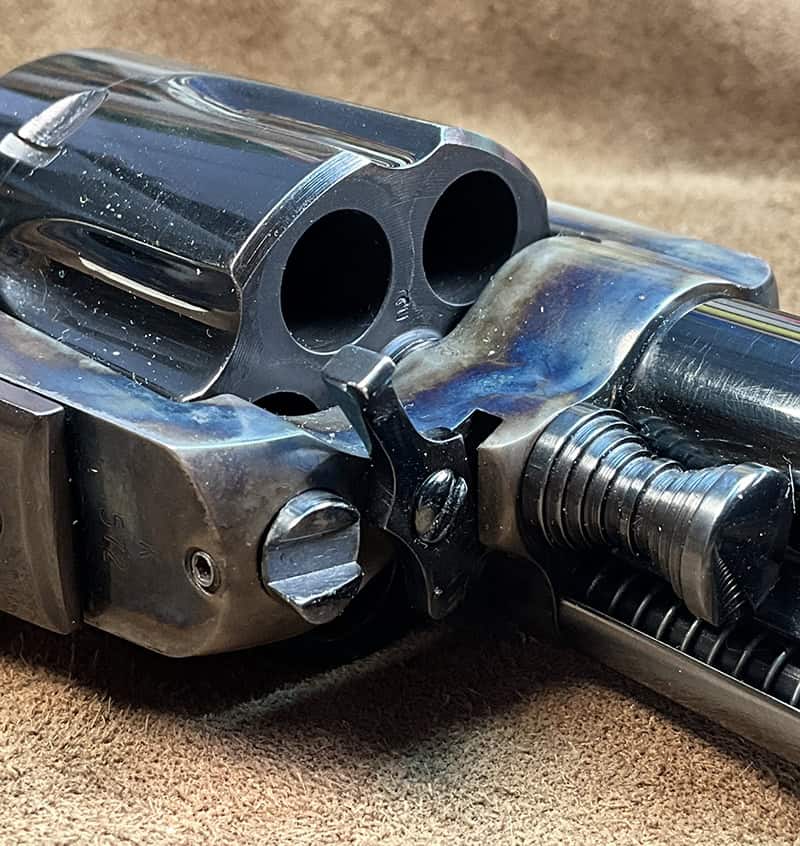
A pivoting latch prevents the cylinder pin from moving forward under heavy recoil.
This quest led him to modify a gun he was intimately familiar with, the Colt Single Action Army. While the Colt felt good in his hand, he wanted something a little different, which led to a Colt modified by expert gunsmith Harold Croft, blending grip frames from the standard SAA and the Colt Bisley model. The result was lovingly called Number 5. “To my notion, this is the finest and best Colt in existence,” Keith wrote in 1929. “For general excellence of grip, balance, sights, trigger, and hammer, I do not think this gun can be improved upon.”
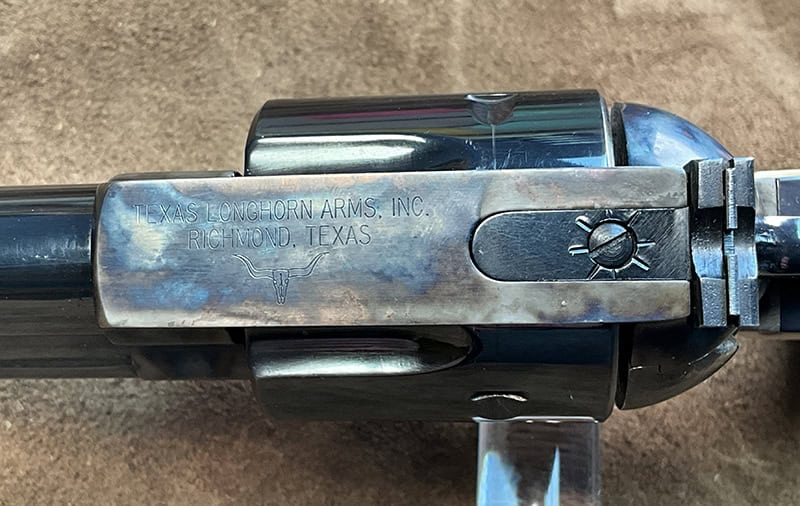
Texas Longhorn Arms is proudly stamped into the top of the frame.
Most would leave that statement alone; after all, who would argue with Keith? But gunmaker Bill Grover felt he could improve on the design while honoring Keith’s heritage. His first attempts failed to produce the gun of his dreams, but in the late 1980s, Grover made the connections needed to bring his brainchild, the Improved Number Five, to life. In 1988, Grover’s company, Texas Longhorn Arms, started shipping, with the very first going to legendary John Taffin, who instantly fell in love with the lines and feel of the six-shooter.
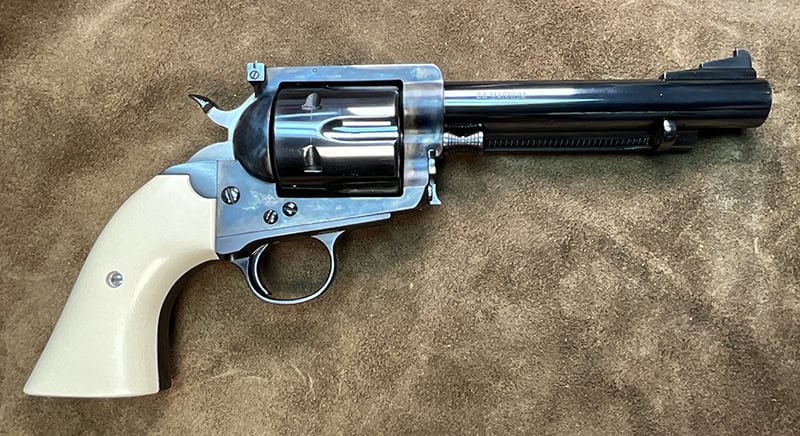
The frame is larger and stronger than the original to handle the potent magnum loads.
The Improved Number Five was built on the lines of Keith’s Number 5, but strong enough to handle the punishment of the .44 Magnum. Grover felt Colt SAAs were better suited for left-handed shooters in terms of loading/unloading. With most shooters being right-handed, he designed his revolver with the loading gate on the left so that the revolver never left the shooter’s hand during reloads.
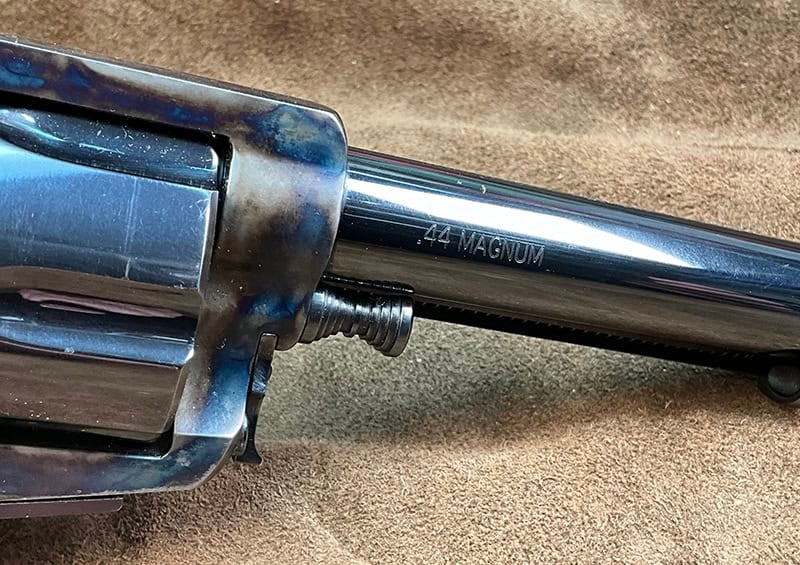
The enlarged stepped cylinder pin head solves removal issues.
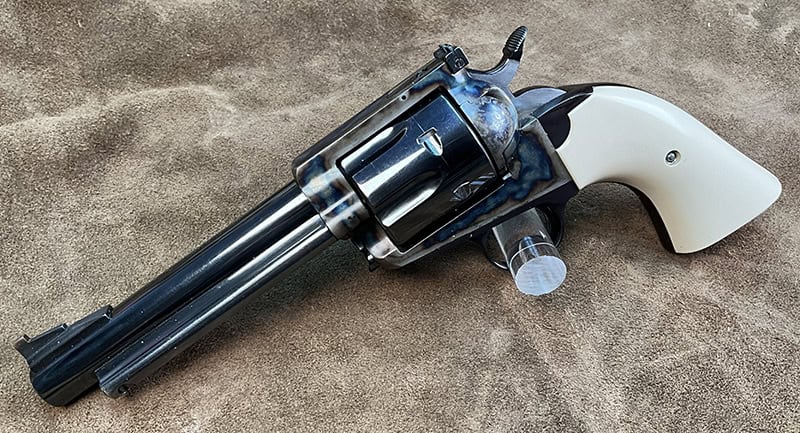
Elmer Keith would instantly recognize the next generation of his prized revolver.
Like the original, the cylinder pin head was oversized and enlarged to provide a positive grip for removal, and a locking lever to prevent the pin from backing out under recoil. The rear sights were low-profile but adjustable. The flat top of the frame provided a clean, strong deck for clear sighting of the raised Patridge front sight. While not an original Bisley-style hammer, Grover’s hammer was grooved and low for secure thumbing while cocking the action. The trigger was shotgun-style and barely moved when cocked. The angle and pattern of the grips helped the shooter maintain control under the full recoil of heavy loads.
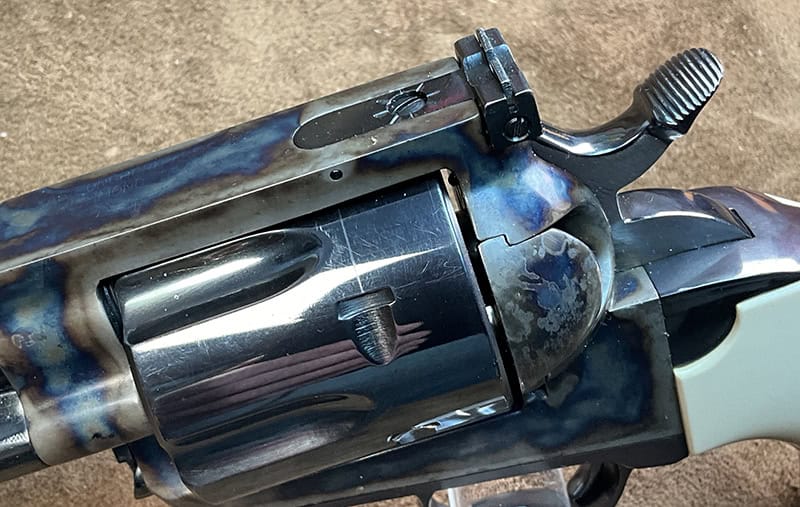
The frame and features lean heavily towards the Colt Bisley.
Grover planned to produce 1,200 Improved Number Five revolvers. Unfortunately for shooters, Grover could not keep up with orders nor build enough capital to improve production times. In 1998, Texas Longhorn Arms closed its doors. Six years later, broken and in poor health, Grover passed away, and with him went the dream to restart production.
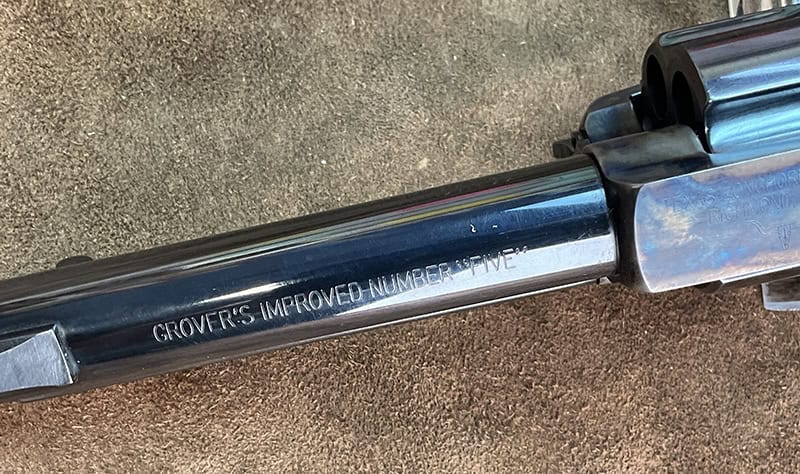
Grover truly improved Keith’s Number Five.
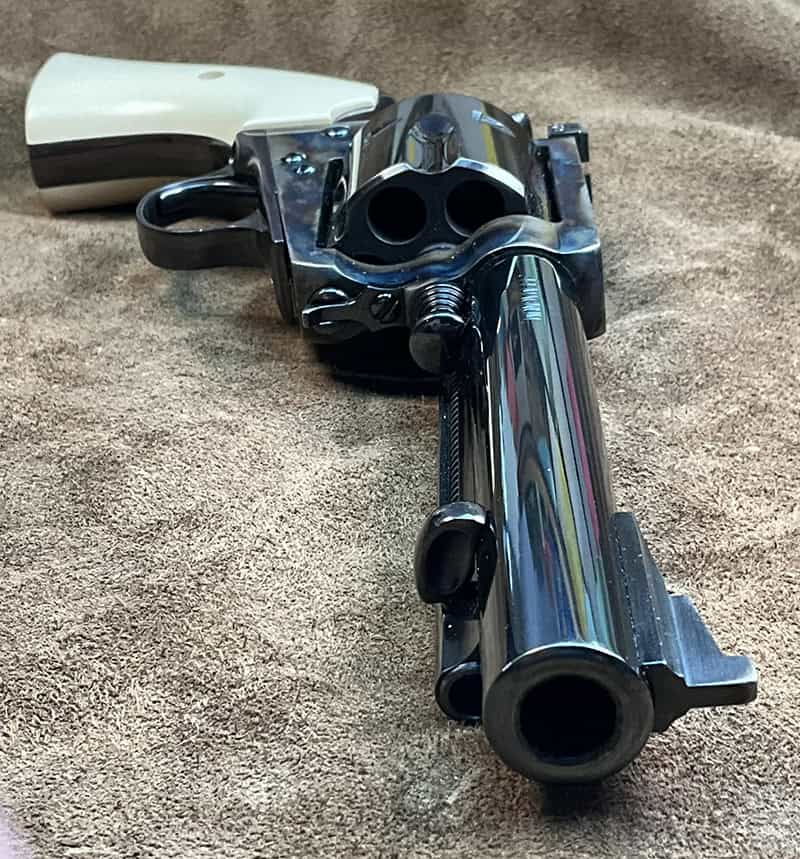
The Improved Number Five is beautifully utilitarian.
Due to its high quality and limited production, the prices of Texas Longhorn Arms’ Improved Number Five are now only within reach of collectors who still honor Elmer Keith and have deep pockets. Could someone pick up the standard and start production for the next generation? We can only dream.
For information on the original No. 5, check out: https://americanhandgunner.com/handguns/the-keith-5-single-action-revolver/
Get more wheelgun content every week!
By submitting this form, you are consenting to receive marketing emails from: . You can revoke your consent to receive emails at any time by using the SafeUnsubscribe® link, found at the bottom of every email. Emails are serviced by Constant Contact