What Makes a “Great” Gun?
Part 1
A Reality Check Beyond Brand Loyalty
What separates an "OK" gun from a great gun?
Barring the purely subjective likes and dislikes of one over another?
We’ve all participated in the range talk…
“This is a great gun!”
“I love this gun!”
“Yeah, this one would be my ‘keeper’ if I had to sell off my collection…”
So, what separates a “great” gun from an “OK” one? Clearly, some of the criteria can be attributed to sentimental feelings. Those are, and should be, purely subjective, and I’d never argue with someone who chose a “great” gun for those reasons. I’ve got some of those. My original 1936 Colt Woodsman from my grandfather, a Beretta 92FS (my first official carry gun), and a Winchester 9410 chambered in .410 shotgun (a gift from my wife, and it’s just fun and interesting). There are more, but you get the idea. While mechanically, I’d stack up that Woodsman against most anything using objective criteria, many of my sentimental “great” guns are just that.
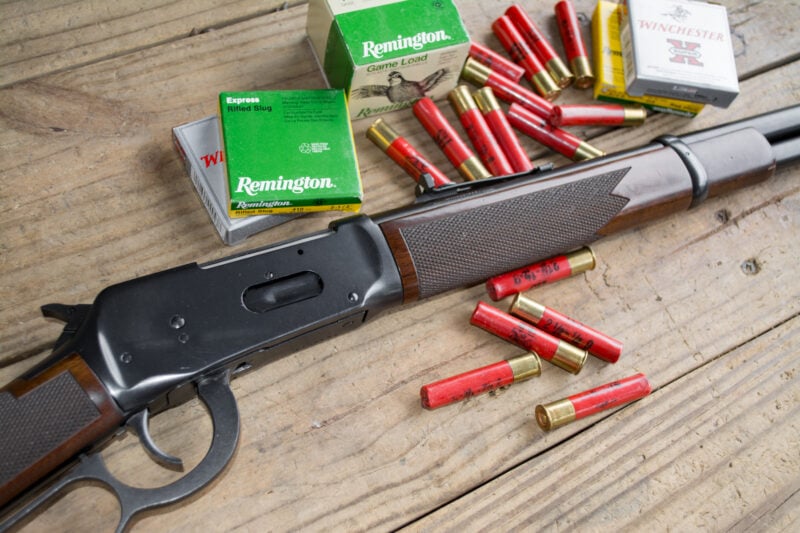
Objectively, this Winchester 9410 is a pretty good gun.
When you factor in the subjective, it becomes a "great" gun, at least in my book.
Yeah, it's super fun, especially on the five stand. Lever-action doubles with a .410?
Challenging to say the least.
So, flipping the coin, what makes a “great” gun when you take the purely subjective preferences out of the picture?
Learnings from Lots of Guns
A lot of you have decades of experience with guns and shooting, so I’d like to hear some of your opinions on the matter. Here, I’ll share some of mine. This could fill a book, so I’ll try to stick to the high points.
The fun part of this job is the opportunity to borrow lots of guns for a couple of months at a time for testing and evaluation. The less fun part of the job is borrowing guns that are not quite up to par. Fortunately, there are very few in this category.
Perhaps this can be attributed to our industry. It tends to be filled with “salt of the Earth” folks who operate on a “back in the day” value system. Just to be clear, in my view, this is the highest compliment. The result? I get lots of letters from readers sharing their experiences dealing with gun, ammo and accessory companies. The overwhelming majority of those letters relate wonderful customer service experiences. Mistakes happen. A gun or product occasionally makes its way into the retail channel, but when it does, the resulting service call usually results in a response like, “Sorry! We’ll take care of that right away. No charge, of course.” Again, there are exceptions, but in the scope of things, relatively few.
So, after getting to tinker with lots of guns, what are the high points separating the “great” ones from the “not so great” competitors? Let’s admit up front that some of these factors are “planned,” meaning there are guns designed intentionally to hit an affordable price point. It would be unfair to compare the features or fit and finish of a $250 semi pistol to a custom Nighthawk, for example. So, comparing apples to apples, here are some factors to explore when evaluating a gun.
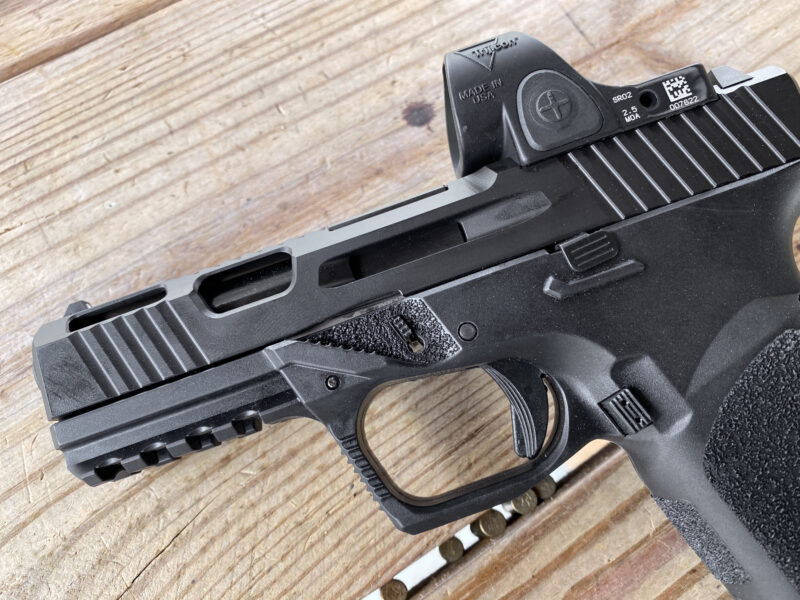
A little rough in operation, thanks to some parts' imprecision (it's a DIY 80% model),
it works fine, but does show the value of precision-fitted parts.
Fit and Finish
Before you even leave the store or the show, you can examine the overall level of attention paid to fit and finish.
Do mated parts line up? Is the back of the slide flush with the frame? If the semi or revolver has installed grips, how do they line up with the frame?
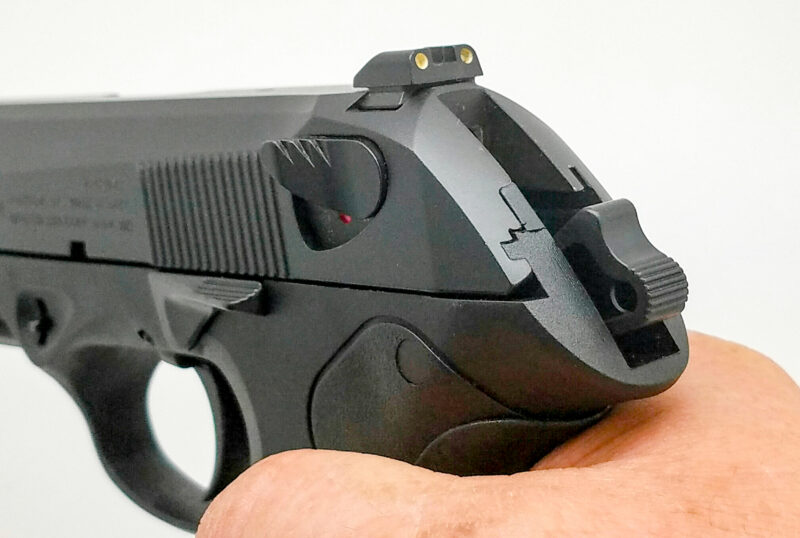
This Beretta PX4 is a mass-produced factory model. Note the nice fit between the polymer frame and metal slide.
For its price point, I think it's a great gun. It's put together well and operates smoothly, not to mention reliably.
How does the muzzle look? Whether it’s crowned or not, how “clean” is it, and does the rifling transition to “air” in front of the fiery end without visible burrs or inconsistency?
I could go on, but you get the idea. While fit and finish issues won’t necessarily define a terrible gun, they do offer insight into the manufacturer’s attention to detail.
Trigger
I’m a trigger snob, but let’s be real. Operating the trigger is something you do with every shot you fire. Yeah, I know, that’s obvious, but like opening the door on a new car and electing that smooth and satisfying “click,” if it’s not right, you are not going to be happy with your purchase. And, in the gun scenario, a rotten trigger contributes to rotten shooting results.
Getting into pure opinion territory (your mileage may vary), I look for a few things.
Does the trigger movement feel like butter on butter, brick on brick, or somewhere in between? One of the first things I do with a new gun is dry fire it, paying careful attention to the feel of the complete trigger cycle. Do you feel any grit or rough spots anywhere in the range of movement? Does the sensation change when pressing with the trigger finger pad versus the first joint? Depending on the fit, this may apply more or less “side pressure” that more readily exposes rough spots. Not only is the “smoothness” of the trigger a contributing factor to consistency, but it’s a reflection on the overall attention to fit and finish we discussed above.
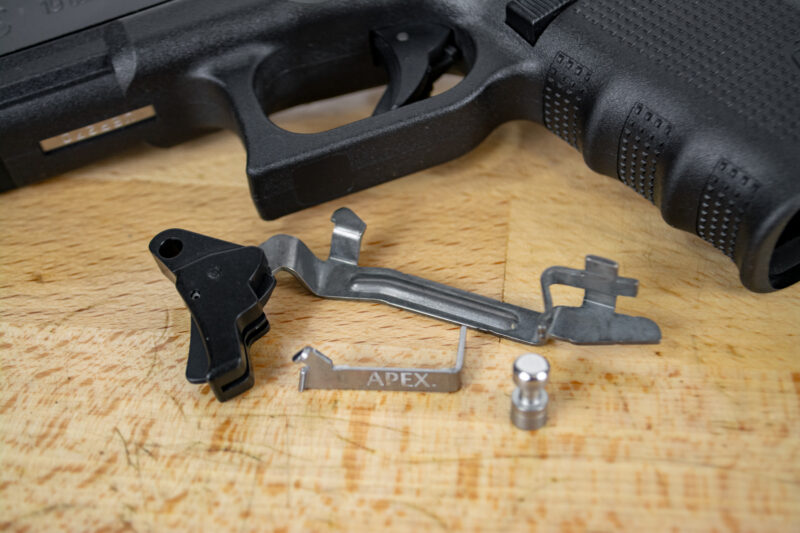
A less-than-great trigger quickly moves a potentially "great" gun into the "OK" gun pile.
Fortunately, DIY upgrades abound, and you can buy an "OK" gun with other good
attributes and make it "great."
Speaking of the trigger, is there any lateral wobble? How about with the hammer, if applicable?
Perhaps surprisingly, I am less concerned with the pull weight of a trigger than with its movement, consistency and break. No one complains about an eight or ten-pound, high-quality trigger on a double-action revolver. If it has a good motion and a predictable break without a mushy feel, you can learn to shoot it well.
Tolerances
There are lots and lots of tolerance issues and corresponding checks, but the biggie is related to lockup. We can illustrate this best with a classic semi-automatic pistol example.
As always, using a carefully unloaded pistol, try to move the barrel. Explore whether the barrel can move back and forth against the breech face. Basically, you’re looking for consistent lockup. Do the slide and barrel return to the exact same positions with every cycle of the action, whether done by hand or live fire?
I did an experiment with a Smith & Wesson M&P semi a few years back. The factory configuration shot just fine for a service gun. At 25 yards, from a good rest, the pistol would produce 2.5 to 3.5” five-shot groups from 25 yards. Certainly, other pistols will shoot smaller groups than that, but 99% of shooters can’t shoot that well freehand anyway, so it’s a bit of a moot point.
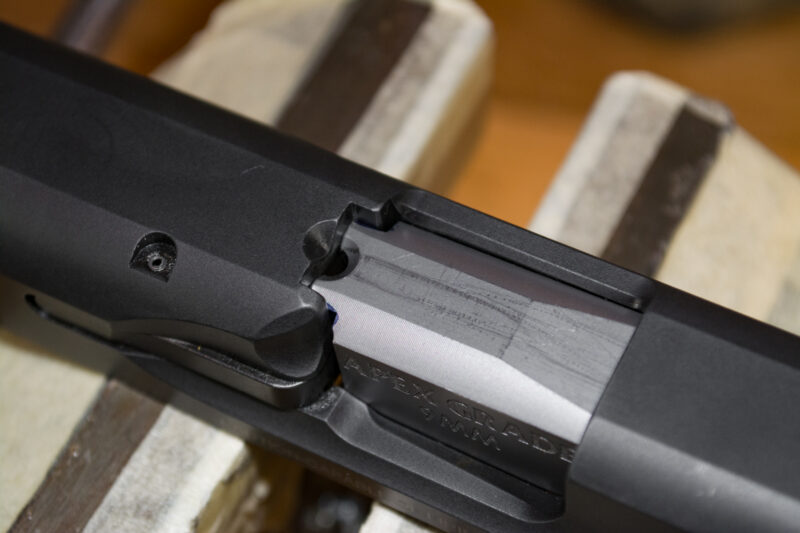
Fit is everything for accuracy. This DIY fit-yourself-barrel now locks up tight in this Smith & Wesson M&P,
producing 1+" groups, far better results than the factory version.
Anyway, the reason for the 3” group performance ties back to tolerance issues. For large-batch production guns, parts are made individually and placed in bins for later assembly. During the assembly stage, workers grab a part and install it on the next gun as it comes down the line. There’s nothing wrong with this; it’s how companies can make great guns for several hundred bucks.
Anyway, to make this system work, there has to be enough play in the parts’ dimensions so that the related part will work with any other. In this example, any slide from the “slide bin” has to fit any barrel from the “barrel bin.”
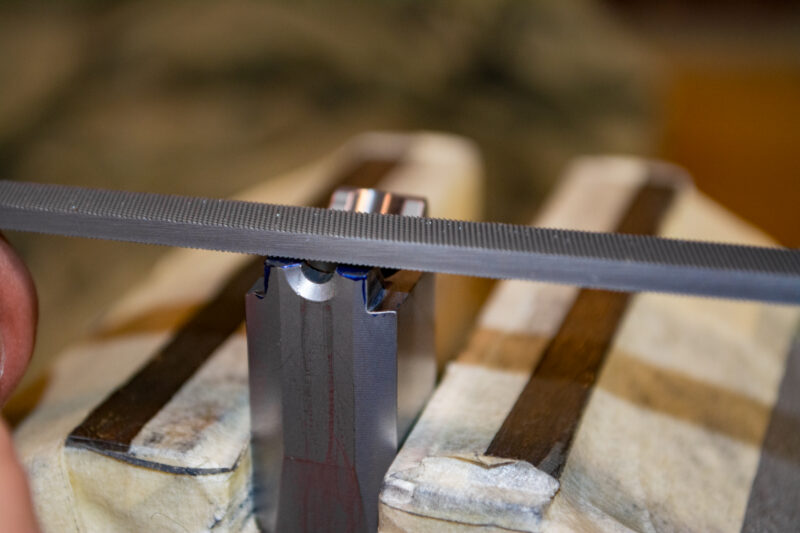
When working with one gun and one set of parts, we have the luxury of setting perfect tolerances
on key components, which usually makes a gun "great."
The result, evident in my gun, is a bit of longitudinal play between the barrel and slide. You can move the barrel back and forth, and a hair side to side. To prove out the illustration here, I bought a semi-fit barrel from Apex and carefully fit it to my particular slide to eliminate any play between slide and barrel. Through fitting and iteration, I made the barrel-to-slide fit tight while still functional. Function is a factor not to be overlooked! When I first achieved a tight fit, the slide and barrel would not reliably lock up, so I had to loosen it just a hair.
Eventually, I had a specific barrel fit to a specific slide. At the range, the results showed the impact of tolerance issues. Almost all ammo types I tried produced 1+” five-shot groups at 25 yards.
Strip away the nostalgia and the “my buddy says it’s awesome” factor, and a great gun reveals itself in more subtle ways. Fit that shows attention to detail, a trigger that behaves predictably, and tolerances that balance precision with reliability all tell the real story. In the end, a great gun isn’t necessarily the one everyone praises at the range. It’s the one that does exactly what it should, every single time.
Get more exclusive online content from American Handgunner delivered straight to your inbox. Sign up for our free American Handgunner Insider newsletter.