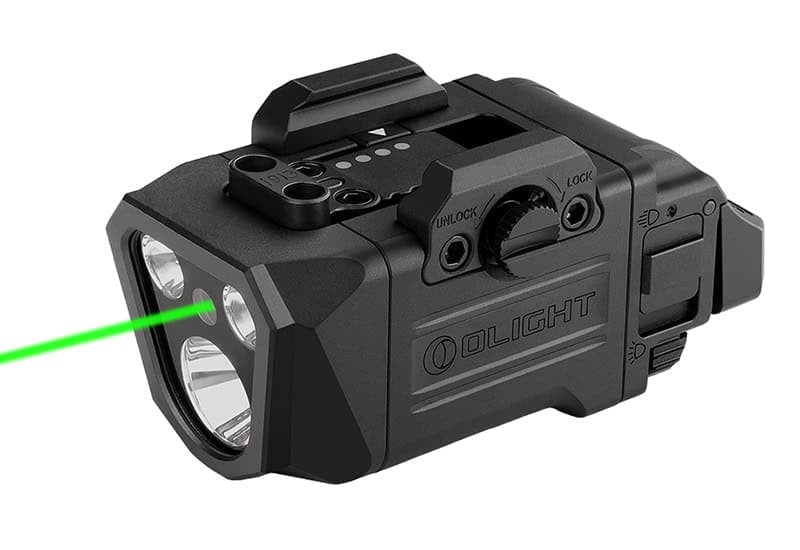
Blow Dryer Voodoo

Blow dryers like this one are just stupid cheap. However, they embody some fascinating science.
I live in rural Mississippi. In the heat of summer, the humidity is so thick you can rip off a chunk of air and gnaw on it. As such, whenever I take my camera outdoors to shoot pictures for a gun article, the lens invariably fogs up. To rectify that, I keep a cheap blow dryer plugged in by the door and give the happy end of my camera a quick squirt before heading outside. Warming up the lens keeps the inevitable fog at bay. The same thing applies to my optical sights when I am scurrying outside in a rush to put paid to yet another enormous water moccasin cruising across my backyard lake. Now, hold that thought …
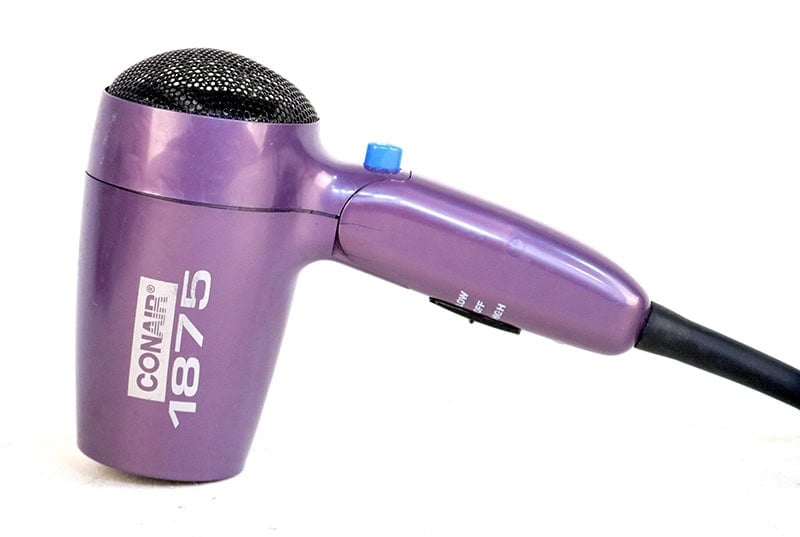
You can discover some fairly miraculous concepts embedded within your humble hair dryer.
Pax Mechanica
Our modern world is covered in a thin patina of amazing machines. Stuff that was literally unimaginable a generation ago is commonplace today. I, for one, am thankful to have grown up in an analog age. Those days are gone never to return.
Back when “Star Trek” was fresh and new, America was caught in the throes of the space race. We all expected that, by the new millennium, humans would be cycling back and forth to the moon and Mars just like we might hit the beach for vacation. Alas, we missed the mark a bit on that one. The real revolution we should have seen coming from “Star Trek” was miniaturized electronics.
Now, every time you visit Walmart, the doors open for you automatically. Additionally, most of us carry a tiny device in our pockets that, given the right number sequence, would allow us to talk to somebody in Norway. Both those things would have been unimaginable when I was a kid. That’s what has really changed the world.
Our modern environment is awash in stuff like that, things that would have seemed more akin to magic than technology a few short years ago. You can find such extraordinary practical applications of science all around if only you know where to look. One such example is the humble handheld blow dryer.
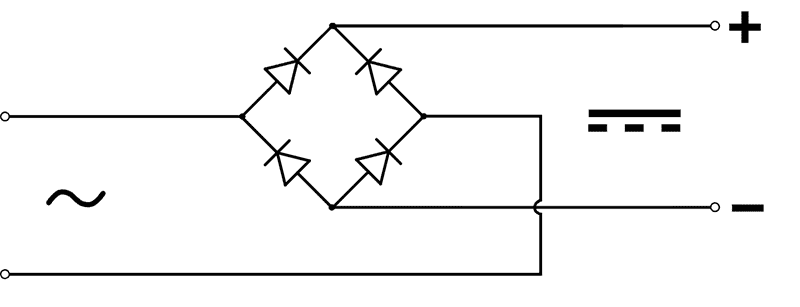
This is the circuit diagram for a bridge rectifier. It is the device used to convert AC power into the DC sort.
Public domain.
Harnessing Science
The blower motor on a cheap handheld blow dryer operates on DC, or direct current. The stuff that comes out of your wall socket is AC, or alternating current. Typically, turning 120-volt AC at 60 hertz into the requisite 12 to 24-volt DC requires a bulky, heavy transformer. An electrical transformer on this scale usually includes a generous chunk of iron and an ample supply of copper wire. To incorporate such a nifty trinket into a handheld hair dryer would create a device that was too bulky and too ungainly to accomplish the mission. As a result, the rocket surgeons who crafted the first blow dryer took a fresh new tack.
Your basic run-of-the-mill blow dryer has two main components — that DC motor to push the air and a heating element to raise its temperature sufficiently to desiccate your flowing locks. An electric motor is an electric motor. They are quite literally everywhere.
The heating element is a long, coiled, highly resistive nichrome wire. By running a current through this wire, direct resistance heating produces the desired hot air. However, activating the heating element without the fan motor would raise internal temperatures precipitously. Do that for long, and the plastic housing of your hair dryer will melt.
You recall we still have the problem of converting 120-volt AC to 12 to 24-volt DC. To do this in the absence of a bulky, expensive transformer, engineers run the current through that long heating element first. As those 120 volts step down through the nichrome wire to about a tenth of that, excess energy bleeds off as heat. The device captures this heat, forces it out the nozzle, and uses it to dry your hair.
In most electrical devices, this excess heat is a challenge to get rid of. That’s why computer motherboards typically have fans and aluminum heat sinks to help dissipate it. In the case of the blow dryer, the extra heat is the point of the exercise.
That nichrome heating element becomes the voltage transformer. By carefully crafting the geometry of the thing and tapping the motor contact at just the right spot, the original 120-volt AC is transformed into a lovely stepped-down voltage suitable to power the fan. The device then uses something called a four-diode bridge rectifier to convert AC to DC. In that state, it is ready to go to work blowing hot air.
In so doing, the device itself becomes the transformer, and the excess heat that might otherwise be wasted accomplishes the mission. Both aspects of the device are equally critical to its safe operation. Because we have so many trial attorneys in America, modern blow dryers also incorporate a compact bimetallic safety switch inside the device that deactivates everything if one component fails and the temperature begins to rise. Not only does this keep your typical blow dryer lightweight and handy, but this elegant solution also means a decent blow dryer will set you back a paltry $15.99 on Amazon.
God put us here for a lot of different reasons. Part of that was, I think, so He would enjoy watching us figure stuff out. Whoever wins the Nobel Prize for Physics next year will not invent anything. He or she will simply discover something that God wove into the fabric of the universe at the very dawn of time. Some of that stuff is pretty opaque and tough to tease out. Other times you can discover some fairly miraculous concepts embedded within your humble hair dryer.
Get More Guncrank Stories Every Week!
By submitting this form, you are consenting to receive marketing emails from: . You can revoke your consent to receive emails at any time by using the SafeUnsubscribe® link, found at the bottom of every email. Emails are serviced by Constant Contact