When the Wolfman’s Cousin Saved the World
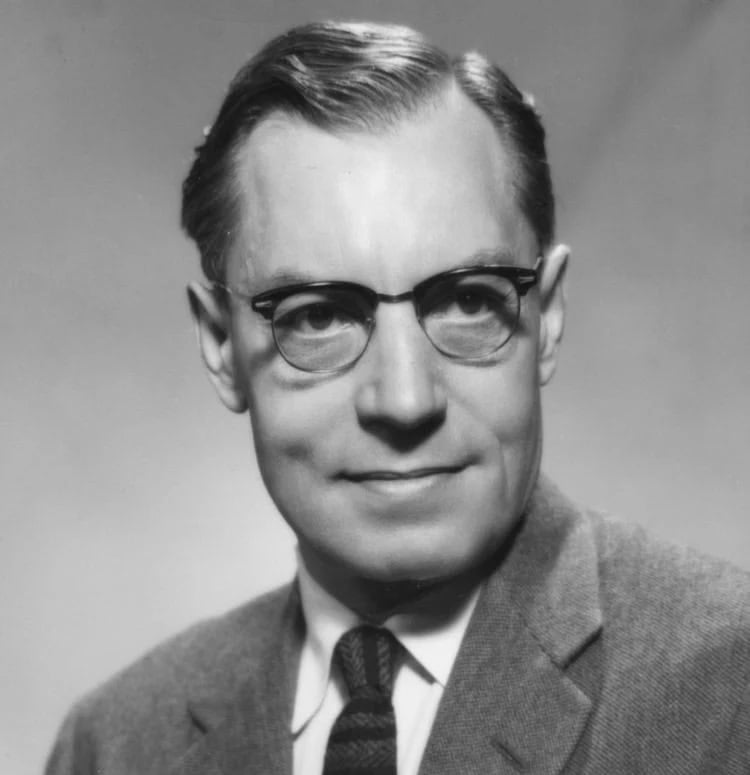
Ancel Keys, the Wolfman's cousin.
Back when I was a kid, folks used to die in their fifties of heart disease all the time. I recall coming to church and hearing friends’ parents lamenting the fact that Mr. Smith or Mr. Jones had been toiling away at work and just fell over dead from a heart attack. That still happens, but it’s not nearly as common. There are a lot of reasons for this.
Curiously, our lifestyles are way worse today. Machines and microelectronics have conspired to make our jobs much more sedentary. Most modern folk work behind a computer rather than a shovel or a jackhammer. As a general rule, we don’t get nearly as much exercise as our grandparents did.
We also eat garbage, most all of us. Helping sizes have skyrocketed across the board. What used to be considered an adequate meal at McDonalds for a typical young adult is a child’s Happy Meal today. Despite this, we are still doing a respectable job in the fight against heart disease. A big part of that is our current understanding of the links between diet and arteriosclerosis. While entire medical specialties orbit around this today, it really all started with one remarkable man. That guy was the Wolfman’s cousin.
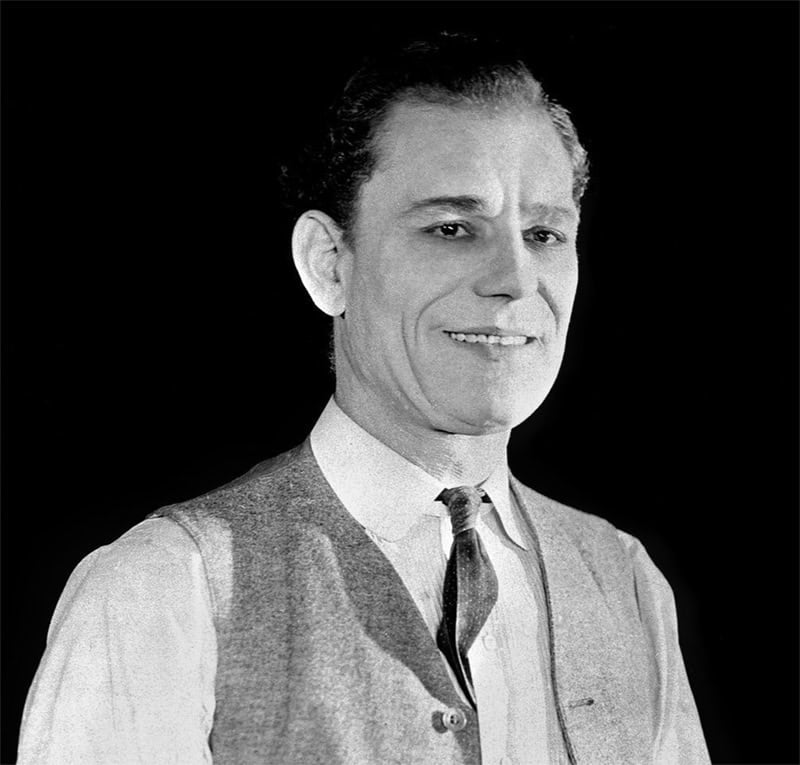
Lon Chaney. Public domain.
Origin Story
Ancel Benjamin Keys was born in Colorado Springs, Colorado, in 1904. His mother, Carolyn Emma Chaney, was the sister of famed silent film actor and director Leonidas Frank “Lon” Chaney Senior. Lon starred in The Hunchback of Notre Dame and The Phantom of the Opera. His son Lon Chaney Junior played a variety of famous Universal monsters to the include the Wolfman, Count Dracula, Frankenstein’s monster, and the Mummy. Ancel and Lon Junior were therefore cousins.
Young Keys was both brilliant and industrious. While in high school, he shoveled bat guano, toiled in a lumber camp, and worked as a powder monkey in a Colorado mine. After taking a gap year to travel to China on the SS President Wilson, he returned home to study economics, political science, zoology, and oceanography. Keys was a polymath who was good at most everything. By the time he became a full-time professor and researcher, he had earned two sequential PhD degrees.
Accomplishments and Accolades
We lack the space to adequately catalog what this remarkable guy did. Keys is the person who figured out osmotic fluid regulation in fish. He developed a machine that let scientists determine the protein content in grasshopper eggs and assess anemia in human blood samples.
Keys exhaustively studied fatigue and starvation. He personally spent two months at 9,500 feet on the side of a Chilean mountain followed by a further five weeks between 15,000 and 20,000 feet cataloging the human body’s physiological responses to high-altitude stresses. His findings informed both mountaineering and high-altitude flight.
With war clouds looming, Keys took a job with the Army Quartermaster Corps in 1937. Burdened by the sordid state of logistics in the pre-war Army, Keys approached the Quartermaster Food and Container Institute in Chicago to inquire about emergency rations. He was told to mind his own business.
Undeterred, Keys secured $10,000 in research money from William Wrigley’s office to develop an emergency field ration for the US armed forces. He started at the Cracker Jack Company and obtained access to their technology for producing wax-impregnated, water-resistant cardboard boxes. He then personally developed what would become the Army’s K-ration, something that, while not the tastiest thing in the world, did fundamentally help the Allies win World War 2.
In 1944, Keys led a study on 36 volunteer conscientious objectors intended to determine the physiological effects of starvation and ascertain the pitfalls associated with refeeding. The study spanned three months. The results were distributed to international relief agencies after the war to assist in the rehabilitation of refugees. In 1950, he completed publication of his omnibus two-volume, 1385-page opus, Biology of Human Starvation. I bet that was a serious page-turner.
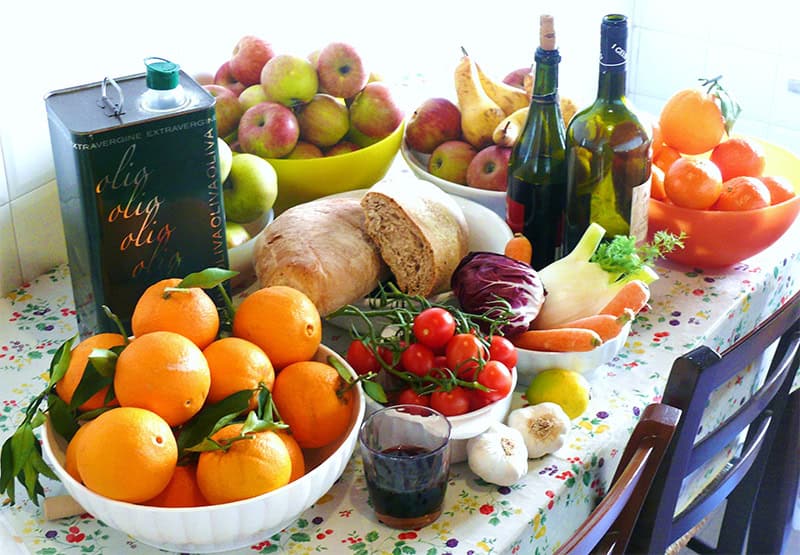
Some ingredients that form a large part of the Mediterranean diet:
fruit, vegetables, bread, olive oil and red wine. Image by G.steph.rocket.
The Real Killer
In the early 1950s, Keys observed that American business executives, among the best-fed people on Earth, had markedly higher rates of heart disease than post-war populations subsisting on limited food supplies. He later opined a correlation between diet, serum cholesterol levels, and cardiovascular risk.
At the time, Italy had more centenarians than any other geographic location in the world. By studying the typical diet in this region, Keys and his wife, Margaret, proposed and popularized what became known as the Mediterranean Diet. It was Ancel Keys who first discovered that saturated fats in meat and milk clogged your arteries, while unsaturated fats in vegetables helped keep them clean.
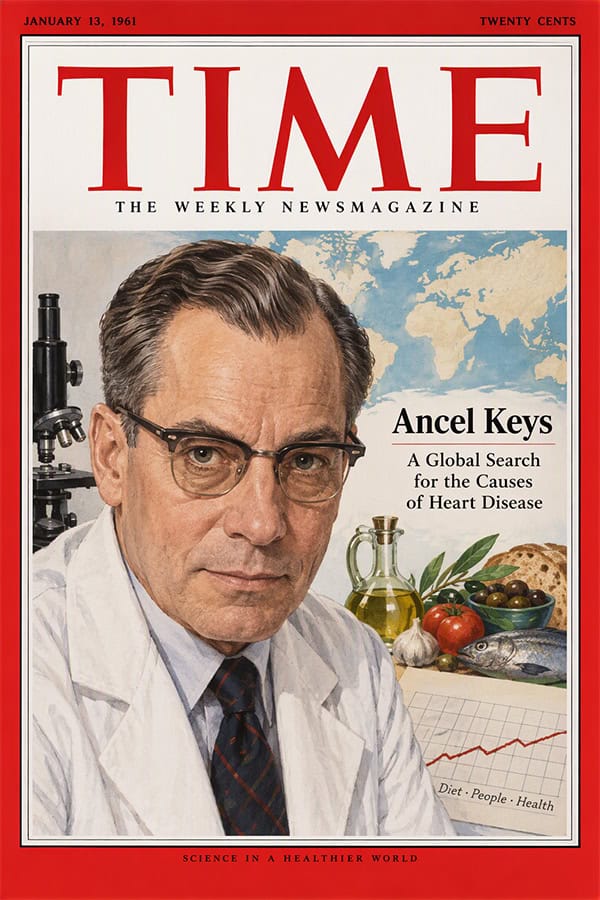
Keys was featured on the cover of the January 13, 1961, issue of Time magazine.
Image AI generated.
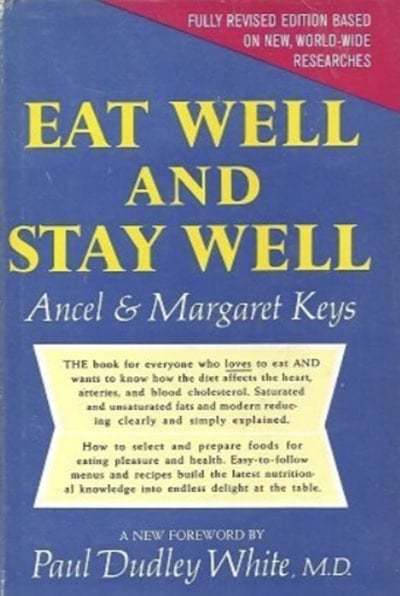
Ancel Keys and his wife Margaret developed the Mediterranean Diet. In so doing,
they discovered invaluable connections between what we eat and heart disease.
Keys eventually moved his wife and three kids to an estate in the Italian seaside village of Pioppi. He and his wife co-wrote several books, and they traveled the world as a family. On November 20, 2004, Ancel Keys, the inventor of the K-ration and discoverer of the link between cholesterol and heart disease, died just two months shy of his 101st birthday. That’s not a bad run for the Wolfman’s cousin.
Get More Guncrank Stories Every Week!
By submitting this form, you are consenting to receive marketing emails from: . You can revoke your consent to receive emails at any time by using the SafeUnsubscribe® link, found at the bottom of every email. Emails are serviced by Constant Contact