Carrying a Spare Magazine
is a Pain in the...
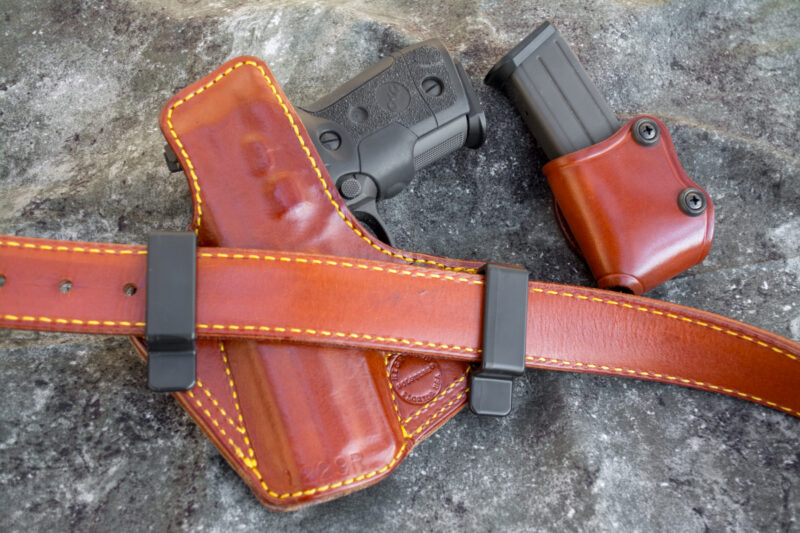
Of course, when your carry method is outside the waistband, an outside-the-waistband magazine carrier
really prevents any additional concealment penalty. It is certainly comfortable because nothing is jammed inside
your belt. This is one sweet rig from High Noon Holsters.
I once stood up from a chair and left my spare magazine behind for all passersby to see and admire.
There it sat, right in the middle of the seat, looking smug. And guess who had no idea it had escaped? You got it. Me.
Apparently, the soft magazine carrier I was wearing had decided the two of us needed some time apart. The carrier was comfortable. It was thin. It didn’t dig into any of my soft and increasingly abundant body parts. And while it worked beautifully for years, it also failed at the one job that mattered. Unfortunately, one failure in this use case disqualifies it for all future use. Trust had been violated.
That’s the irritating thing about concealed carry gear. Comfort, concealment and security get along beautifully right up until they don’t.
Carrying a spare magazine seems like the easiest part of the whole concealed carry setup. Get a magazine. Load it up. Put said magazine somewhere on your person. Ipso facto, e pluribus unum, you are now prepared.
Not necessarily.
A spare magazine you can actually reach, grab, and stuff into the pistol, preferably without looking to find and orient it, is useful. One that rolls around in a pocket, flips upside down or sideways, or, from personal experience, just falls out in a chair, is somewhat less than ideal.
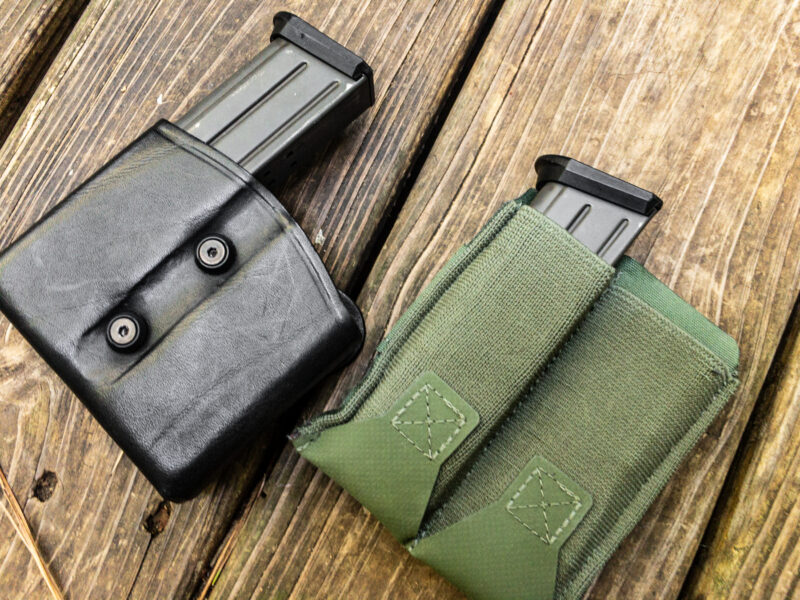
These super elastic magazine carriers are the handiest things since sliced bread.
I've used them for years, but I did have one mishap.
Why Bother?
Let’s just agree to skip the “How many rounds do you need?” debate. That conversation has been flogged beyond recognition. By definition, no one’s self-defense encounter is “average.” Yours may require anywhere between zero and infinity rounds. Carry whatever pistol and ammunition supply make sense for you.
There are two practical reasons to carry a spare magazine, and only one involves having more ammunition.
Yes, the spare adds capacity. Whether your pistol holds seven rounds or 17, more ammunition is better than less ammunition if you happen to need it. I’ve never heard anyone complain afterward that they had too many rounds available.
The second reason may be more important. The magazine, while pretending to be a “no moving parts” component, is really a busy little contraption charged with balancing spring pressure, moving cartridges, feed lips, a follower, a floorplate and sometimes an extended basepad. It also gets dropped, stepped on, packed with lint and generally treated like a hammer, especially if you take the occasional training class or compete. In those cases, it will hit the ground, a lot. If something goes wrong with the feeding process, replacing the magazine may be part of getting the pistol back into operation. In fact, magazine problems of one sort or another are the leading cause of semi-auto malfunctions. Five out of four pistoleros agree.
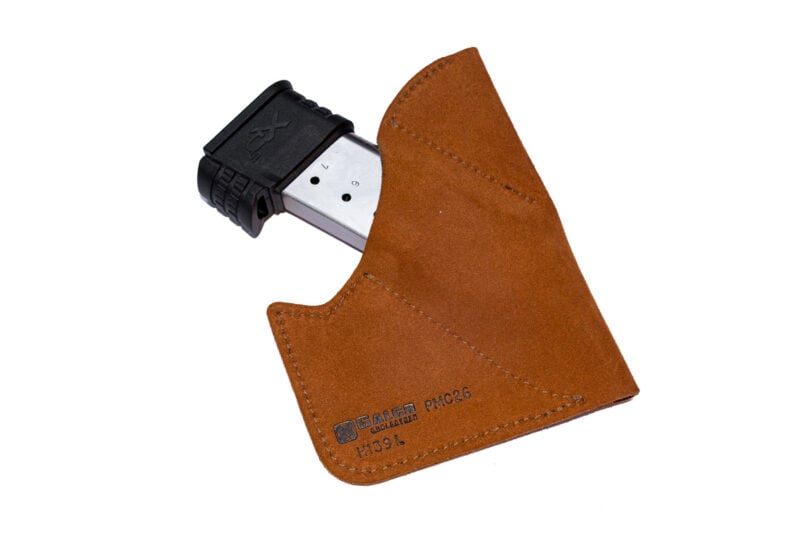
If you've got a free pocket because you don't want to share a magazine pocket with anything else,
a carrier like this really is a must. It keeps the magazine oriented properly and clear of lint and other
debris in your pocket.
The Hard Carrier
A rigid belt carrier made from Kydex, polymer or leather solves several problems at once. It can help hold the magazine in one known place at a consistent orientation and usually provides adjustable or at least predictable retention. When your hand reaches the carrier, the magazine should be exactly where you left it. This is the part that’s really nice to be able to do reliably without looking.
The tradeoff is bulk. You already have a handgun and holster hanging somewhere around your waist. Add a rigid magazine carrier on the other side, and your belt starts resembling Batman’s utility-laden waistline.
Rigid belt carriers can also print under a light shirt, especially with thick double-stack magazines or ones with extended basepads. A little experimentation with placement can help. Moving the carrier an inch forward or backward may make a surprising difference in both concealment and comfort. So can changing the magazine’s ride height or cant if your chosen carrier allows it.
The retention test is simple. With an unloaded magazine, bend, twist, sit, stand and flop around on the floor. Yeah, you’ll look like a dork, but it’s in the name of science and potentially saving your life. Try the movements that happen during an ordinary day, not just the dignified pose you assume in front of the mirror. Don’t forget car seats. Getting in and out and using seat belts.
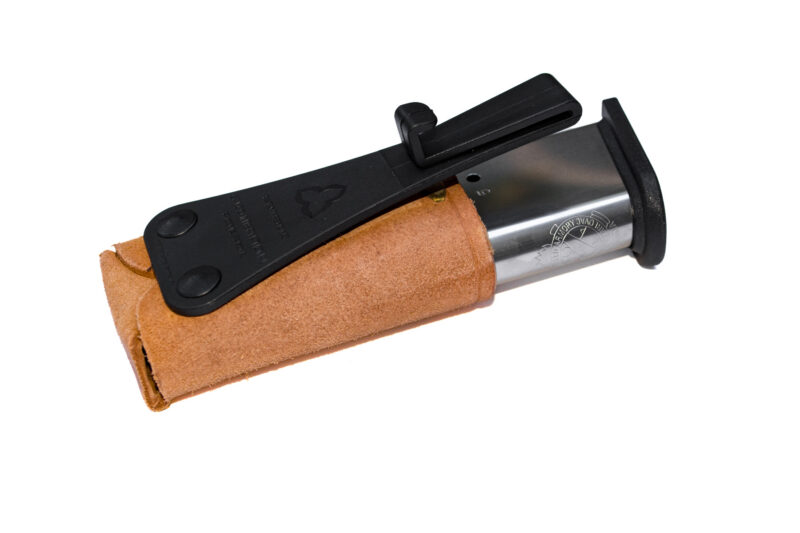
This little Galco carrier is about as simple as it gets and combines the best of both worlds: Kydex and leather.
The Soft Carrier
Soft elastic carriers can be wonderfully comfortable. They’re thin when empty, conform to the body and often stretch enough to hold single-stack magazines, double-stack magazines, flashlights or other gear. I’ve used them for years and still like the idea.
However…
Elastic wears. Different magazines create different amounts of tension. A skinny single-stack magazine may not be held as tightly as a chunky double-stack model. A heavy extended magazine can use its extra weight and leverage to stay put while you sit, drive or go about your day.
This doesn’t make soft carriers bad. It means you have to test retention with the exact magazine you plan to carry, loaded to its normal weight. Then it needs to be checked again as the carrier ages.
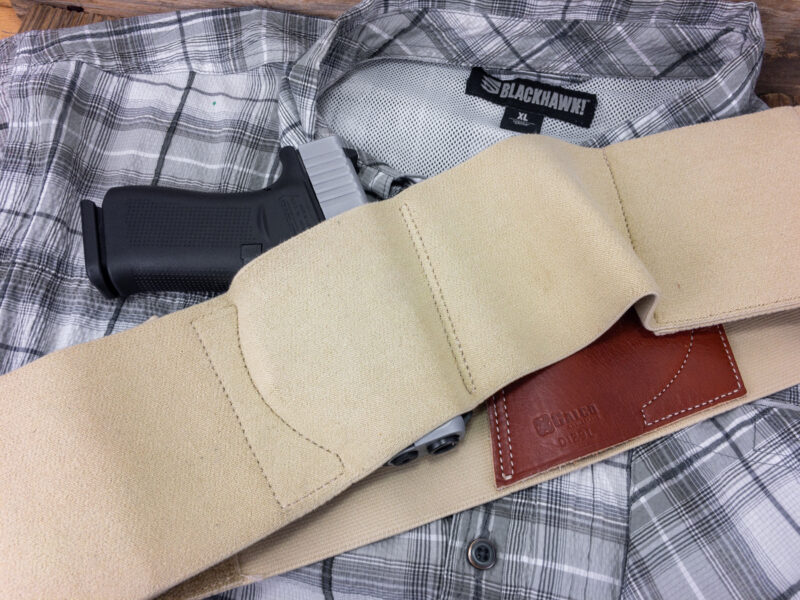
Belly bands are an awesome way to carry spare magazines, especially if that's your primary "holster"
for the gun itself. They're tucked up under the rib cage, but most belly bands also come with an array of
pockets in different orientations and angles, so you can really customize your storage.
The Pocket
Dropping a spare magazine into a pocket is certainly convenient. It also gives the magazine complete freedom to move around.
Without a pocket carrier, it can rotate, turn upside down and get tangled up with coins, keys, breath-mint wrappers and who knows what else. None of this is beneficial when you need a clean, predictable draw.
A dedicated pocket magazine carrier works much like a pocket holster. It keeps the magazine in a consistent orientation and uses shape, texture or a hook to remain in the pocket while the magazine comes out. That last part matters. Drawing the magazine and its carrier as one unit creates an embarassing and potentially harmful situation.
Pocket space is also a limited natural resource. If you keep your spare magazine there, make it a single-occupancy residence.
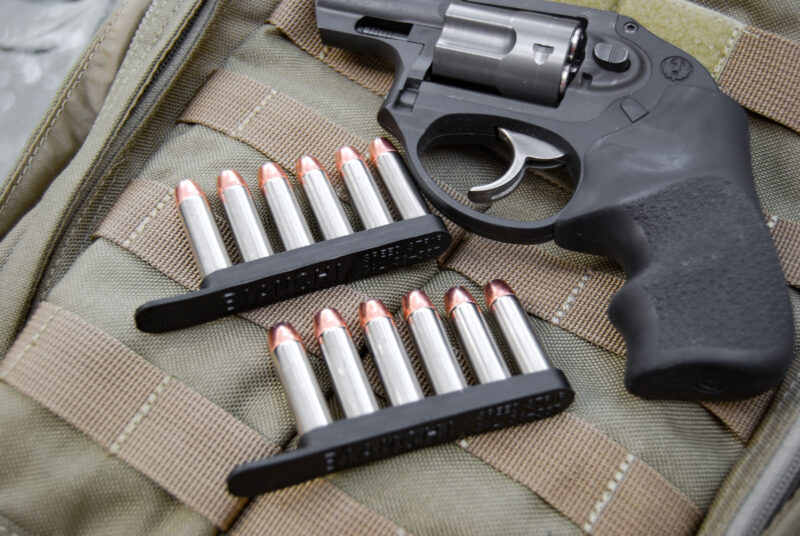
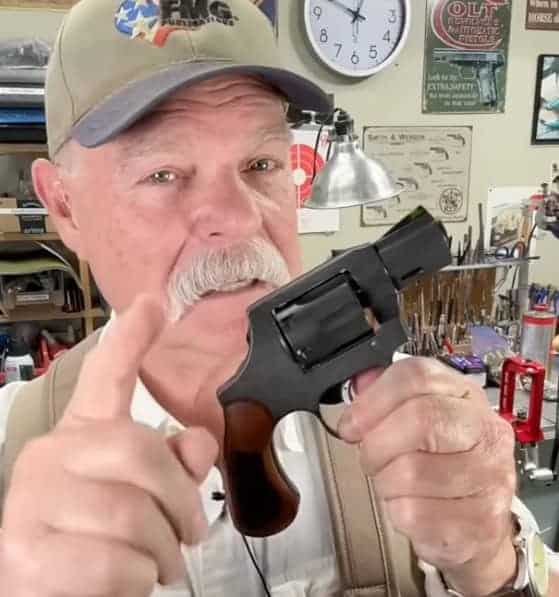
If you're a revolver person, who cares about magazines? There aren't any, and speed strips like this
are a very easy way to carry spare ammo.
The Orientation Problem
Assuming the gun is on one side, and the magazine is on the opposite side of your body, the normal method is to have your magazine oriented top down with the bullet noses pointed forward. If you’re the Jimi Hendrix of magazine reloads and have developed your own system to do that in some other way, then you do you. There’s no universal law requiring the bullets to face forward or backward in the carrier. What does matter is that the orientation remains the same every single time.
For many right-handed shooters carrying the spare on the left side, bullets facing forward allow the index finger to run up the front edge of the magazine. The hand then moves toward the pistol with the magazine already aligned for insertion. While you should bring all this motion up to face level, it helps, as your brain is really good at knowing the position of a pointing finger without seeing it.
Pick an orientation. Practice it. Don’t alternate based on whichever way the magazine happens to land when you get dressed.
Small magazines deserve special attention. A short six- or seven-round magazine can disappear into a deep pocket carrier or leave very little exposed surface for a solid grip. Extended basepads can help your hand find and control the magazine, but they add length and may print under clothing. There’s always a tradeoff, isn’t there?
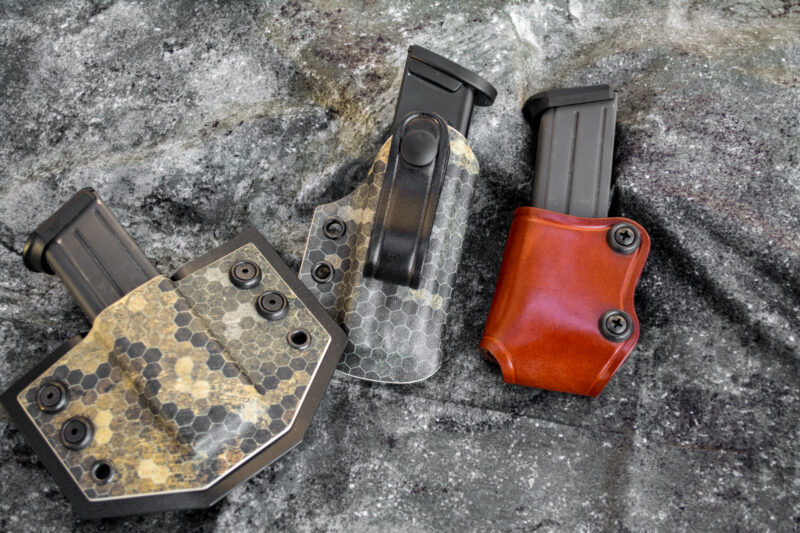
Some dedicated magazine carriers from High Noon: outside the waistband in both kydex and leather,
and a single inside the waistband model for concealed carry.
Test the Whole Contraption
Most of us shoot, and therefore regularly test, our pistols. If you’re cautious and thorough, you’ll also test your defensive ammunition. We may even spend an alarming amount of time choosing a holster. Just ask my drawers full of them. Then we jam the spare magazine somewhere and declare a job well done.
The spare deserves the same checks and repetitions.
Start at home with an unloaded pistol and magazines, in a room containing no live ammunition. Practice clearing your cover garment, drawing the spare magazine and bringing it to the pistol. Go slowly enough to notice whether your hand gets a repeatable grip and whether the magazine arrives at the gun facing the correct orientation. Speed will come on its own with slow, deliberate and most important, identical repetition.
At the range, you don’t need a wheelbarrow of ammunition. The Dot Torture drill uses 50 rounds and finishes with draw, reload and fire sequences. You can also load two magazines with one or two rounds each and repeat a simple reload exercise. The important part is starting with the spare in its real concealed-carry location, under the same type of cover garment you normally wear. You should be able to do this at most any range as your gun isn’t holstered and is pointing downrange at the target.
Dummy rounds can add another useful test. Have a shooting partner safely mix one into a loaded magazine so you don’t know when it’s coming to gum up your works. When the pistol stops, work through the problem. Depending on the malfunction, that spare magazine becomes your replacement part.
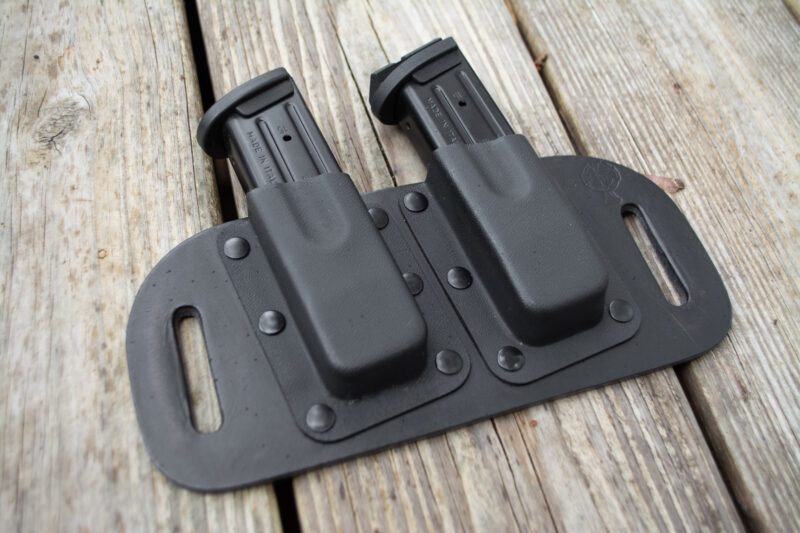
The folks at Crossbreed Holsters are known for using generously large leather panels to make carry feel lighter
and be comfortable at the same time. That even applies to outside-the-belt carry.
One Last Check
Before leaving the house, give the magazine a push or tug to confirm it’s seated in the carrier. Every so often, unload it and inspect the feed lips, basepad and cartridges. Clean the lint and debris from the magazine and carrier. If the carrier has adjustable tension, verify it hasn’t loosened. If it relies on elastic, make sure the elastic still behaves.
Then sit in a chair. Stand up. Look behind you.
It sounds ridiculous, but so does leaving your ammunition on the furniture. Ask me how I know.
Get more exclusive online content from American Handgunner delivered straight to your inbox. Sign up for our free American Handgunner Insider newsletter.