Hoarding Brass
The Ultimate Reloading Series: Part 1
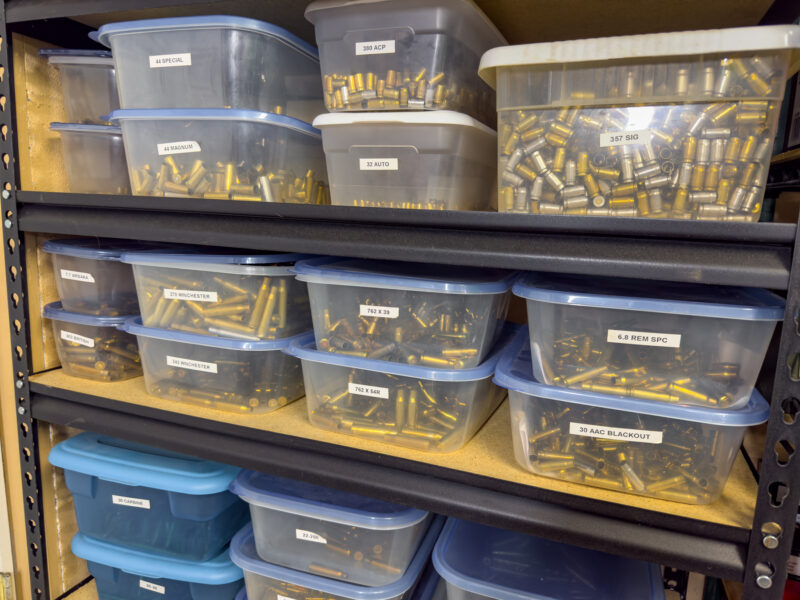
We’ve been talking about doing a practical reloading series for 75% of forever.
It’s time.
Over the coming weeks, we’ll dive into the reloading process in a fun and easy-to-digest way. If you’ve been thinking about taking up the reloading hobby, this is your starting point. If you haven’t, read on anyway.
Reloading knowledge has a nifty way of bringing up all sorts of topics to further your gun and ammo education. And, as history proves, there will be another politically-driven panic at some point, and ammo will become scarce and expensive when everyone starts panic hoarding. It’s as predictable as politicians blaming the guys on the other side of the aisle. I’m sure you’ve lived through a few of these cycles by now.
Anyway, by the end of the series, you’ll be a certified … well, you won’t actually be certified in anything. But you’ll have a heck of a good understanding of the reloading process and some of the quirks, joys, benefits and pitfalls. So, stay tuned, and to be sure you see this, make sure you’re subscribed to our free emails. You can take care of that here.
Step 1
Most series begin with some sort of Episode 1. We’re super thorough around here, so we’re going to start earlier than everyone else with some pre-steps you can begin doing right now with virtually zero knowledge. Sounds easy enough, huh?
There’s a good reason for this. The forthcoming step one involves beginning to work with the actual reloadable component — the brass cartridge case. I’ve found it’s frustrating to start learning how to turn that empty, pre-blowed-up case into a brand new shootable cartridge if you don’t have any. So, we’re going to spend a bit of time talking about how to get started building your ready-to-reload brass supply.
Types of Brass
If you’re going to start hoarding, and in this case, you should, it’s important to know the right types of brass to keep.
Not only does the “wrong brass” take up valuable space you’ve negotiated from others sharing your home, but it can create all manner of problems when it makes its way into the reloading process. In some cases, using the “wrong brass” in a reloaded cartridge can create safety issues, but most of the time, the price is jamming up your reloading equipment or getting cases semi-permanently stuck in dies.

Range pickups: On the left, real brass! Good to go! The center two are nickel-plated brass, also good to go.
On the right are polymer-coated steel cases. Note the dull finish. You can throw those in the trash.
Let’s cover some generalities of what we’re looking for to start the brass collection.
First and foremost, it should be in good condition. That means no dents or cracks. There’s enough brass running free in the world that you don’t need to spend time and effort trying to repair a bad case. Besides, it can be dangerous depending on the type of damage. Perform a public service and stomp these flat and dispose of them so no one else will be tempted to use them either.
Look for “brass colored” brass. Sounds easy, and it is. Cases that look gold and brassy probably are, and therefore are almost always reloadable. Lots of premium ammo uses nickel-plated brass, so also look for the shiny silver ones. To add confidence to your evaluation, look at the stamp on the case head. If you see a premium brand, you’re likely good to go.
There are other “silver-ish” cases out there. Look for ones that are dull in color. They’re likely made from aluminum and came from bargain bulk ammo. Sometimes you’ll run across steel cases too, and they’ll usually have a similar dull finish. Toss these right in the trash; they’re not usable. Same for green-ish cases. Those are usually made from lacquer-coated steel. These will usually be for rifle calibers, but you might find some oddball ComBloc pistol ammo floating around.
Now that you have some hints as to what to look for, let’s discuss possible sources.
Save Your Own
The very best bet is to start building your own supply of spent cases from reputable ammo you’ve purchased and fired. Pick up your own empties and save them!

The fun way to start building your brass supply. Buy decent ammo (not the cheapest bulk stuff) and save your brass. You'll know it's "age" and condition.
Pistol ammo can often be reloaded up to ten times if you use light to moderate loads and inspect cases before sending them through the process for another reload. They just don’t endure that much abuse (relatively speaking). If you start out knowing your cases have been fired only once, starting from a factory-fresh state, you’ll get a lot of mileage from your factory-generated stock.
Down the road, as you start reloading, you can easily track the number of reloads for batches of brass when you start with almost-new cartridge cases you’ve bought as new ammo yourself.
Bottom line? Using cases of known origin, whether you save fired ammo cases or purchase empty cases, is always the best and safest way to build your supply. But …
Range Scrounging
There’s a lot of free brass to be had if you’re OK with investing more time inspecting your haul.
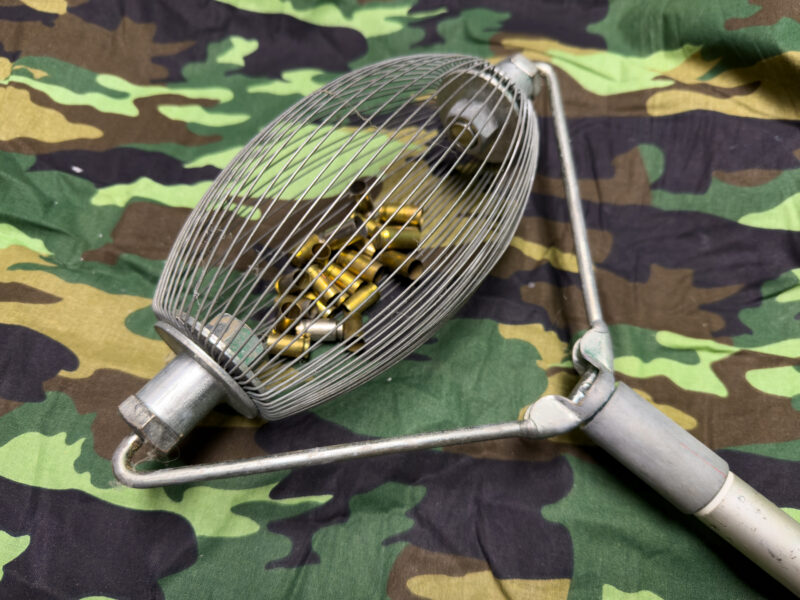
These were originally invented for picking up pecans and other nuts, but are handy for brass, too.
The dirt and small stuff fall out, so you don't have to filter that at home.
Some ranges are stingy, and while they might make you clean up your own brass, they insist on keeping it all themselves. When I can’t keep my own brass at a range, it quickly loses my patronage.
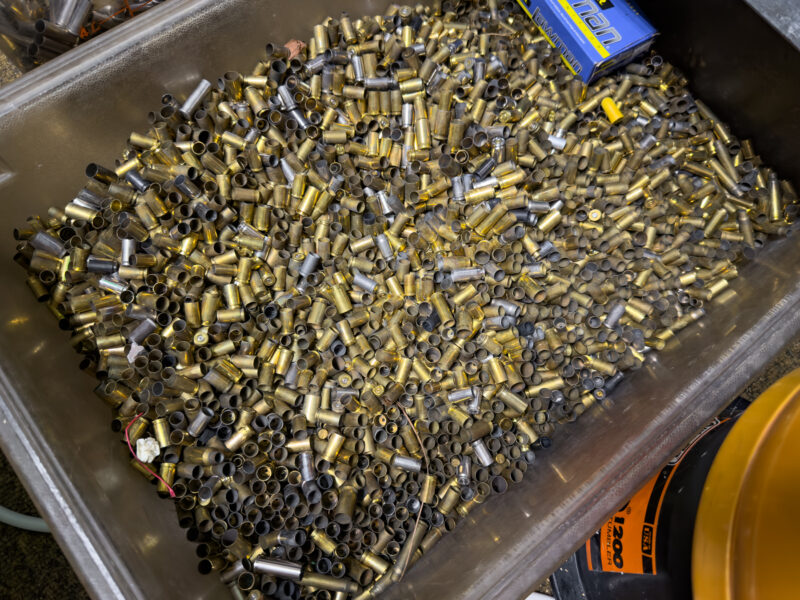
Some ranges are stingy, and while they might make you clean up your own brass, they insist on keeping it all themselves. When I can’t keep my own brass at a range, it quickly loses my patronage.
However, there are also plenty of ranges that make you clean up your own brass and don’t care if you keep it. Outdoor ranges often fall into this category.
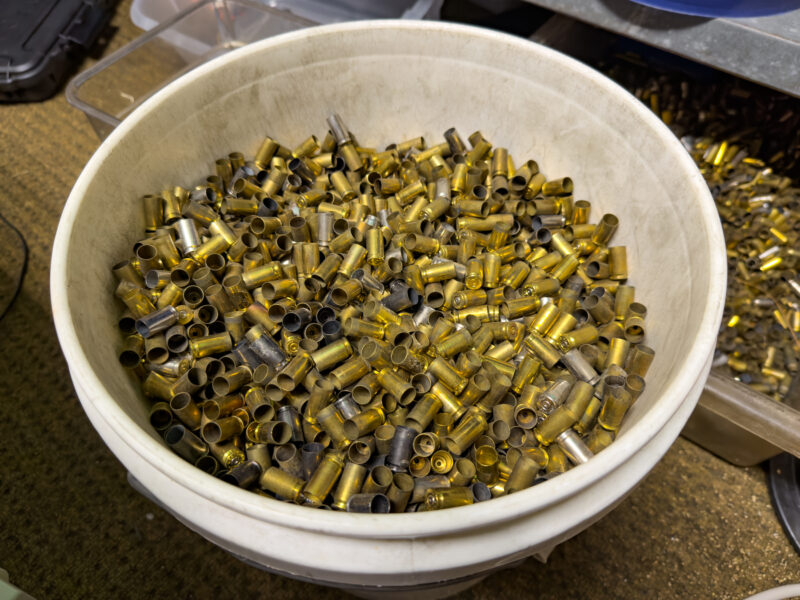
After sorting by caliber, I store the dirty "range" brass in buckets until I get around to cleaning it.
It's easier to inspect unknown brass after it's squeaky clean.
If you’re fortunate enough to use a brass-friendly range, start your hoarding plan now! Just a few things to consider first:
• Especially for outdoor ranges, it might benefit you to invest in one of those nut-picker-upper things. Basically, it’s a football-shaped wire cage on the end of a stick. It’ll do a reasonable job of picking up most of the brass on the ground, while at the same time leaving the dirt where it belongs and avoiding all those .22 LR cases you can’t use anyway.
• Keep etiquette in mind. Don’t be that guy who’s nosing around other shooters, sweeping their brass out from under their feet while they’re shooting. Always ask first before taking someone else’s spent brass. I get royally ticked when some other cheapskate (like me) is busy picking up my brass as fast as I can shoot. It’s annoying.
• Don’t worry too much about filtering and inspecting while at the range. Bring it home and clean it all (we’ll cover that soon). Clean brass is much easier to inspect and sort anyway.
Sounds easy enough, right? So the first homework assignment is easy. Start hoarding. If you’re unsure of brass status or usability, toss it. It’s not worth the risk to your safety or your equipment to save a few cents! There’s plenty to go around.
Read Part 2 (The Process).
Get more exclusive online content from American Handgunner delivered straight to your inbox. Sign up for our free American Handgunner Insider newsletter.