Take Two: Hollywood Still Can't Handle a Gun
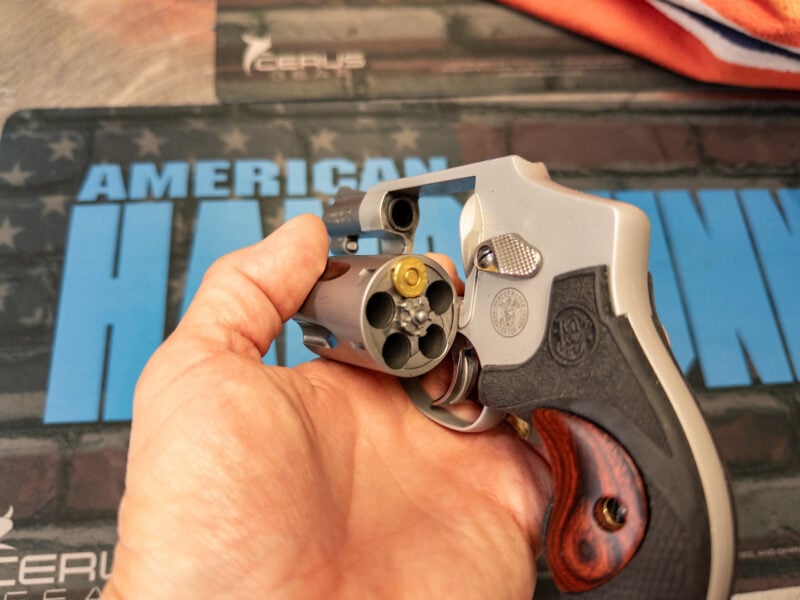
Would you pull the trigger on this configuration, even after checking to make sure the live round
wouldn't be in play? A couple of idiot actors did.
Every time another Hollywood-and-guns story crosses my path, I roll my eyes and move on to the next story. There are only so many ways to write, “people who make a living pointing guns at coworkers don’t have the vaguest ideas of how guns work; and certainly not how to handle that one.” We’ve all seen the stories and reports. And they’re old news.
Then I read this one. To bring your blood pressure down easily, I’ll share a couple of others after the shocker.
The Live-Round Director's Cut
For the post-post-war Russian roulette moment in “The Deer Hunter” (1978), Robert De Niro asked director Michael Cimino to load a live cartridge into the revolver. Not a blank. Not a dummy. A live, fully functional, primer plus powder plus bullet round. The kind you and I use at the range.
His reason was realism. He felt he could act the scene more realistically if the gun were actually loaded.
Here’s where I have to stop. Don’t we collectively pay these idiots tens, and in some cases, hundreds of millions of dollars to pretend they are (fill in the blank with: sad, happy, scared, nervous, psychopathic, egotistical, narcissistic, etc.)? What’s all the money for if they have to use “real props” (is ‘real props’ an oxymoron) to make them appear really nervous or scared? But I digress. Rant over. Back to the story.
Cimino confirmed the story himself. By his account, De Niro looked him in the eye and said something along the lines of, “I think I can do the scene better if we put a real round in the gun.” His co-star, John Cazale, sitting across from him with the muzzle pointed at his head, agreed to it.
Cazale’s only ask was that the cylinder be checked between takes to make sure the live round wouldn’t land under the hammer when De Niro pulled the trigger. That was the safety protocol. Trust the spin, count the chambers, hope nobody called for a quick re-take.
For those scoring at home with the Four Rules, this scene violated all of them. On purpose. The gun was loaded. It was pointed at a person they very much did not want to destroy. Well, as far as we know. The trigger was pressed deliberately. And the only thing standing between Cazale and an exit wound was a hand check by a crew member who should have been freaked out by the whole thing, but odds are they didn’t know jack about gun safety either.
It worked out. Amazingly, no actors died. They got the shot. The movie won five Oscars, including Best Picture. Cazale died of lung cancer a few months after filming wrapped, which Hollywood does not love to dwell on, but the cylinder never came around to the wrong chamber.
I’m probably safe speaking for you as well, but every shooter I know, the kind of people who actually handle firearms for sport or a living, would never agree to that scene. Not for an Oscar, not for a paycheck, not for the director’s approval. Because we all internalized the part where bullets do not care that you’re acting.
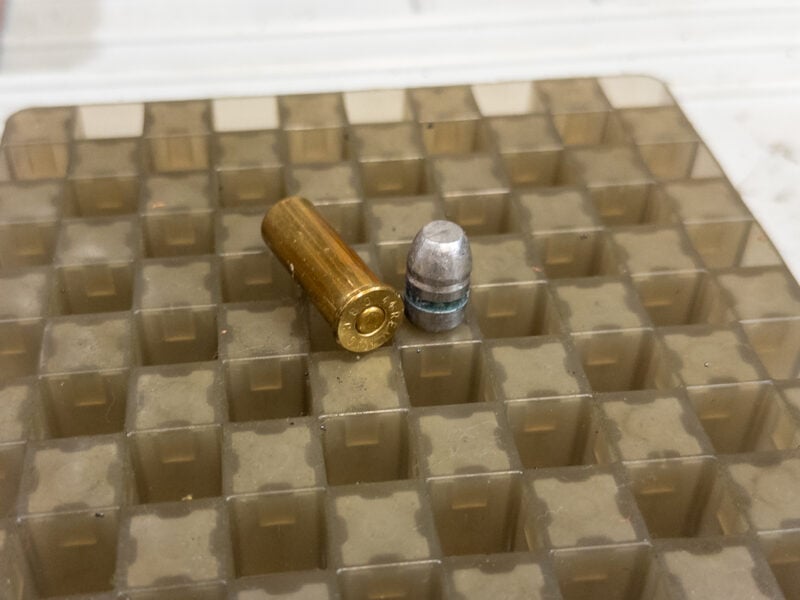
Hollywood made primer-only loads with a bullet for props. It's a bad idea.
Can you say "bullet lodged in the barrel?"
Brandon Lee and the Bullet That Wasn't
Fifteen years after Cimino called action, Hollywood was still ignoring the lessons. Probably because no one actually got shot — that time.
On March 31, 1993, Brandon Lee was filming a scene for “The Crow” in Wilmington, North Carolina. The script called for actor Michael Massee to fire a Smith & Wesson .44 Magnum revolver at Lee from about 12 feet away. The gun was loaded with blanks for that take.
What nobody on set realized was that the same gun had been used earlier for close-ups with dummy rounds. The dummies had been built on the cheap, by pulling the bullets from live cartridges, dumping the powder, and reseating the bullets in the cases. The primers were left in. When one of those primer-only rounds was loaded for an earlier scene, and the trigger was pulled, the primer alone had enough energy to pop the bullet off the case and lodge it partway down the barrel.
Then the gun went into a bag, came back out, got loaded with blanks, and pointed at Brandon Lee. The blank charge launched the stuck bullet with plenty of velocity. It hit Lee in the abdomen. He died that afternoon. He was just 28.
The death was ruled accidental, but investigators and the district attorney found negligence. They just didn’t press charges. Nobody had checked the gun properly. As usual, the handgun was treated like a prop, not a firearm, which is exactly the mindset that kills people.
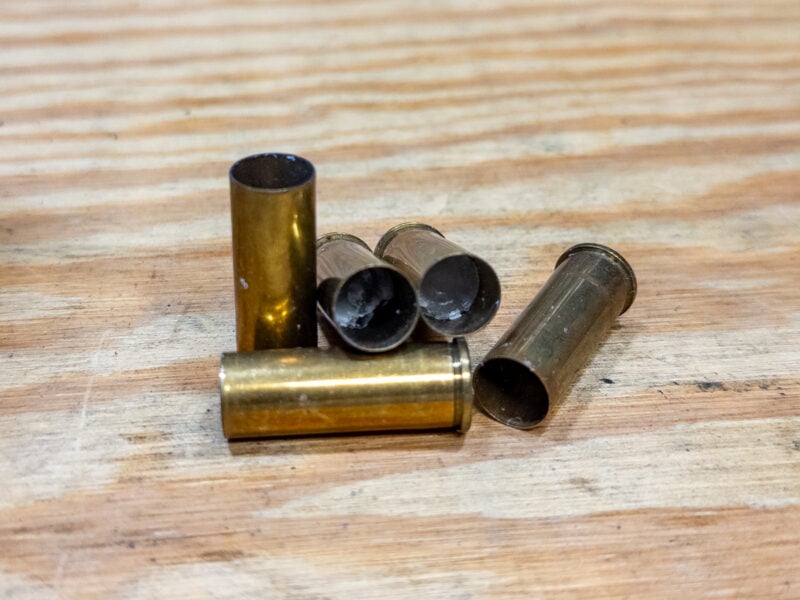
Even "blanks" like these primer and wax "spider killer" loads are dangerous
when pointed at something you don't want to destroy.
Jon-Erik Hexum and the Myth of Blanks
Nine years before Brandon Lee, Jon-Erik Hexum was filming the TV series “Cover Up” on a Fox soundstage. Between takes, bored and waiting on the director, he loaded a .44 Magnum revolver with blanks, mimicked a Russian roulette spin as a joke, put the muzzle to his own temple, and pulled the trigger.
He loaded blanks. He figured a blank was, by definition, harmless.
The muzzle blast from that blank, at skin contact, was enough to fracture a quarter-sized piece of his skull and drive it into his brain. He was taken off life support six days later.
You already know this, but for any aspiring actors out there, blanks are not harmless props. They are a powder charge with no projectile, and that powder charge still has to expel a high volume of expanding gas somewhere. At contact ranges, the gas itself becomes the “projectile.”
The Rust Refresher
If you thought the industry had absorbed all of this by now, October 2021 says otherwise.
On the set of “Rust” in New Mexico, Alec Baldwin was holding a Colt single-action revolver while rehearsing a scene. He fired the gun with a live round in the chamber. The bullet killed cinematographer Halyna Hutchins and wounded director Joel Souza.
The armorer, Hannah Gutierrez-Reed, was convicted of involuntary manslaughter in March 2024 and sentenced to 18 months. Live ammunition had been on set, mixed in with dummies, for nearly two weeks. Baldwin’s own case was dismissed mid-trial due to evidence-handling issues.
Rewind and replay. A real firearm. Real ammunition somewhere in the building. A culture that treats guns as props instead of the firearms they really are.
The Hypocritical Part
Here is what gets me about all of this.
Many of the same actors and directors who cannot seem to keep one set safe will turn around and lecture the rest of us about how we don’t deserve to own the same equipment they have repeatedly mishandled.
The people who actually own guns, who treat them with the kind of boring, repetitive discipline the Four Rules require, who clear the chamber every single time they pick a pistol up, who never let the muzzle drift across another human, who treat every gun as loaded even when they unloaded it 10 seconds ago, are the people Hollywood spends two hours pointing a finger at on TV. I know, you’re not the least bit surprised.
Maybe before the next movie star lectures America about gun culture, they could spend a Saturday morning in a basic safety course at the local range. They might learn something the gun owners in their audience already know.
Bullets do not care about your ego.
Get more exclusive online content from American Handgunner delivered straight to your inbox. Sign up for our free American Handgunner Insider newsletter.