FALCO Hawk and King: One Hides, One Hauls
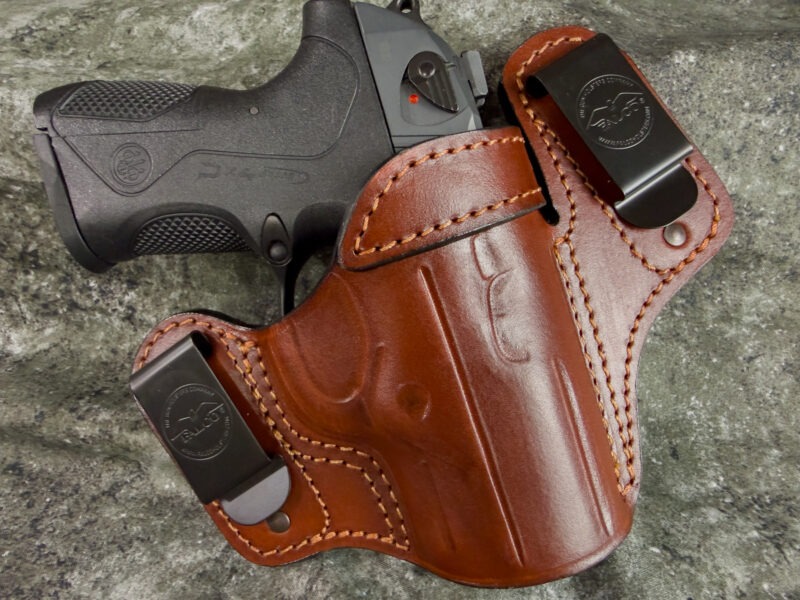
The FALCO A112 turned out to be a great pairing with this Beretta PX4 Compact Carry.
I’ve got a problem, and it can be a bit embarrassing. It makes people look at me funny in public. And no, it doesn’t involve prescription medication solutions.
I squeak. And sometimes creak.
Yes, my “getting older” joints are responsible for some of that, but here I’m referring to one of my daily holsters.
I’ve been trying out appendix carry for a few years now. I originally adopted it to put my money where my mouth is and give it a real try before passing judgment based on internet hearsay. Call it part of this job. I’m guessing you’d prefer people like me to share real experiences, good or bad, rather than pass along gun counter conversations.
Anyway, not too long ago, I became inspired to carry one of my favorite carry solutions, a Beretta PX4 Compact Carry. Mine is one of the “old” ones, with the design inspired by Ernie Langdon back when Langdon Tactical was a young company. It’s a great pistol, and I’ve always been a fan of the double-action/single-action design because it offers a layered approach to safety for everyday carry.
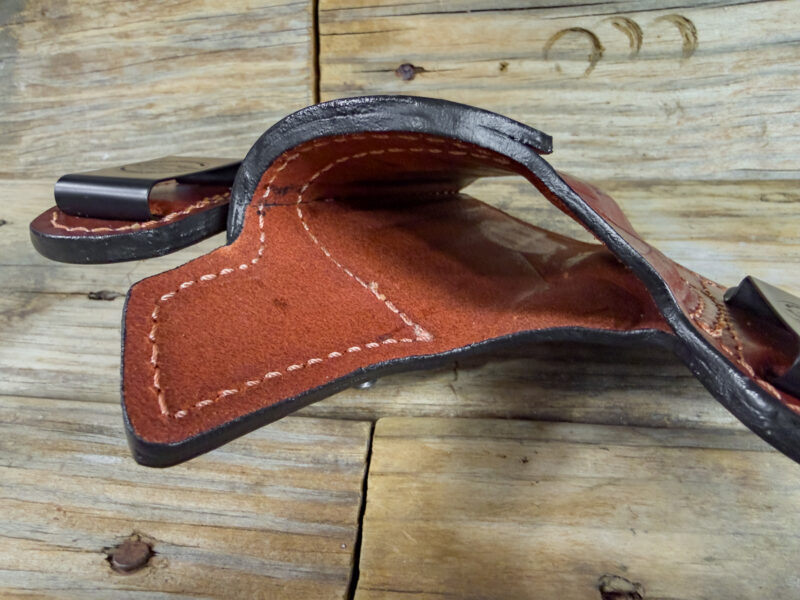
Both the A112 and C631 feature double layer mouths for easy, one-handed reholstering.
Holster Challenges
Back to squeaking. The holster I’d used in the past for my PX4 is one of those hybrid types with a leather back panel and Kydex gun pocket. It’s thin and concealable. It’s pretty comfortable. It does a decent job of securing the gun, especially since it’s mounted inside the belt so the pressure helps.
And it’s noisy. When I walk, it squeaks. When I sit, it squeaks. When I do just about anything involving movement, it squeaks. This isn’t trivial. It’s loud enough for people around me to hear.
I got to talking to my friend Martin at FALCO Holsters about this, and it was clear he was familiar with the problem. Often, the culprit is cheap leather. Of course, one can get a bit of noise from quality leather too, but I’ve found it’s almost always a temporary issue. As the holster breaks in and softens a bit, the noise disappears.
Long story short: Martin suggested I try one of his solutions for IWB strong side carry. Enter the FALCO A112 Hawk.
For the second installment of this FALCO Holsters series, I’m trying both the A112 and, for a second rig for a similar but different job, the FALCO C631 L King for a Springfield Armory 1911 Operator 9mm with a rail-mounted Streamlight. Given its bulkier cargo, the C631 is configured as a larger outside-the-waistband rig.
One hides a daily carry gun. The other carries a lot of pistol. Both represent quality leather solutions.
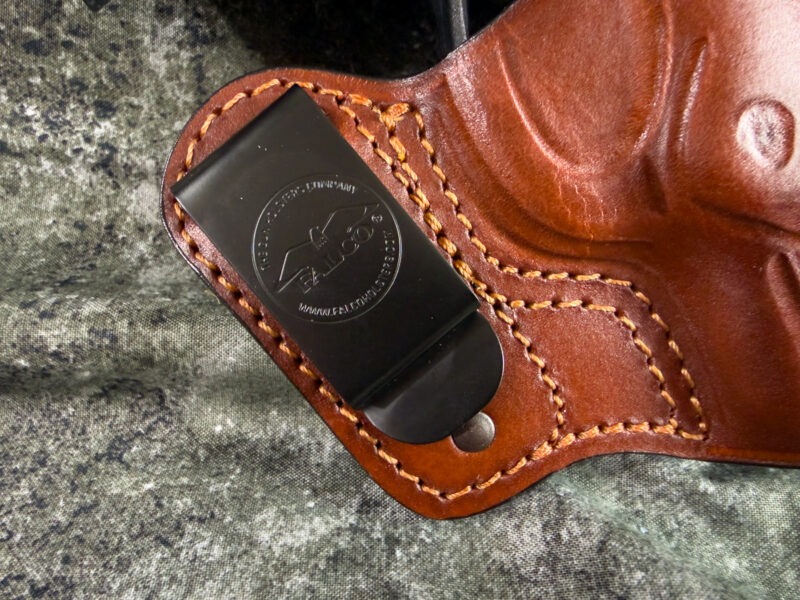
The dual clips on the A112 are aggressive. A bit tough to get over the belt, and that's a benefit as the fit is solid.
Start With the Gun
FALCO’s most useful distinction may be its custom-fit ordering system. These holsters aren’t generic leather pouches offered in small, medium and “good luck.” The company makes them for the buyer’s handgun and, where applicable, its light, laser, optic, sight height, barrel length and other details. Yes, sight height. That’s becoming an important distinction with the advent of optics and suppressor-ready pistols. A good holster is designed to closely map to all the nooks and crannies of a given handgun, including the sight channel.
That matters with both test pistols. The PX4 Compact Carry has the Beretta’s distinctive rotating-barrel action and rounded slide shape, so it doesn’t share the usual polymer-pistol profile. The 1911 Operator presents the opposite problem. Add a weapon light to a railed 1911, and the holster must account for the frame, light body, controls and front-sight clearance as one package.
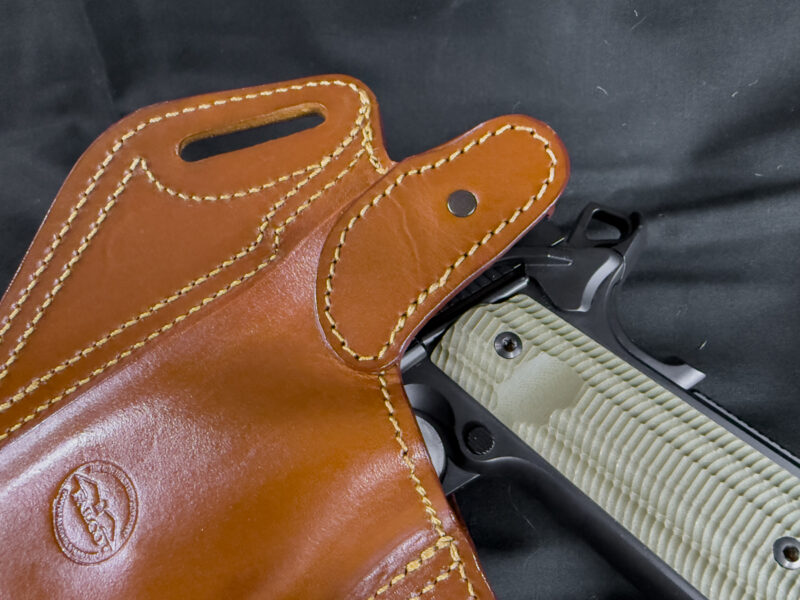
Note the double-stitching and sweat shield that covers the entire slide.
FALCO says its craftspeople mold each leather holster on a replica of the specified firearm. Leather normally relaxes and shapes itself through use, so a new holster should begin “overly” snug and break in around the actual gun. One trick to facilitate this process is to cover your unloaded gun with a gallon-sized Ziploc bag, then holster it. Then let it sit, occasionally moving it around a bit. That extra layer of plastic helps contour the holster to the “tightness” (read: retention) you desire.
This helps explain why material and construction matter. Thin leather, weak stitching and unsupported openings may change in all the wrong ways. Heavy full-grain leather, reinforced mouths and protected stress points are intended to control how the holster ages. Falco backs its workmanship with a limited lifetime warranty and offers a 30-day buyback guarantee.
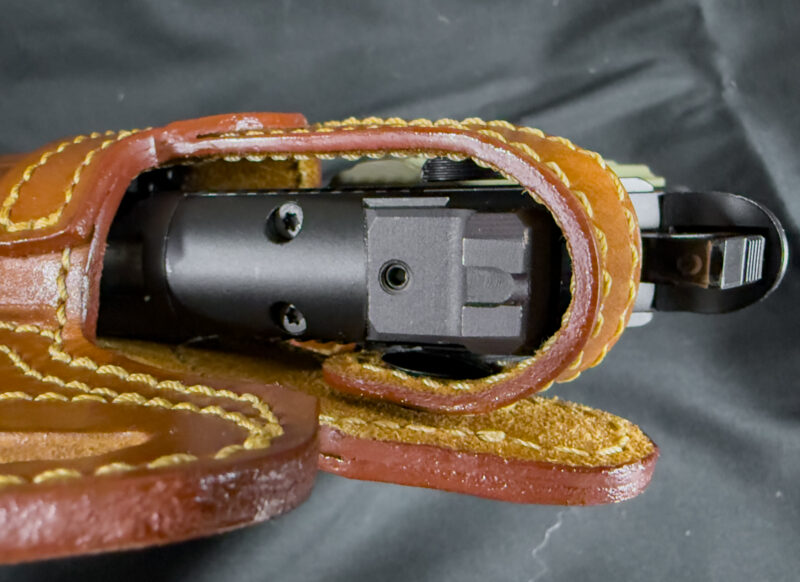
The C631 L features a thumb break for active retention.
Medium-Boned
The boning process is essential to a good fit with a leather holster. Folks with really strong hands press the leather around key areas of the holster exterior and force it into shape around areas like the ejection port and trigger guard area. The idea is that the interior of the leather will hold a shape in those “pockets” of the gun itself, thereby improving natural retention.
The A112 fit for the Beretta PX4 provides a good example. On the holster’s exterior, you’ll see where tools were used to make these impressions. While the leather is too thick to reproduce every exterior impression on the inside, you will see key areas like the ejection port and distinctive oval trigger guard impressed on the inside. So, when I holster the PX4, that interior leather bulge slips into the trigger guard to help secure the gun.
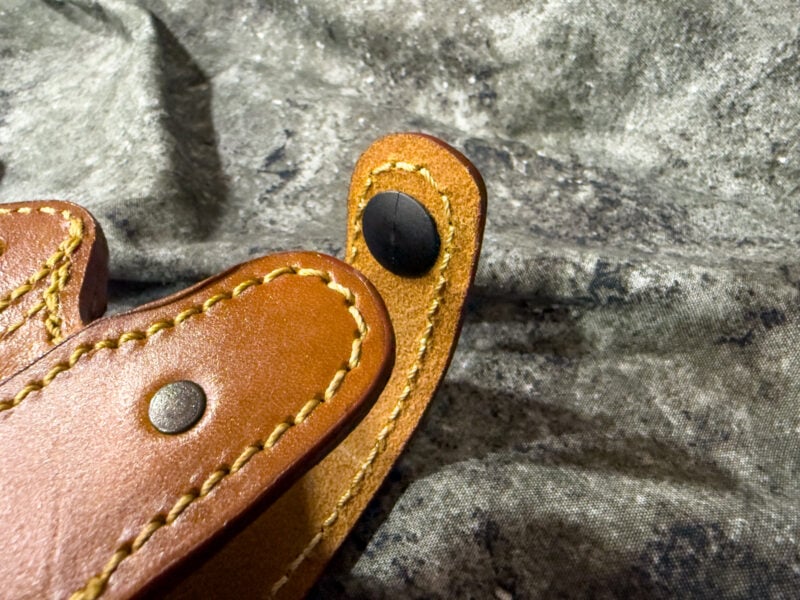
A nice touch that protect your gun's finish: plastic rivet covers to prevent scratching.
The Discreet Option
The A112 Hawk comes from FALCO’s Premium line and is intended for inside-the-waistband carry around the four-o’clock position. Mine is fitted to the 3.2-inch Beretta PX4 Storm Compact Carry with factory sights.
Its construction borrows an idea from pancake holsters. Two widely spaced steel belt clips spread the load and hold the holster flat instead of hanging the entire pistol from one narrow attachment point. The clips also make it possible to put on or remove the holster without threading the belt through fixed loops. The clips on this one are each about one inch wide and exceptionally tight. It takes a bit of work to get it on over the belt, and that’s a benefit, not a drawback. This holster isn’t going anywhere once it’s mounted.
The A112 has an open top for an unobstructed draw, plus a reinforced leather mouth so the opening doesn’t collapse after you draw. That feature matters every time the gun goes back into the holster. You can easily reholster this IWB model one-handed. A sweat guard separates the pistol from the body and keeps the PX4’s controls and slide from rubbing against skin. On this fit, it extends upward far enough to cover the entire slide.
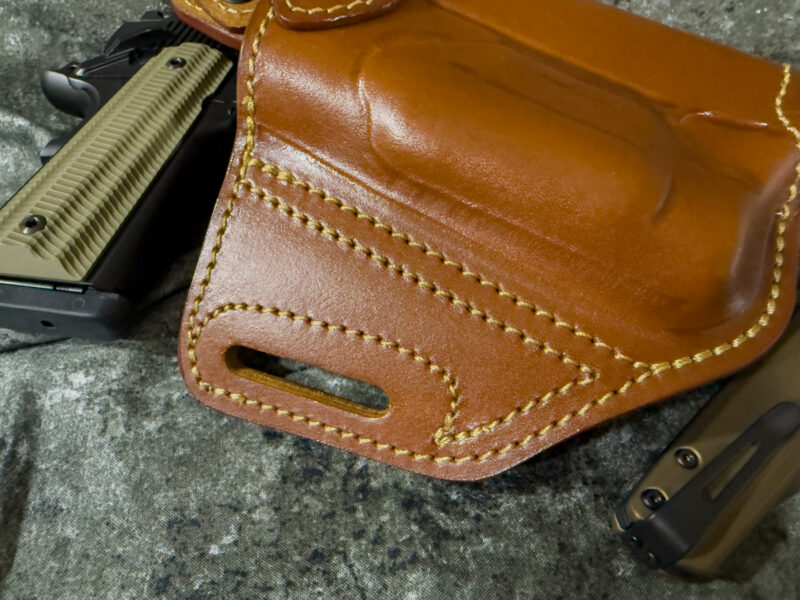
For stability, the C631 L uses reinforced belt slots.
FALCO hand-colors, shapes and lacquers the A112 using full-grain Italian leather. Buyers can choose right- or left-handed construction and configure details including color, belt-clip size, thread color, edge color and personalized embossing. Some choices are cosmetic. Others determine whether the holster fits the belt and body correctly.
The Big Rig
The C631 L King tackles a different problem. As an outside-the-waistband option configured with a snap-based thumb break strap, it’s the way to go for larger guns, or in this case, guns with external accessories like a rail-mounted light or laser. This rig is for situations where concealment matters less than support, security and access.
The King is a traditional leather pancake holster with some useful reinforcements. Its 1.5-inch belt loops are stitched around their full perimeter to resist stretching and deformation. Falco can make other loop widths on request. The body uses 1/8-inch-thick, 7- to 8-ounce full-grain Italian leather, with double stitching in high-stress areas.
A forward-molded shape and cant angle facilitate carry between three and five o’clock. The open bottom lets debris escape, while the mouth, like on the A112, receives an extra layer of leather to hold it open for one-handed reholstering. Hardware sits between leather layers or behind protective covers so rivets, snaps and screws don’t chew on the pistol’s finish.
Then there is the thumb break. FALCO reinforces it with steel so it can provide active retention as an extra layer over friction fit. With a bit of practice, your thumb releases the snap as you obtain a firing grip, so there’s no separate motion to break retention.
Just to be clear, the C631 series is available in configurations for a handgun only, and a handgun equipped with a rail-mounted accessory.
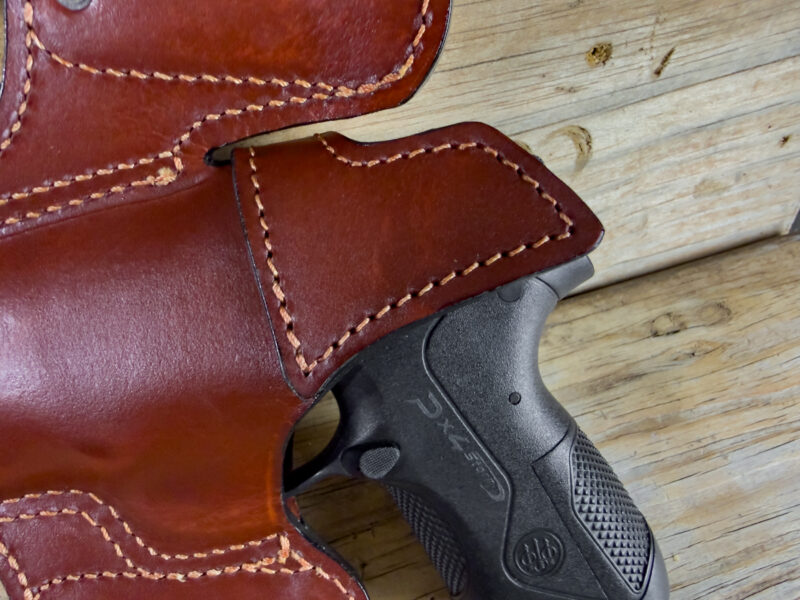
Especially important for an IWB holsters, the A112 shields you from all the metal parts.
Buy Once, Cry Once — Or Keep the Box
FALCO began as a family leather shop in Slovakia. Founder Ivan Kovac learned sewing while repairing parachutes during military service, later made falconry gloves and eventually built gear for hunters and handgun owners. The business officially became Falco in 1989, and its holsters are still handmade in Slovakia.
The history is interesting, but the practical point is simpler. Falco built its business around making gear for an individual user rather than filling shelves with generic sizes.
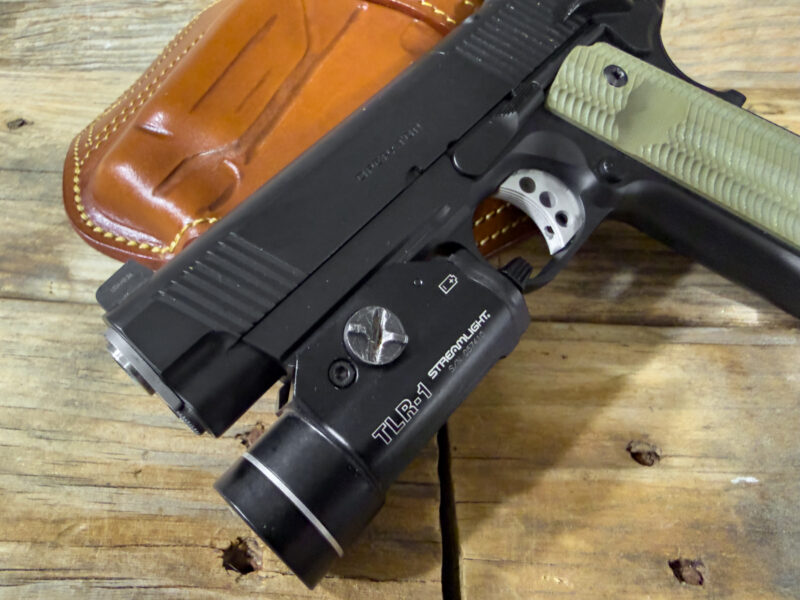
When you want to carry some bulk, like this SA 1911 Operator with a Streamlight TLR-1,
OWN carry is the way to go.
No holster can promise universal comfort because bodies, belts, wardrobes and carry positions present infinite variables. Still, beginning with the correct gun fit, good leather, solid attachment points and enough structure gives you a fighting chance.
For more information: FalcoHolsters.com