The Father of Modern Shipping
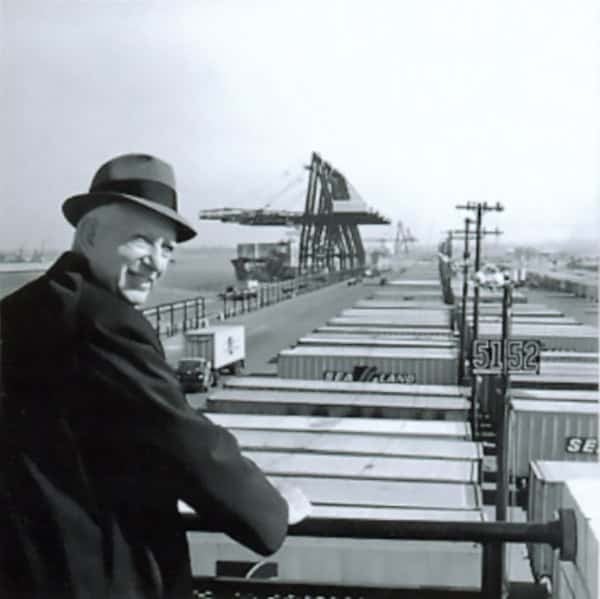
Malcom McLean looked at the world in a fresh new way and became
fabulously successful as a result. Wikipedia photo by Maersk Lines.
How many times have you looked at some common object in everyday use and lamented the fact that you didn’t think of that first? We’ve all been there. In my mind at least, I’m never more than one good inspiration away from becoming the next Elon Musk.
There are lots of reasons why this will never happen. I’m a fair to middling word monkey. I am, conversely, a lousy entrepreneur. I’ve toiled away my entire life to reliably provide for my family. Even if I were clever enough to think up the world’s next smartphone-grade innovation, I lack the boldness to sink my life’s savings into producing and marketing it. I suppose Elon’s position atop the rarefied list of successful businessmen is safe for now.
Regardless, that doesn’t stop me from being impressed when others view the world around them in a slightly different way. These visionaries are the ones who really do change the way we live. In a capitalist society, having a truly great idea and launching it successfully also tends to make one lyrically wealthy. A great example can be found in one Malcom McLean.
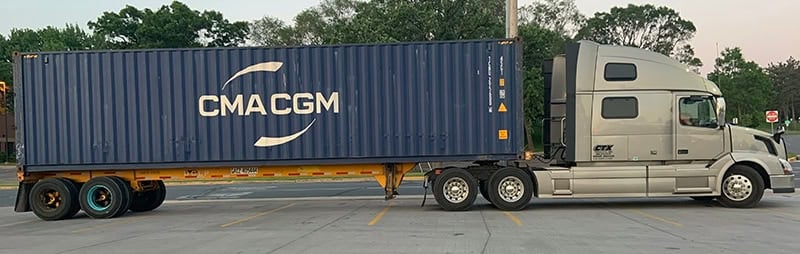
Standardized 40-foot shipping containers stack like Legos onboard ships and then
drop seamlessly onto truck chassis or railroad cars. Wikipedia photo by Wikideas 1.
The Guy
Malcom Purcell McLean was born in 1913 in Maxton, North Carolina. His given name was Malcolm, but he later dropped the “L” for some inexplicable reason. In 1935, Malcom’s family was unable to afford to send the boy to college. They did, however, buy him a used truck.
With that single vehicle as a basis, the industrious young man started McLean Trucking Company. His business model was hauling empty tobacco barrels. Malcom himself did much of the driving early on.
As a commercial shipper, McLean was keenly interested in efficiency. Maximizing cargo volume for a given space also maximized profits. Curiously, right up through World War II, nobody did that terribly well.
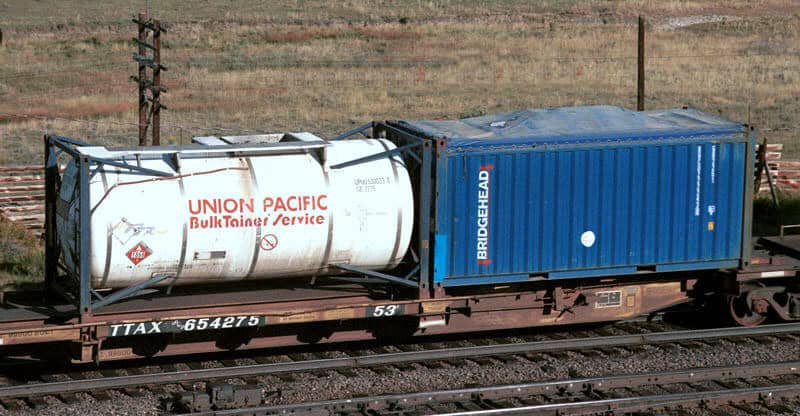
Nowadays standardized tanks stack like shipping containers to carry liquids and gases.
Wikipedia photo by Mr. Snrub.
The Problem
Prior to 1956, loading ships was like playing a huge game of Tetris. Experienced stevedores spent careers learning how to efficiently pack cargo ships. Crates, bags, and barrels were meticulously crammed into freighters, transported across the ocean, and then laboriously unpacked for loading onto trucks for shipment to their final destination.
During the war, we dabbled in packing loaded trucks onto ships so we could just drive them off on the other end. That worked okay if the objective was something like Lend-Lease, wherein the trucks themselves were also part of the shipment. However, for just moving stuff, this was terribly inefficient. That’s when Malcom McLean had his epiphany.
A Leap of Faith
In the mid-1950s, US antitrust regulations prevented trucking companies from owning their own shipping lines. McLean hired a lawyer, borrowed $22 million, and purchased a pair of government-surplus WWII-vintage T-2 tanker ships. He gutted and refitted them to accept standardized shipping containers on wooden shelter decks called Mechano decking. By specifically designing the steel containers to be compatible with the standard trailer chassis of the day, McLean and Co turned the ships’ interiors into one gigantic Lego set.
On 26 April 1956, McLean’s SS Ideal-X set sail from the Port Newark-Elizabeth Marine Terminal in New Jersey for the Port of Houston in Texas, stuffed full of fifty-eight 35-foot standardized shipping containers. As the ship left port, Freddy Fields, an official in the International Longshoremen’s Association, said, “I’d like to sink that SOB.” The Ideal-X made the trip without incident, and Freddy was soon out of a job.
Numbers
Prior to McLean’s inspiration, it cost $5.86 per ton to move cargo by sea. That price included the artisanal talent needed to organize, stack, and unpack dissimilar cargo at both ends of the trip. Once he got his systems running smoothly, McLean could move that same stuff for sixteen cents per ton. The process was also much faster and less labor-intensive.
Malcom McLean’s gift was in seeing the world around him in a fresh new way. Before McLean, shippers falsely assumed that loading a ship efficiently improved the overall process. McLean saw the ship as simply one link in the larger supply chain. He shifted the focus from handling the cargo to handling the container. By packing both the interior and exterior of massive transcontinental cargo ships with stackable shipping containers, Malcom McLean literally changed the world.
Nowadays, everything from auto parts to textiles to personal electronics to bananas crisscross the globe every single day by means of Malcom McLean’s modular container systems. Shipping containers are removed from ships using big cranes and then dropped right onto truck chassis for shipment to their final destinations. That’s the reason I can pick up fresh flowers from Colombia for my wife from our local Kroger even in the dead of winter for less than the cost of a couple of gallons of milk.
Denouement
In 1978, McLean owned 4,400 Twenty-foot Equivalent Unit (TEU) container ships. His was the largest commercial fleet in the world at the time. Four years later, he enjoyed a net worth of $400 million and featured prominently on the Forbes 400 Richest Americans list. But a few years later, McLean filed for Chapter 11 with outstanding debts totaling $1.3 billion. He had bet that fuel costs would remain high after the Carter Administration. Reagan’s economic boom took the world in a different, unexpected direction.
Don’t feel too sorry for the guy. He still did fine overall. In May of 2001, Malcom McLean died at his home in New York City of heart failure at age 87. Norman Mineta, the US Transportation Secretary at the time, eulogized him with, “Malcom revolutionized the maritime industry in the 20th century. His idea for modernizing the loading and unloading of ships, which was previously conducted much the same way the ancient Phoenicians did 3,000 years ago, has resulted in safer, less expensive transport of goods, faster delivery, and better service. We owe so much to a man of vision, ‘the father of containerization,’ Malcolm P. McLean.”
In addition to extensive real estate holdings, McLean also patented a device for lifting patients from a stretcher onto a hospital bed. Malcom McLean has been compared to Robert Fulton, the father of the steamboat, as an innovator whose efforts fundamentally changed modern life. Curiously, all he really did was see the world differently and apply the concept of Legos to international shipping.
Get More Guncrank Stories Every Week!
By submitting this form, you are consenting to receive marketing emails from: . You can revoke your consent to receive emails at any time by using the SafeUnsubscribe® link, found at the bottom of every email. Emails are serviced by Constant Contact