What Makes a “Great” Gun?
Part 2
Range Time
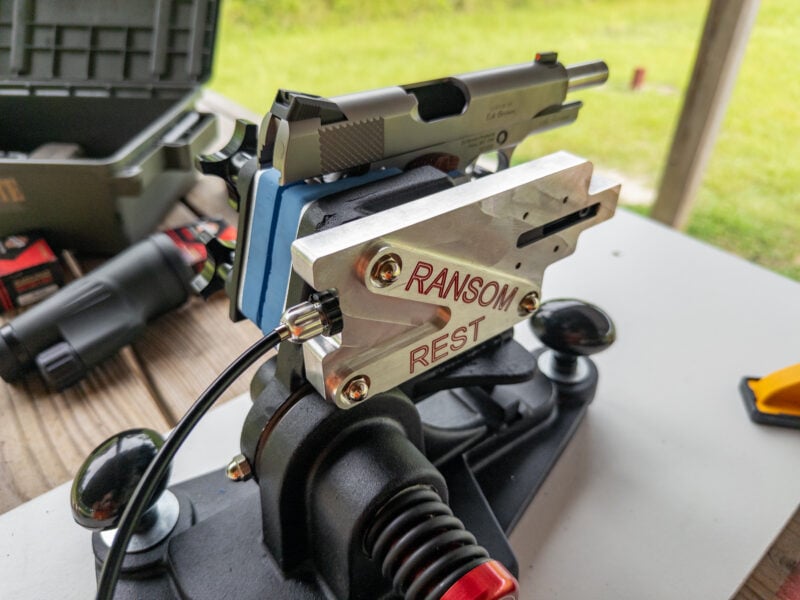
An evaluation at the range always includes accuracy testing, but there's much more to consider.
In Part One of “What Makes a ‘Great’ Gun,” we talked about some of the factors you can evaluate in the store, at the gun show, or at home. Here, we’ll explore “at the range” evaluations. As in part one, I’m sharing the things I look for, but I’d love to hear your thoughts on your own criteria. We can’t cover everything here, and there’s a lot of collective knowledge out there. So don’t be shy…
The following are some things I try to do with every evaluation gun that comes through the system here. Not all are “make or break” binary tests that create two groups of guns: “good” and “lousy.” Fortunately, very, very few fall into the “lousy” category these days. That makes this job a lot more fun. It’s just not very satisfying to review a rotten gun. So, instead of “good” and “bad” criteria, I like to think of these tests and trials as a way to (admittedly, in part, subjectively) rank similar firearms.
And some “tests” are not necessarily make-or-break, but things I want to know. The intended use of the gun has a lot to do with which performance attributes are important. For example, a bullseye pistol doesn’t have to feature controls and design that facilitate fast reloading. A defensive gun should have those capabilities.
Basic Handling
For pistols, I tend to check the magazine design and operation first. Do magazines fall freely, whether empty or full? Steel magazines rarely have a problem dropping free. Polymer? I’ve seen mixed results. Again, intended use is important. For a range gun, it’s no big deal to tug out a stuck magazine. For a carry gun, it’s a flaw.
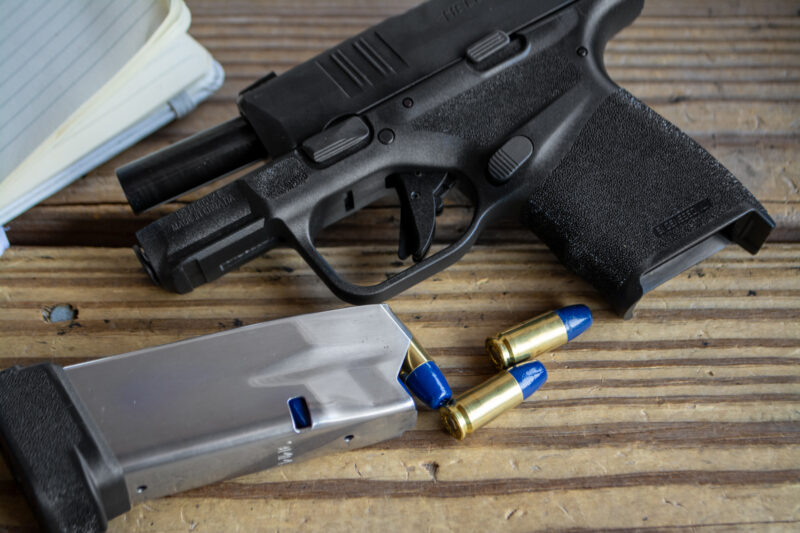
I like to shoot with "stuffed full" and "near empty" magazines to make sure the gun operates equally
reliably in both conditions. While you're at it, check to make sure magazines drop easily full or empty
and in hot or cold conditions.
Sticking with pistols, is the slide operation workable with proper technique? Few slides are “light and easy,” but there should be no “stickiness” in operation to hinder repeatable performance.
Are the operational (not administrative, like the takedown levers) controls easy to operate? Can you reach them? Are they large enough for consistent operation? If you prefer to use the slide lock to release the slide after a reload, can you do it without changing your grip with the thumb only?
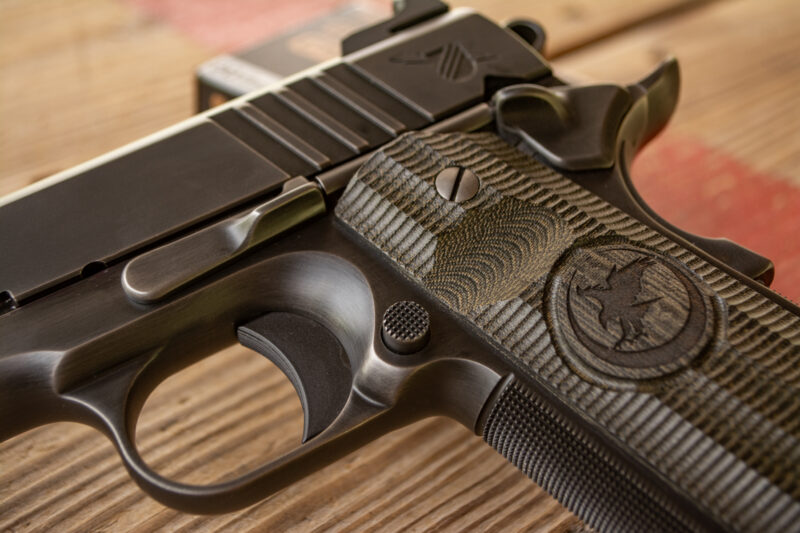
An example of stellar fit and finish. All parts mate perfectly and operate like butter on butter.
With a revolver, how tight or sticky is the cylinder release? Can you do it with your firing hand thumb only?
How much pressure does it take at the muzzle to knock the slide out of battery? This one is a carefully unloaded gun test!
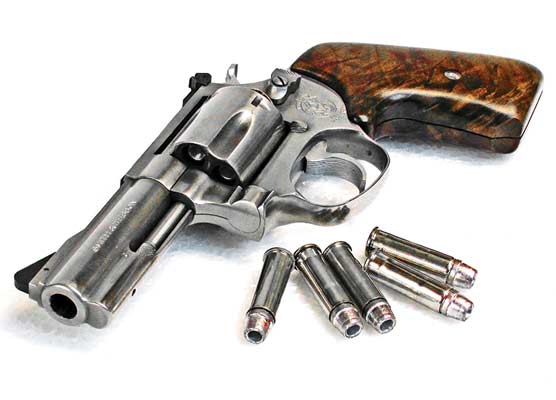
How about ejecting a loaded round? Any issues there? With a revolver, can you easily extract both fired and unfired rounds? This is “good-to-know” stuff, as some revolvers, like my snubby, often require a bit of help getting cases past the grip.
Shooting
Accuracy is just something I want to know. With modern guns and under controlled accuracy testing conditions, the “worst” gun I’ve tested in recent history produced groups in the three-to-four-inch range. That doesn’t make impressive content in the articles, but realistically, it’s likely better than most people can shoot free-handed, and certainly good enough for effective use at most self-defense scenario distances.
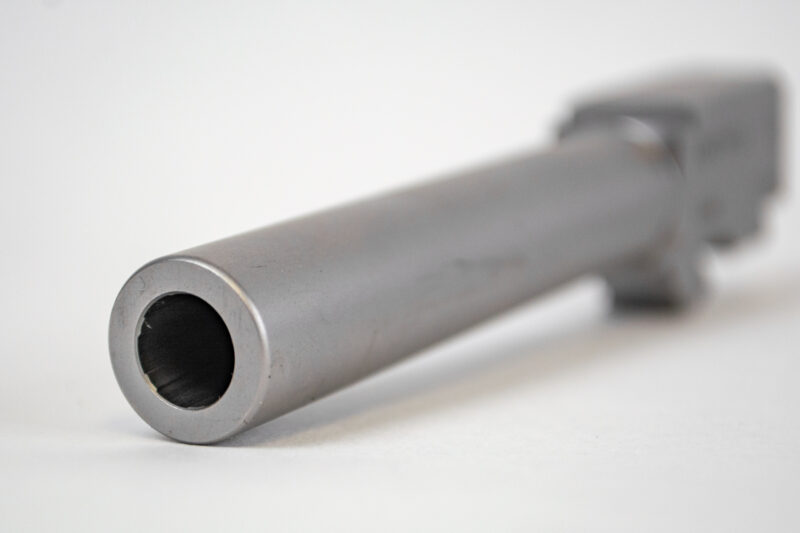
One thing to inspect, especially with used guns, is the quality of the crown. Whether fancy-beveled or not,
it must be "crisp" with no aberrations to interfere with the bullet's exit.
So, with that said, I always set up some type of controlled conditions to figure out what a gun will do. I never do this freehand, as I think that’s more a reflection of a shooter’s skill and how easy a gun is to shoot accurately. For this purpose, I want insight into a gun’s mechanical accuracy, which sheds light on the fit of parts and quality of the build. So, I’ll use a quality rest like the classic Ransom vise or the Ransom Multi-Caliber rest to provide a stable test platform for 25-yard shooting. For subcompacts, I’ll sometimes test at 15 yards if the sight radius is particularly short.
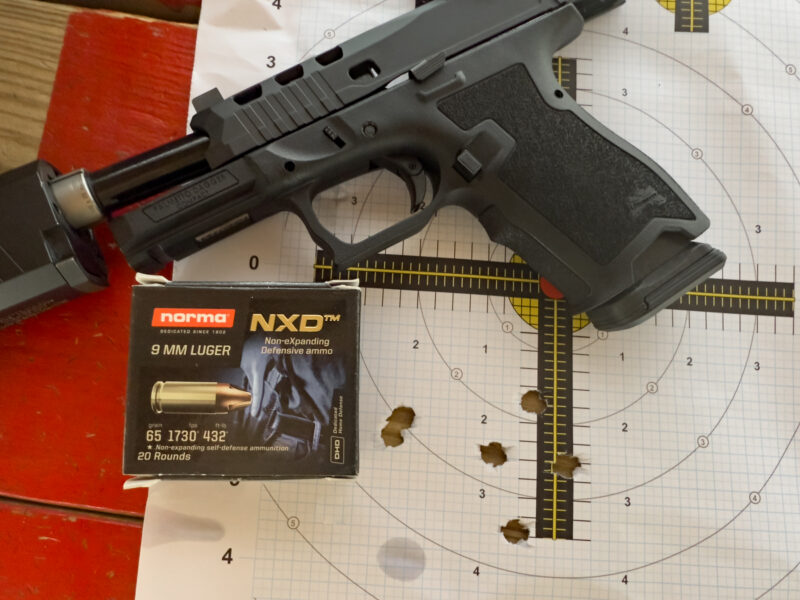
At the range, one thing to evaluate quickly is point of impact relative to point of aim with your chosen ammo.
This normal load is light for caliber, hence the low impact point.
As part of the accuracy tests, I like to consider the patterning, again for insight into how the gun was put together. Are the groups circular or vertically, or horizontally strung? While we’re at it, how does the point of impact look? It’ll vary vertically with different types of ammo, and that’s normal. But does the “standard” load for the caliber hit fairly close to the point of aim? How about windage? If it’s off, are the sights adjustable to compensate?
Next up, reliability. Revolvers usually get a free pass, although make sure your cylinder doesn’t get “sticky” with shooting! For semis, I like to test with magazines near empty and full to capacity to make sure there are no issues with super-compressed or nearly fully extended spring issues with feeding. Be sure to test repeatedly in the “topped off for carry” condition with a full magazine and one in the chamber. This doesn’t require lots of ammo, just shoot some, re-top off the magazine and repeat. Although I will also shoot through full magazines.
For semis, I want to know how reliable it is under less-than-ideal shooting conditions. For defensive use, you don’t get to decide whether or not you can use a classic shooting stance and grip. The situation dictates that, and you may be stuck using your support hand only or some other “unusual” shooting grip. It’s nice to know whether your gun will shoot with a more “limp-waisted” approach. Or whether it will shoot and eject and cycle when oriented more horizontally to one side or the other. I wouldn’t necessarily classify any of these as a poor-performing gun; I just want to know. Thinking back, this was one of the reasons I liked the Beretta 92 platform so much. I can literally hold it with two fingers, and it will fire and cycle reliably.

I've always enjoyed the reliability of the Beretta 92 family when shooting from less-than-ideal stance
and grip conditions. They just seem particularly insensitive to a poor grip. Who knows what conditions
you might face in a self-defense encounter?
Sometimes, looking at fired brass will expose hidden flaws. For semis, does similar-power, bullet-weight ammo eject brass in a consistent direction? How does the fired brass look? Is it damaged or bulged? Do the firing pin indents look normal and deep enough for consistent ignition? Ideally, check that last one with “hard primer” loads. Some military and commercial brands tend to use harder primers, so be sure to test if you plan to use those. If you see anomalies on the brass, take a look at the firing pin and extractor for flaws.
The range visit is a good place to verify the operation of all the safety features. There are too many safety checks to detail here, so depending on your gun and its intended design, make sure the trigger doesn’t move with the safety engaged. Does the slide operate or lock as intended with the safety engaged? If your gun has a magazine disconnect, try it. Make sure the gun won’t fire with no magazine installed. If you shoot a 1911, Roy wrote up a great safety check routine here.
In short, do read your owner’s manual. It will tell you what the gun is supposed to do and precisely how it’s supposed to operate. It’s your job to check and verify that all those functions operate as intended.
While there are lots of ergonomic and performance attributes we weigh on purely subjective means to define our “great” guns, any “great” firearm must be put together with care, and it must perform with distinction at the range.
Get more exclusive online content from American Handgunner delivered straight to your inbox. Sign up for our free American Handgunner Insider newsletter.